


Key Takeaways:
- In 2025, Canada slaughtered a record 882,351,493 land animals for food—an increase of nearly 19 million animals compared to 2024, averaging roughly to 1,678 animals killed every minute, or 28 per second.
- The decade-long rise (up 132 million animals since 2015) is largely driven by demand for chicken meat. This increased demand is due to population growth, lower prices, fast-food expansion and greenwashing propaganda promoting chicken as a healthier, less-polluting alternative to red meat. Over 834 million chickens were killed for food in 2025.
- Because chickens provide much less meat per animal than cows, consumers choosing chicken meat over beef means far more individual animals suffer and die in our food system.
- Official slaughter statistics exclude billions of additional animal lives every year, including an estimated 8 billion aquatic animals, 20 million newborn male chicks killed at hatcheries, 21 million live animal exports, and casualties from barn fires, farm illnesses, or transport conditions.
- Farmed animals in Canada lack federal animal protection laws; the industry largely self-regulates through the National Farm Animal Care Council’s voluntary guidelines for the treatment of farmed animals, which operates without independent oversight or legal enforcement.
Canada slaughtered a record number of animals for food in 2025. Government slaughter statistics analyzed by Animal Justice reveal that a horrifying 882 million land animals were killed—that’s around 19 million more animals than in 2024.
The magnitude of these numbers can be difficult to grasp. Yet each one represents a sentient, innocent individual who endured immense suffering because they were treated like a commodity instead of recognized as a living being. This enormous number means 28 animals were killed every second for an entire year.
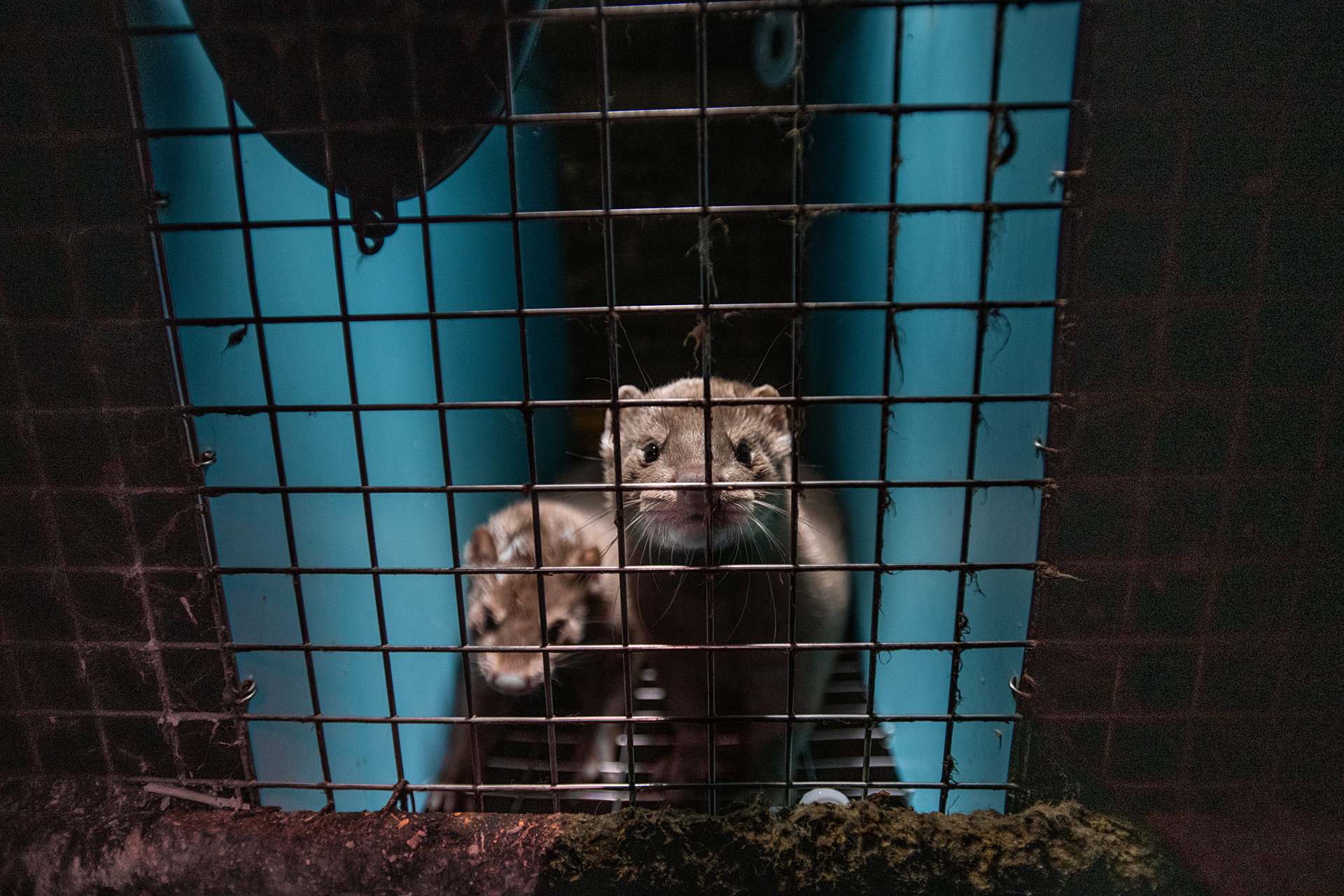
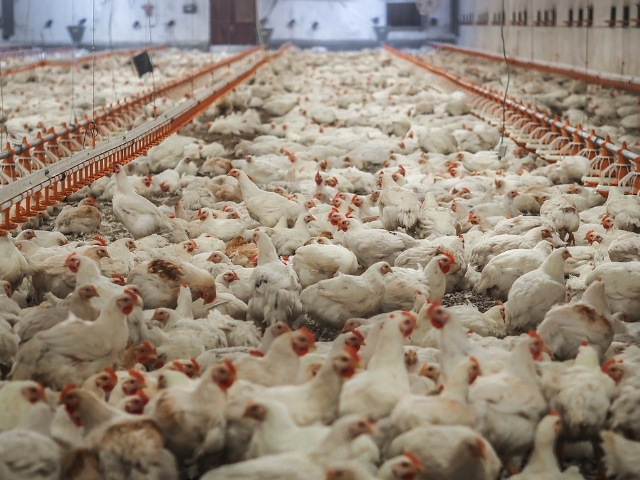
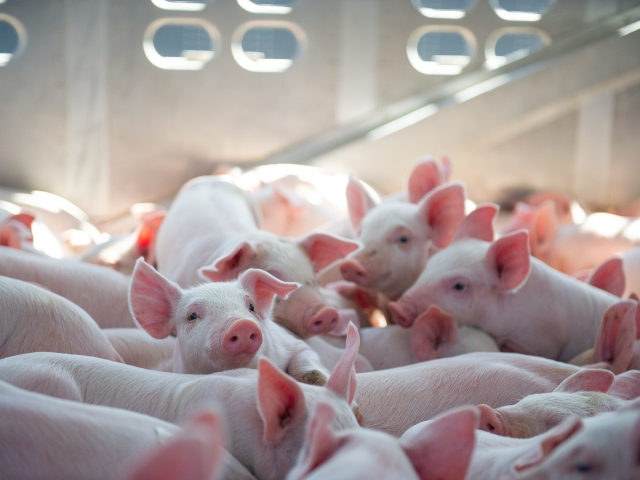
The vast majority of animals caught up in the factory farming system live short lives filled with suffering. Chickens, pigs, cows, and other farmed animals are subjected to painful mutilations without anesthesia, crowded into filthy cages or pens in factory farms, and rapidly fattened before being sent to slaughter. Most of them are killed at only a fraction of their natural lifespan.
Increase in Number of Animals Killed From 2015 to 2025
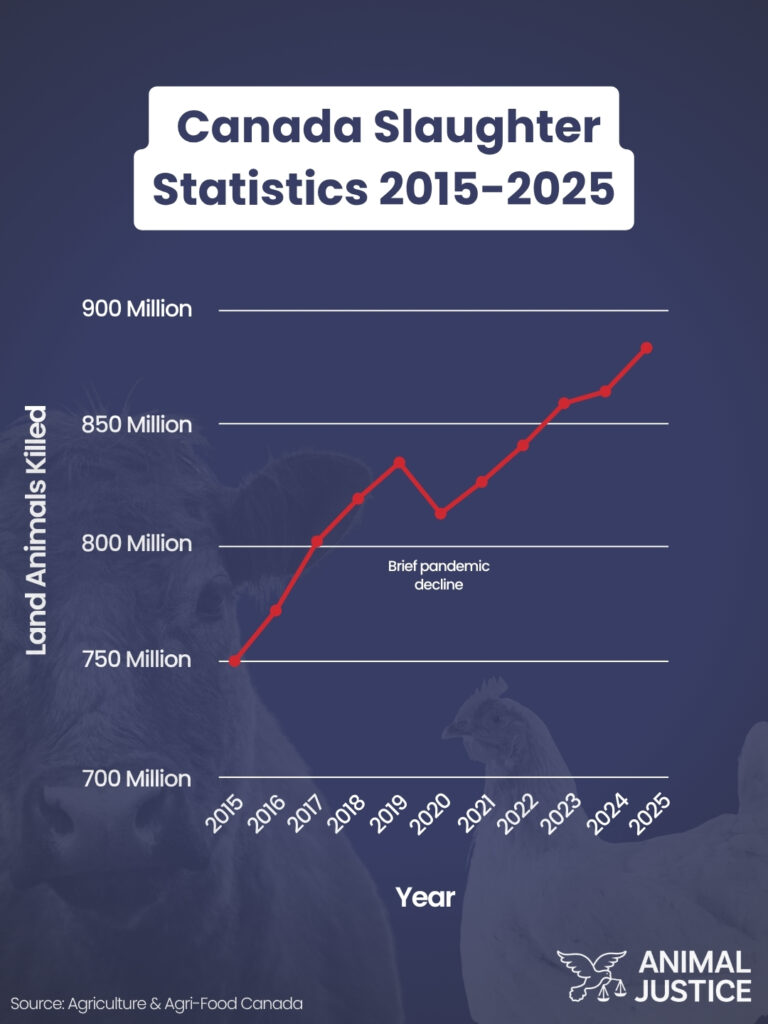
- 882 million in 2025
- 863 million in 2024
- 859 million in 2023
- 841 million in 2022
- 825 million in 2021
- 812 million in 2020
- 834 million in 2019
- 819 million in 2018
- 800 million in 2017
- 771 million in 2016
- 750 million in 2015
The number of animals killed for food dipped during the pandemic in 2020, but has otherwise continued to climb.
More Animals Are Killed Every Year
In just 10 years, the number of land animals killed for food in Canada surged by 132 million, rising from 750 million in 2015 to 882 million in 2025.
This dramatic increase is driven almost entirely by chicken production. Canada’s population growth, low prices for chicken meat, and fast-food expansion have all contributed to this rise, along with greenwashing propaganda promoting chicken as a healthier, less-polluting alternative to red meat. In 2025 alone, while slaughter numbers for cows, sheep, ducks, and geese all dropped, chicken slaughters jumped by 22 million, from 812 million in 2024 to 834 million in 2025.
This trend highlights a critical issue known as the “small body problem.” Because chickens provide significantly less meat than cows, far more individuals must be raised and slaughtered in cruel, factory farming systems to supply the same amount of food. As a result, consumers switching from beef to chicken end up driving a massive increase in individual animal suffering.
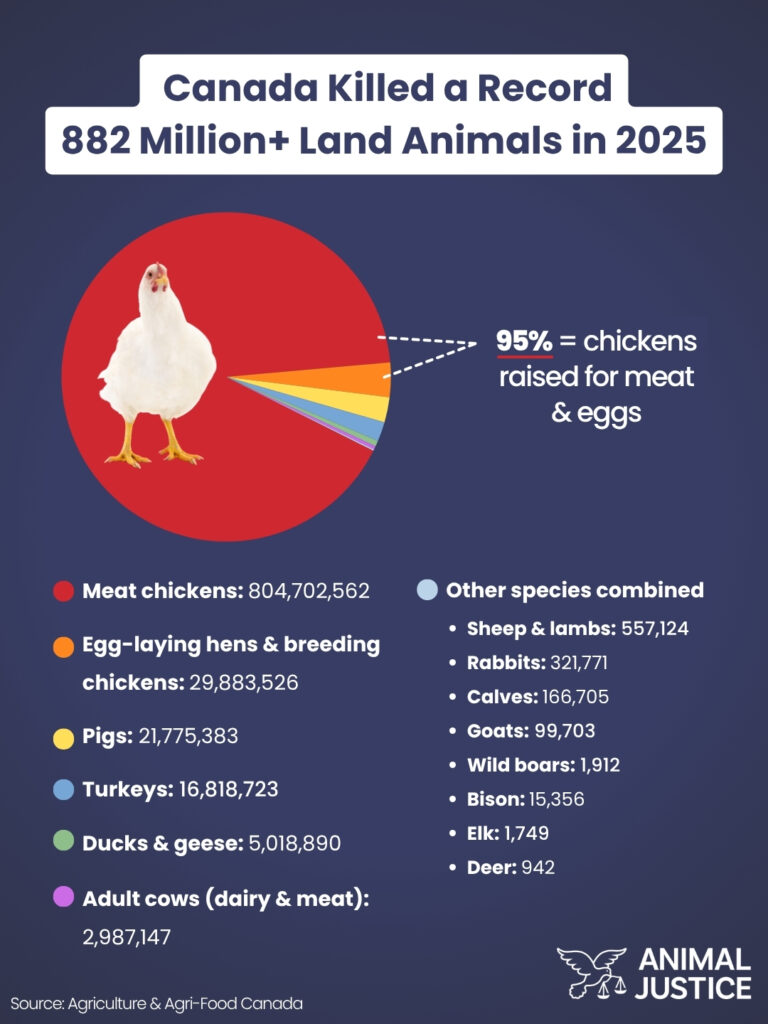
Animals Killed Broken Down by Species
- Meat chickens: 804,702,562
- Egg-laying hens & breeding chickens: 29,883,526
- Pigs: 21,775,383
- Turkeys: 16,818,723
- Ducks & geese: 5,018,890
- Adult cows (dairy & meat): 2,987,147
- Sheep & lambs: 557,124
- Rabbits: 321,771
- Calves: 166,705
- Goats: 99,703
- Wild boars: 1,912
- Bison: 15,356
- Elk: 1,749
- Deer: 942
TOTAL: 882,351,493.
The numbers above only count the animals who are slaughtered and enter the food supply, but many more deaths in farming go uncounted each year. This includes:
- Animals who die on farms due to illness or injury.
- Approximately 20 million newborn male chicken and turkey chicks killed in hatcheries annually, considered useless because they do not produce eggs.
- Almost 21 million cows, pigs, sheep, horses, chickens, and other birds exported live to other countries.
- Millions of animals killed or injured in transport who don’t enter the food system.
- Billions of aquatic animals killed, including lobsters, fish, crabs, and clams. Their deaths are reported separately only by weight, their individuality ignored. Animal Justice’s analysis of the most recent data estimates that over 8 billion aquatic animals are killed each year.
- Millions of farmed animals who die in barn fires each year.
- Canada has not released official data on the number of horses slaughtered for food since 2022, when 14,064 horses were killed. However, based on horse meat export data for 2025, it is estimated that more than 12,000 horses were slaughtered in Canada that year.
Lack of Legal Protection for Farmed Animals
Canada’s farmed animals lack any meaningful protections from federal law. Instead, Canada’s agriculture industry largely regulates itself through the National Farm Animal Care Council’s (NFACC) voluntary codes of practice. The NFACC is mostly made up of agriculture representatives and has no independent oversight or strict enforcement.
Although laws do apply to transport and slaughter, animals still endure gruelling journeys in extreme temperatures with inadequate food, rest, and protection. At slaughterhouses, speed is prioritized over welfare, which leads to animals being scalded, skinned, or cut apart while conscious. Existing regulations and enforcement are weak, and violations often result in minor fines.
Banner: Gabriela Penela | We Animals
Frequently Asked Questions
1. How many land animals were killed for food in Canada in 2025?
In 2025, a record 882 million land animals were killed for food in Canada. Government data analyzed by Animal Justice shows this is nearly 19 million more animals than in 2024. That averaged to about 1,678 animals killed every minute.
2. Why are animal slaughter numbers going up in Canada?
The increase is almost entirely due to chicken farming. Chicken slaughters jumped by 22 million in 2025 alone (from 812 million to 834 million). This rise is driven by population growth, cheap prices, fast-food expansion, and industry propaganda claiming chicken is healthier and better for the planet than beef.
3. What is the “small body problem”?
The “small body problem” happens when people switch from eating large animals, like cows, to smaller animals, like chickens. Because one chicken provides much less meat than one cow, far more individual chickens must be raised and killed to produce the same amount of food. This greatly increases the total number of animals who suffer for meat.
4. Do these official numbers include sea animals and farm deaths?
No. The official count of 882 million only includes land animals killed in slaughterhouses. It leaves out the approximately 8 billion sea animals killed each year, as well as millions of uncounted farm deaths. Uncounted deaths include baby male chicks killed at hatcheries, animals dying in barn fires or during transport, and animals sold alive to other countries.