Lire la version française ici.
Key Takeaways:
- Animal Justice investigated five facilities in Quebec: a dairy farm, three Délimax veal farms, and a livestock auction. The investigation documented physical abuse, extreme confinement, and filthy conditions.
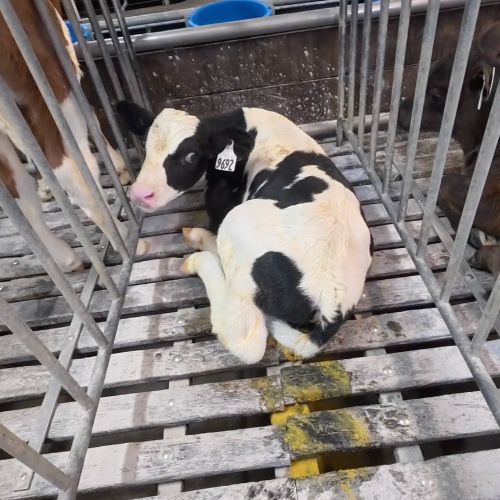
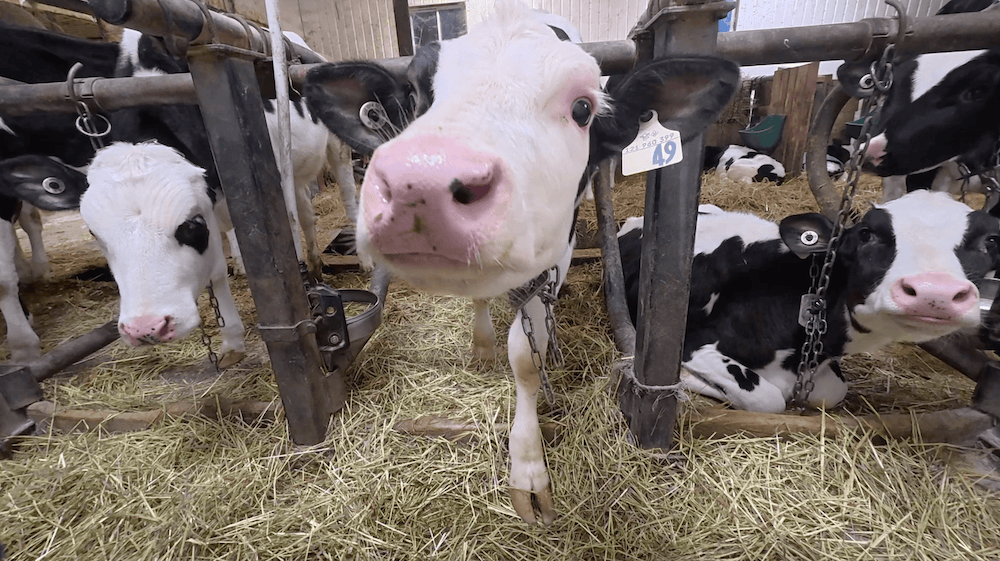
- Calves remain confined in individual veal crates despite industry promises. Animal Justice’s investigator found calves trapped alone in tiny, barren crates that restrict movement and natural social behaviours.
- Animal Justice is calling for federal farmed animal protection legislation. We are demanding strong, enforceable standards of care on farms and proactive government inspections.
- Featured on Radio-Canada’s Enquête: Animal Justice’s footage adds to an overwhelming archive of exposés from over 100 Quebec farms, slaughterhouses and auctions across Quebec, showing that routine suffering across farms is a systemic crisis.
- The footage on Enquête prompted the Quebec government to commit to passing new farmed animal protection laws and remove law enforcement from the Ministry of Agriculture, which promotes animal agriculture, resulting in a clear conflict of interest.
Our shocking new investigation reveals the brutal reality for calves in the Canadian dairy and veal industry.
Animal Justice conducted an investigation spanning five different facilities across Quebec—including a dairy farm, three veal farms, and a livestock auction—showing cruelty is rampant in the dairy and veal industry.
Over 80 percent of Canada’s veal comes from Quebec. But the animal abuse we uncovered in Quebec is far from an isolated incident—it is a damning indictment of a nationwide regulatory failure. This investigation confirms what numerous exposés have already revealed: cruelty is built into the system because there are no laws governing animal welfare on farms, and virtually no government oversight.
With no enforceable standards, Canada has left Big Ag to make up its own rules. The industry creates voluntary guidelines through the National Farmed Animal Care Council (NFACC)—an industry-led body that sets the lowest possible bar for animals on farms, and has no lawmaking or enforcement powers.
The result is devastating. Footage obtained from over 100 farms in Quebec aired on the investigative news program Enquête, featuring Animal Justice’s investigation alongside investigations by We Animals and Projet Existence. It shows a systemic crisis of cruelty entrenched in farming practices across the country.
After the episode aired, the Quebec government committed to passing new farmed animal protection laws and moving enforcement of animal protection legislation out of the Ministry of Agriculture—which promotes animal agriculture, resulting in a clear conflict of interest.
Watch the Video
The facilities investigated include three Délimax veal farms, and a dairy farm and auction in Saint-Hyacinthe.
The Appalling Findings
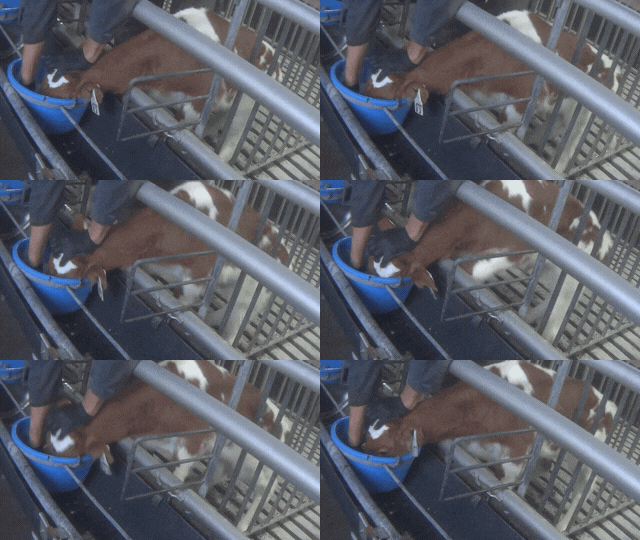
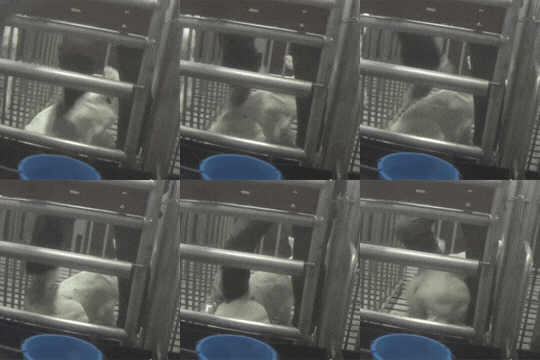
- Horrific Abuse: Workers kick and drag defenseless calves and violently shove calves’ heads into buckets of milk replacer during force-feeding.
- Brutal Separation: A farmer tears a newborn calf from his mother within minutes of birth and hits her in the face as she tries to protect her baby.
- Extreme Confinement: Calves are trapped in solitary, barren crates where they can barely move or engage in natural social behaviours.
- Filthy Conditions: Calves are forced to live in their own waste and many suffer from diarrhea while breathing putrid air thick with the stench of feces and urine.
- The Auction Pipeline: Workers hit, shove, and yell at day-old calves, who are treated as nothing more than “surplus” dairy commodities to be sold to the highest bidder.
Marcel’s Story: The Dairy Industry’s Dark Secret
The veal industry is a direct and bloody byproduct of dairy. To keep milk flowing, cows endure repeated forced impregnations until their bodies give out and they are sent to slaughter. While female calves are typically kept to replace their mothers, male calves are auctioned off and eventually killed for veal.
While on the dairy farm in Quebec, our investigator witnessed the birth of a male calf they named Marcel.
Marcel’s mother spent the first few moments after his birth cautiously hovering over him and cleaning him. But just minutes later, a farmer took Marcel away from her.
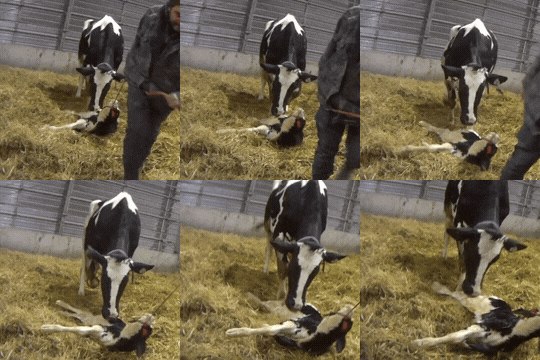
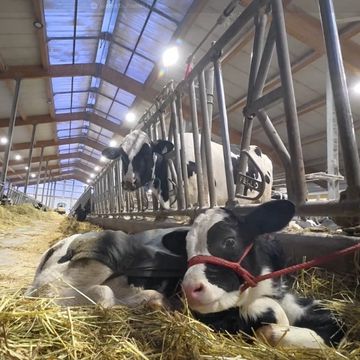
He was dragged by his head across a feces-covered floor while his mother bellowed and chased after him—only for the farmer to hit her in the face as she tried to follow him. She never saw Marcel again.
After about a week, male calves like Marcel are sent to auctions, where they face further abuse. From the auction, they are funnelled into veal farms where they spend most of the rest of their short lives trapped alone in tiny crates, without the comfort of their mothers or of other calves. They are subject to more violence, force-feeding, and isolation before being sent to slaughter.
This cycle underscores the need for real farmed animal protection laws—not voluntary industry-created guidelines.
A Broken Promise: The Veal Crate Scandal
For over a decade, the Canadian veal industry has known that solitary confinement is cruel. In 2014, a high-profile investigation into a Délimax-affiliated veal farm in Quebec exposed horrific conditions and led to a rare conviction for animal cruelty. Afterward, the veal industry publicly committed to ending the use of veal crates, claiming it would “become much more humane.”
Yet over a decade later, calves are still trapped in these cruel crates. The conditions today are a direct echo of the horrors seen a decade ago.
Switzerland, New Zealand, and a number of US states have banned these crates, but Canadian calves are still left to languish in isolation. Without laws setting standards of care for animal welfare on farms, NFACC’s industry-created “Veal Code of Practice” has served as nothing more than window dressing and a delay tactic to avoid meaningful reform.
Enquête Report Exposes Widespread Animal Suffering
Footage obtained from over 100 farms in Quebec—the equivalent of more than two-and-a-half years of continuous viewing—was broadcast on the investigative news program Enquête. The program featured investigations by Animal Justice, We Animals, and Projet Existence. The footage shows the systematic, routine suffering in dairy, pork, poultry, and egg facilities, including cruel practices permitted under the NFACC’s codes of practice, and illegal violent abuse.
These shocking but legal practices include:
- Newborn piglets being castrated, having their tails docked, and their teeth clipped without anesthesia or adequate pain management;
- Killing piglets through blunt force trauma, a practice also known as “thumping,” where they’re slammed against hard surfaces;
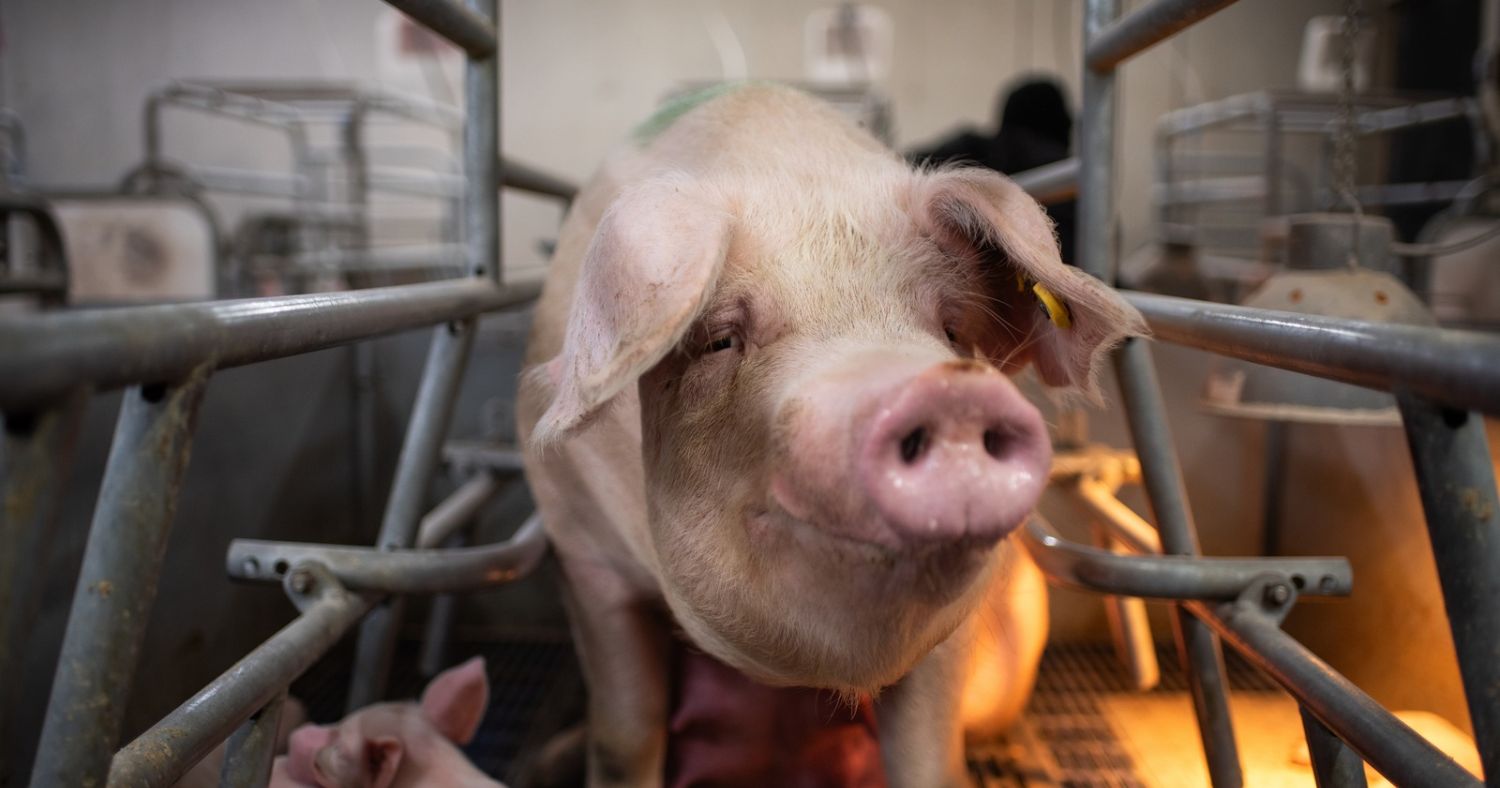
- Mother pigs confined in barren gestation and farrowing crates—cages so small they can’t turn around;
- Disbudding of calves—destroying horn buds with a hot iron or corrosive paste that causes chemical burns;
- Dairy cows chained at the neck, barely able to move;
- Egg-laying hens confined in cages with less than a sheet of paper’s worth of space.
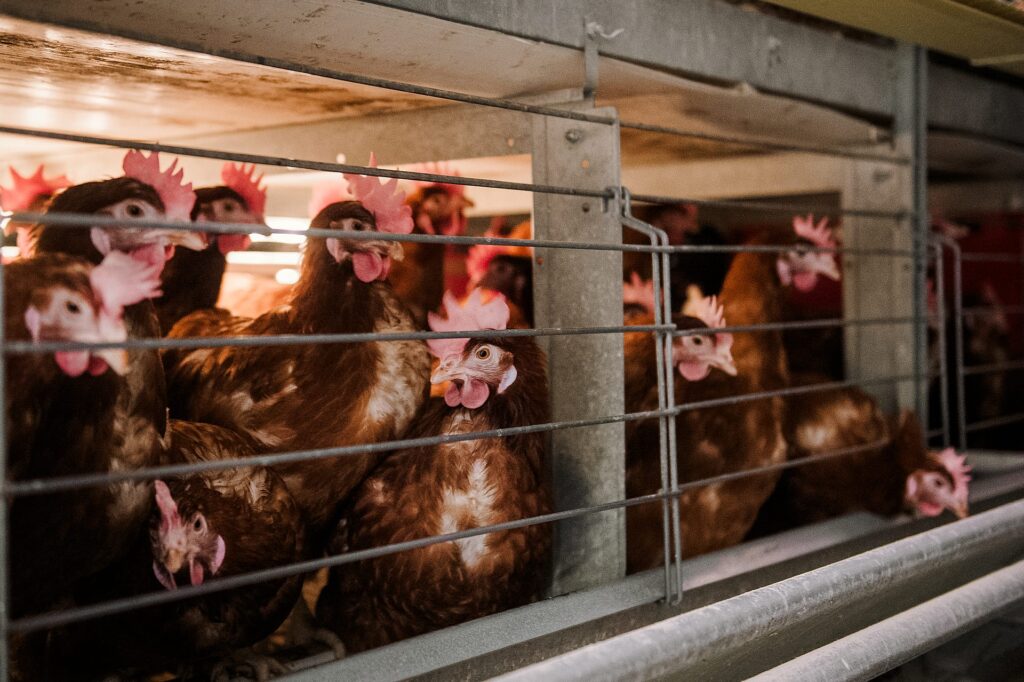
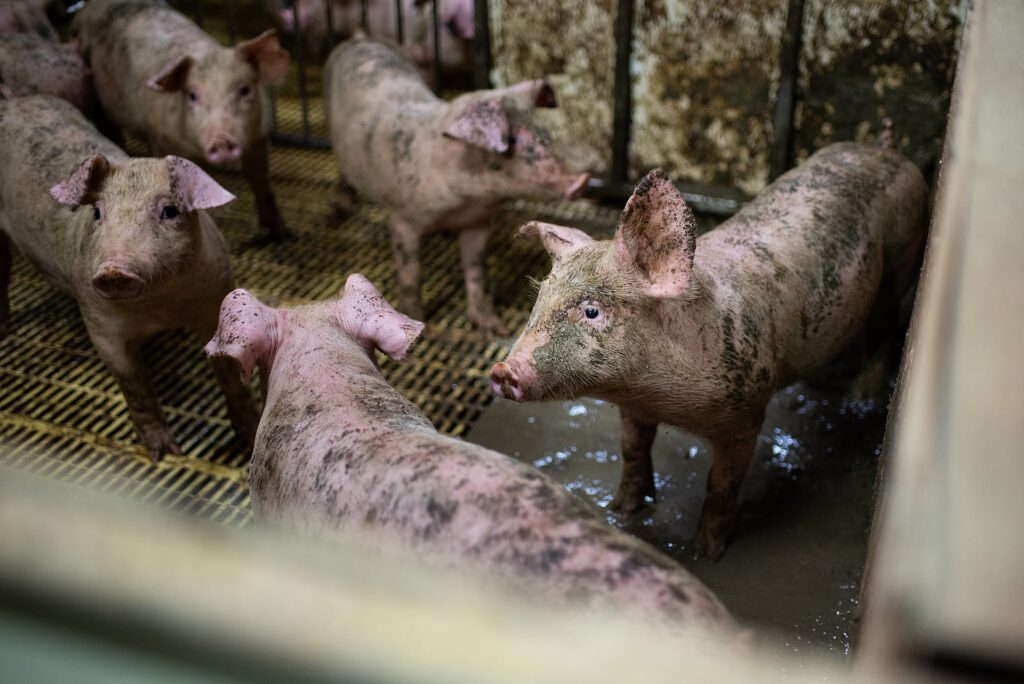
These are not isolated incidents, but practices normalized within Canada’s animal agriculture industry and permitted under existing standards—many of which have been banned in other countries.
Alongside these cruel industry practices, investigators also documented blatant illegal suffering and abuse:
- Workers violently kicking and hitting animals;
- Animals left with untreated illnesses, serious injuries, and gaping wounds, sometimes left to die slow, painful deaths;
- Dying animals being thrown alive into freezers;
- “Botched killings”—attempts to kill animals that failed, leaving them to die in agony.
While standard industry practices are rife with cruelty, violent and illegal acts like these are widespread on farms due to a lack of oversight and poor law enforcement. This desperately needs to change.
A Nationwide Crisis: Quebec Can Lead the Way
While Quebec’s commitment to passing new farmed animal protection laws and moving enforcement out of the Ministry of Agriculture is a good start, the new laws must be strong and based on what is best for farmed animal welfare, and not watered down by industry influence. And any inspection and enforcement regime must be adequately resourced and have a mandate to proactively investigate farms.
Provincial action must also go hand-in-hand with federal reform. Because animals and animal products move across provincial borders every single day, on-farm cruelty is a nationwide crisis and the federal government must follow suit with dedicated federal legislation.
Both levels of government can and must act: Quebec can set the pace by establishing strong provincial regulations, while the federal government must enact a national regulatory baseline, ensuring no farmed animal’s welfare is left behind simply because of the province they’re in.
The Problem: Industry Writes Its Own Rules
In Canada, the federal government has handed the responsibility to protect animals on farms to the industry itself, giving the power to make up its own rules. This means that those profiting from large-scale intensive factory farming are deciding what practices are acceptable—no matter how much suffering they may cause.
Because Canada has no federal laws for farms, companies like Délimax can defend cruel treatment by citing the Veal Code of Practice rather than being held to a legal standard.
Take Action: Demand Real Animal Protection Laws
Canada’s lack of farmed animal protection laws is a national embarrassment. We have some of the weakest farmed animal protection laws in the Western world, because the government has failed to take responsibility for overseeing animal welfare on farms.
It is time for Canada to take back control, and start protecting animals who are suffering and dying on factory farms. We need strong, enforceable legal standards of care on farms, and proactive government inspections to ensure that farmed animals across Canada, in Quebec and beyond, are protected on farms.
Will you join us in demanding the government pass federal legislation to protect animals on farms?
Frequently Asked Questions
What was exposed in the Radio-Canada show Enquête?
Radio-Canada’s investigative program Enquête featured footage from more than 100 farms across Quebec over several years. The reports revealed widespread, routine cruelty and neglect across the dairy, pork, poultry, and egg industries, proving that on-farm animal suffering is not an isolated problem, but an institutional crisis.
What was the Quebec government’s reaction to these investigations?
After the Enquête episode aired, the Quebec government committed to passing new farmed animal protection laws and moving enforcement of animal protection legislation out of the Ministry of Agriculture—which promotes the farming sector.
What did Animal Justice’s investigation reveal about farming?
Animal Justice investigated five Quebec facilities, including a dairy farm, three Délimax veal farms, and a livestock auction. The investigator documented workers kicking and dragging calves, violently shoving their heads into buckets of milk replacer, and calves kept in filthy conditions and tiny, individual crates.
How is veal production connected to the dairy industry?
The veal industry is a byproduct of dairy production. Cows give birth to produce milk. While female calves are typically kept to replace dairy cows, male calves are sold to be raised and slaughtered for veal.
Are veal crates still used in Canada?
Animal Justice’s investigation found calves confined in individual veal crates on Quebec farms, despite the Canadian veal industry’s public commitment to end their use following a 2014 investigation.
Why are individual veal crates harmful to calves?
Individual veal crates severely restrict calves’ movement and prevent natural social behaviours. Animal Justice’s investigator found calves trapped alone in tiny, barren crates, without the comfort of their mothers or other calves.
Who is Marcel in Animal Justice’s investigation?
Marcel is a male calf whose birth Animal Justice’s investigator witnessed on a Quebec dairy farm. Within minutes, a farmer dragged him away by his head across a feces-covered floor. His mother bellowed and tried to follow him, only to be hit in the face. She never saw Marcel again.
What is the National Farmed Animal Care Council’s role?
The National Farmed Animal Care Council (NFACC) is an industry-dominated private body with no lawmaking or enforcement power. It develops species-specific Codes of practice for the treatment of animals on farms, including veal calves. Animal Justice is calling for enforceable legal standards rather than voluntary industry-created guidelines. To learn more about NFACC, visit nfacts.ca.
What changes is Animal Justice demanding to protect animals on farms?
Animal Justice is calling on the federal government to adopt legislation that establishes strong, enforceable standards of care for animals on farms, backed by proactive government inspections, independent oversight and dedicated government leadership. We are asking Canadians to support this urgent call for reform by taking action.
If the Quebec government has promised to introduce new laws, why do we still need federal legislation?
Quebec’s commitments can set a strong example for the rest of Canada, but cruelty persists in farms in every province The federal government must introduce strong laws to protect farmed animals across the country, including proactive inspections to ensure those laws are followed.