



Ontario has taken a historic step toward preventing dogs and cats from suffering in some of the most painful experiments in laboratories.
New regulations released in June will ban a range of invasive experiments on cats and dogs, including procedures that cause extreme pain, severe distress, or death. These rules build on the groundbreaking passage of Bill 75, which amended Ontario’s Animals for Research Act and brought the world’s first ban on the use of cats and dogs in invasive experiments.
The new protections passed under the act further define what research will be banned, and come into effect on January 1, 2027.
A Hard-Fought Win for Animals Used in Research
Under Ontario’s new restrictions, dogs and cats will be protected from some of the most invasive forms of experimentation, including:
- Experiments that remove organs or limbs
- Procedures that require opening an animal’s chest cavity
- Experiments that cause moderate to severe distress or discomfort
- Extremely painful experiments
- Experiments that result in an animal’s death
Importantly, the bill also allows the government to extend these vital protections to other species of animals in the future.
While more work needs to be done to protect all animals used in research in Ontario, the new rules represent an important shift in how we view animals used in research. More and more people are questioning the cruelty animals experience in laboratories and demanding stronger protections.
Secret Lab Sparks Growing Movement for Change
In 2025, Animal Justice released a shocking investigation into a secret dog laboratory at St. Joseph’s Hospital in London, Ontario.
The investigation revealed dogs being subjected to heart attacks lasting up to three hours. After the experiments were completed, they were killed and disposed of like trash.
Two brave whistleblowers came forward with their heartbreaking accounts from inside the facility. They described one gentle puppy named Salt, who endured immense distress after her companion, Sugar, was killed during an experiment. The whistleblowers say she showed signs of severe emotional suffering, including repeatedly submerging her face into her water dish. Salt was killed just two months later.
Four days after our investigation went public, St. Joseph’s committed to ending its experiments on dogs. Shortly afterward, Ontario Premier Doug Ford pledged to end dog and cat testing across the province. Surviving dogs from St. Joseph’s have since been adopted.
Although these protections came too late to save Salt and the countless dogs who suffered before her, their stories helped create lasting change.
More Protections For Animals Are Needed
While Ontario’s new rules are a major victory, they do not end all suffering for animals used in research.
- Some invasive research will still be allowed at veterinary schools or by experimenters researching animal health or medicine.
- Mandatory adoption after experiments was not implemented, despite Animal Justice’s advocacy.
- The cruel practice of pound seizure, which allows experimenters to purchase lost and abandoned pets from shelters for six dollars per dog or two dollars per cat for experimentation, will continue.
- Where a facility uses cats or dogs in invasive research for a veterinary purpose, the regulations require researchers to consider non-animal alternatives or using animals of a “lower order.” This language is deeply concerning, as animals like primates, rabbits, and mice are also capable of experiencing pain and suffering, and deserve protection from harm.
Animal Justice will continue working to identify facilities using dogs and cats in experiments and advocate for these animals to be released and rehomed.
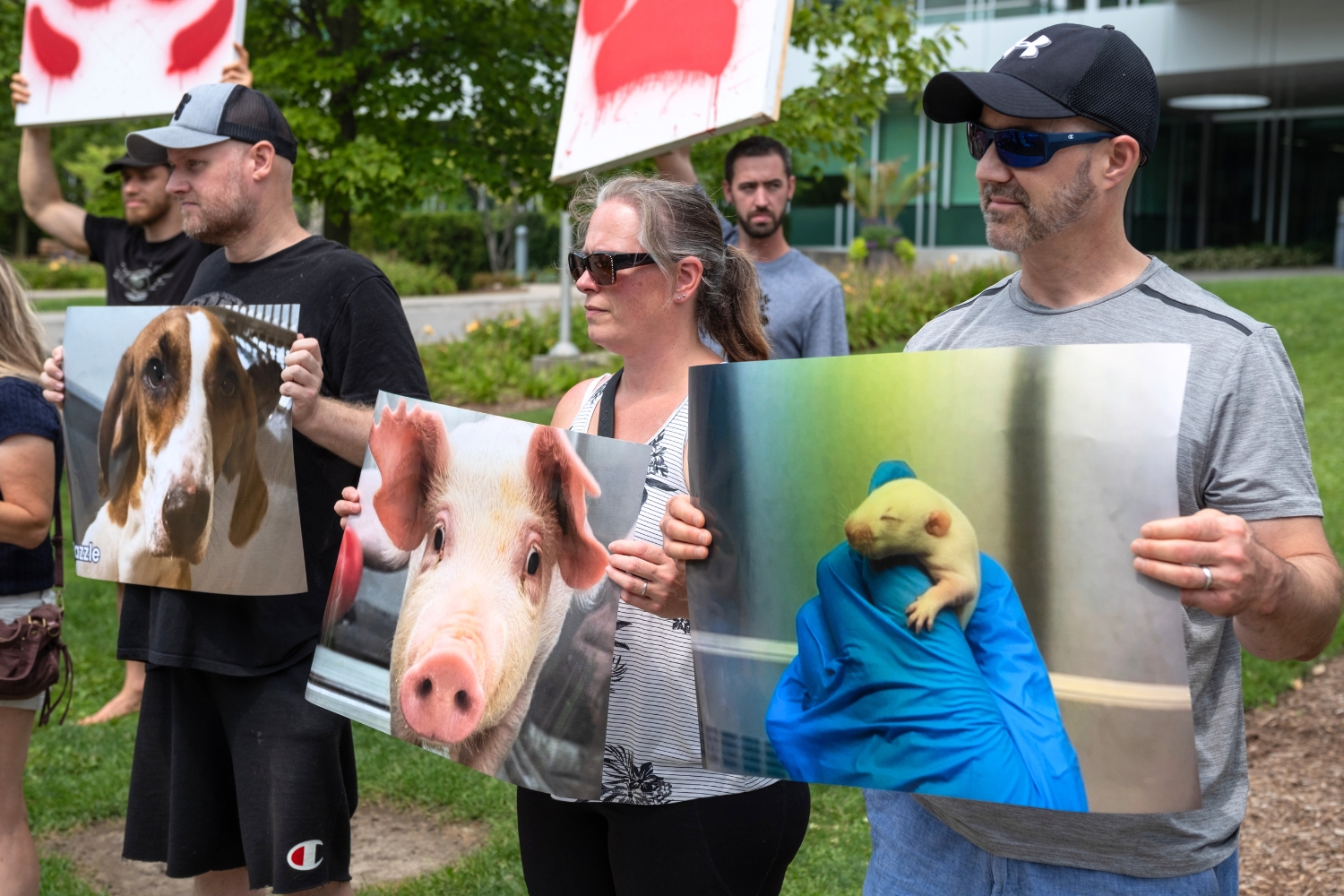
The Fight for Animals Suffering in Labs Continues
Ontario’s new law and regulations are proof that change is possible when people speak up for animals.
But animals across Canada still need stronger protections. At the federal level, there are currently no laws banning cruel experiments on animals. And still, research oversight relies on a voluntary system dominated by animal experimenters.
Canada has recently taken important steps toward reducing animal testing. Parliament passed two landmark bills to ban cosmetic testing on animals and phase out the use of animals in toxicity testing—the most harmful use of animals in Canadian science.
But to end cruelty in labs, Canada must invest in cutting-edge alternatives to animal research. Canada’s only national centre dedicated to advancing these methods was recently forced to shut down due to a lack of public investment. Tell Canada to invest in animal-free science!