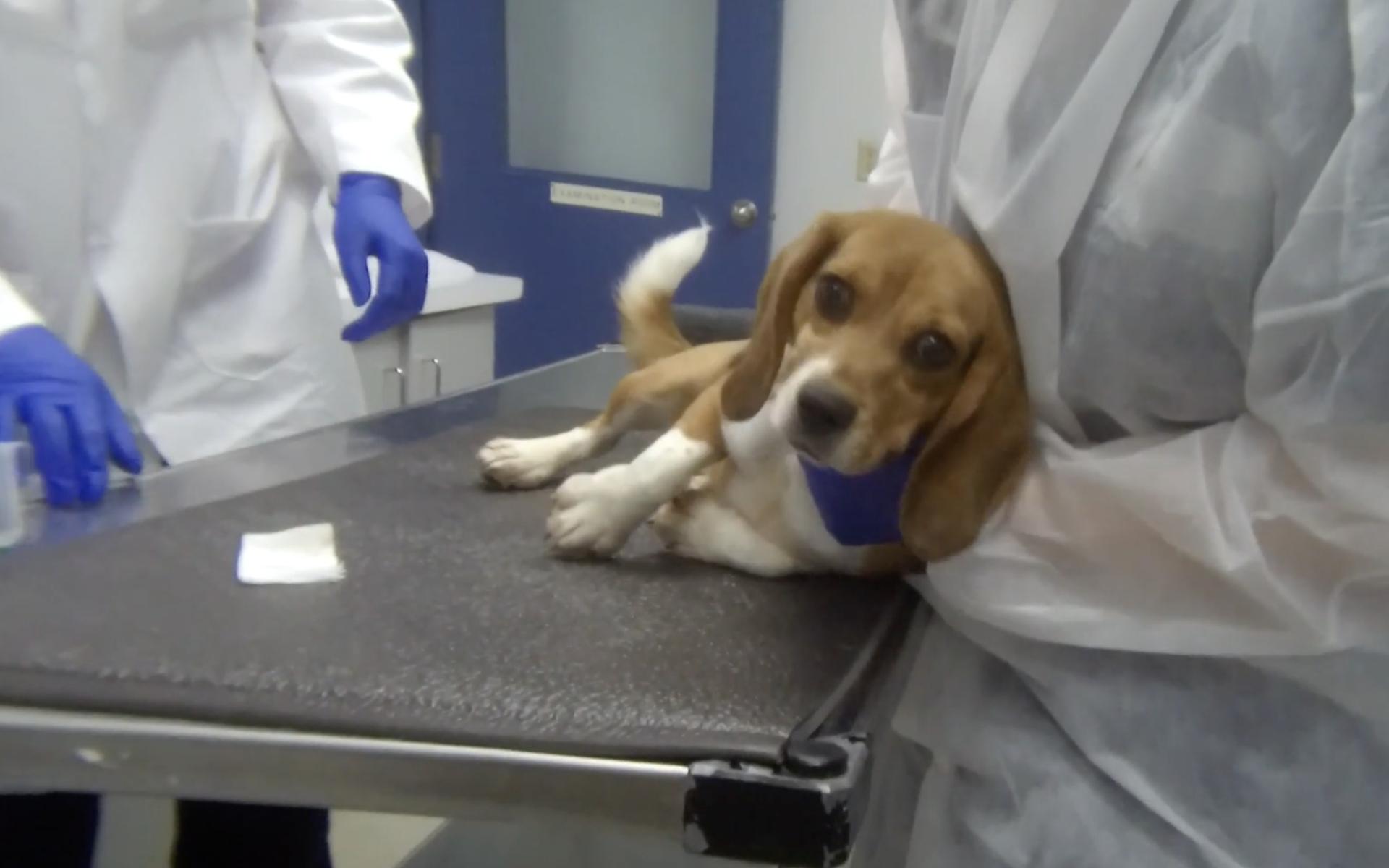

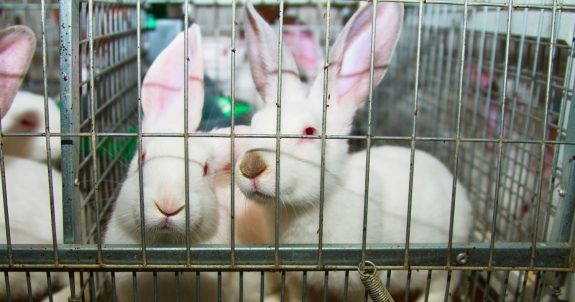

According to newly released animal testing data, over 3.7 million animals were used in Canada in 2024, an alarming 18.5 percent increase from 2023. The experiments were also more painful, with a higher number of animals involved in procedures classified as causing severe pain or distress. This rise in animal use highlights Canada’s slow and troubling lack of progress toward more modern, non-animal research methods.
This data follows widespread public outrage after Animal Justice exposed that St. Joseph’s Hospital in London, Ontario, subjected dogs to three-hour induced heart attacks—a shocking example of outdated and cruel experiments still conducted behind closed doors. Public outcry forced the secret dog lab to close, and Ontario has now promised to ban cat and dog experiments. But for animals used in labs, help can’t come quickly enough.
The Hidden Cost of Animal Research
The data comes from the annual animal testing data report from the Canadian Council on Animal Care (CCAC), which provides insights into animal-based science in CCAC‑certified institutions across Canada.
Shockingly, the federal government doesn’t regulate or oversee the use of animals in research and testing. Instead, Canada relies on the CCAC—a non-profit organization with no legal authority, which is dominated by animal experimenters—to develop guidelines for the use of animals in scientific research.
While CCAC reporting gives an idea of the scale of animal testing in Canada, it doesn’t capture the full picture. Participation in the CCAC is voluntary, and private labs have no obligation to report their data, meaning the true number of animals who suffer for research is likely much higher.
The CCAC’s national animal use data shows that despite advances in technology and growing public concern for animal welfare, millions of animals in Canada continue to be experimented on in labs.
The data shows over 3,706,907 animals were used in research, testing, and teaching across Canada in 2024. The vast majority were fishes and mice, which together made up more than 75 percent of all animals used. Birds, cows, rats, amphibians, and pigs accounted for a smaller percentage of animals used, while dogs, cats, rabbits and nonhuman primates accounted for less than one percent of the total.
Research involving dogs declined but cat use increased, and both species continued to be subject to painful and invasive experiments. At Queen’s University in Kingston, Ontario, researchers kept eight dogs with naturally occurring hemophilia A in a lab for over a decade to test liver-directed gene therapy. They analyzed bleed rates, major surgeries, and repeated tests, and ultimately killed all the dogs at the study’s end.
| Type of animal | Number of animals |
|---|---|
| Fishes | 1,713,418 |
| Mice | 1,202,233 |
| Cattle | 369,769 |
| Rats | 110,134 |
| Birds | 102,932 |
| Amphibians | 76,117 |
| Other animals | 33,703 |
| Reptiles | 27,891 |
| Pigs | 23,770 |
| Other rodents | 12,754 |
| Dogs | 9,252 |
| Guinea pigs | 8,205 |
| Nonhuman primates | 7,826 |
| Cats | 4,911 |
| Rabbits | 3,992 |
| Total | 3,706,90 |
Experiments Cause Intense Suffering
The CCAC classifies animal experiments by how painful they are to animals, ranging from Category B, involving minimal discomfort, to Category E, causing intense pain or distress.
The five CCAC Categories of Invasiveness include:
- A – involving no living animals
- B – little or no discomfort
- C – minor stress or short-term pain
- D – moderate to severe distress or pain
- E – severe pain or distress without relief
The 2024 animal testing data reveals a concerning trend: the number of animals used in Category D and E experiments has increased. That means more animals are enduring the highest levels of pain and distress.
The heart attack research exposed this year at St. Joseph’s Hospital in London is a disturbing example of Category D experimentation, involving severe distress and pain. In one recent Category E experiment at the University of British Columbia, researchers forced eleven dogs, rats, and mini pigs to undergo invasive heart procedures while the animals were fully conscious. They then killed the animals to examine their tissues.
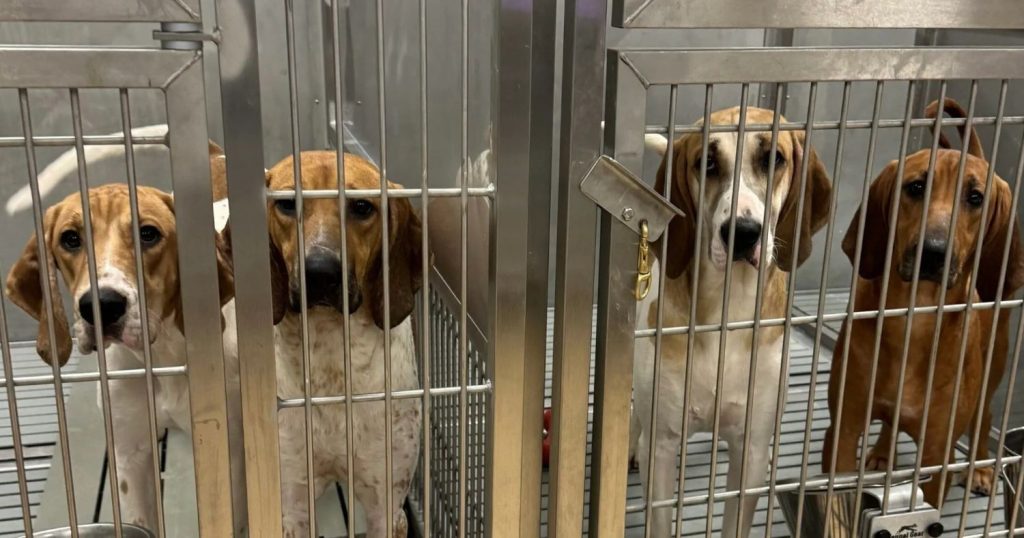
A System Still Dependent on Animal Experimentation
The CCAC claims it aims to reduce the number of animals used in research and to refine experiments to lessen pain and distress. Yet the latest animal testing data show both metrics are worsening. Researchers are using more animals and causing more suffering in the most invasive experiments.
This disturbing trend exposes how Canada’s voluntary oversight system is failing animals. Without mandatory laws, rigorous review of experiments, and independent enforcement, laboratories and institutions can continue harmful experiments with little accountability.
After years of work by Animal Justice and other groups, Canada has released a long-awaited national plan to phase out toxicity testing on animals. This important step was required as part of a new law passed in 2023 to help move Canada away from animal-based toxicity testing, in favour of superior animal-free methods. The same year, Canada also passed an important law banning testing cosmetics on animals.
While the national plan is a good step, Canada has still fallen far behind other countries. In 2024, Canada’s first and only national science centre devoted to replacing animal testing methods was forced to close due to lack of federal funding. It’s time for Canada to devote the resources required to end animal experiments, and replace tests with cruelty-free methods.