



Key Takeaways:
- Nucro-Technics, a Toronto-based contract research company that conducts pharmaceutical and toxicity experiments on dogs, is challenging Ontario’s new ban on most invasive medical experiments on dogs and cats.
- Ontario’s groundbreaking law takes effect January 1, 2027, and prohibits many forms of invasive medical research on dogs and cats, with limited exceptions and new safeguards for other research.
- A 2023 undercover investigation by Last Chance for Animals documented beagles at Nucro-Technics struggling and crying during procedures, vomiting and collapsing after exposure to test substances, and displaying signs of psychological distress. The dogs were killed at the end of the experiments.
- Animal Justice will seek permission to intervene in the legal challenge, bringing its animal law expertise to court to help defend Ontario’s historic protections for dogs and cats.
Ontario made history this year by becoming the first province in Canada to ban most invasive medical experiments on dogs and cats.
Now, a company that conducts gruesome pharmaceutical and toxicity experiments on dogs is asking a court to overturn that law.
Nucro-Technics Inc., a private contract research company in Toronto, has launched a legal challenge against Ontario’s new protections for dogs and cats. Animal Justice will seek leave to intervene in the case to help defend the law and the animals it was designed to protect.
The stakes are life or death for potentially thousands of innocent cats and dogs who could again suffer in experiments if the law is overturned.
Nucro-Technics Is Challenging Ontario’s New Animal Protection Law
Ontario’s new law, which takes effect January 1, 2027, prohibits many forms of invasive medical research on dogs and cats, with narrow exceptions. It also places new safeguards on other research involving cats and dogs.
Nucro-Technics’ lawsuit claims that Ontario did not have the constitutional authority to enact the ban.
It argues the law is really criminal law, which only the federal Parliament can enact, and that it conflicts with federal drug approval and safety laws—even though those laws don’t require dog tests.
We disagree. Provinces have broad authority to protect animals, including regulating their treatment. Ontarians fought hard for this groundbreaking new law, and we’ll fight just as hard to help protect it and save dogs and cats from a gruesome fate.
Why Did Ontario Ban Invasive Dog & Cat Experiments?
Most people have no idea that thousands of dogs and cats are used and killed in experiments every year in Canada. But in 2025, Animal Justice helped whistleblowers show a horrifying truth, exposing a secret dog laboratory at St. Joseph’s Hospital in London where dogs were kept in cages and subjected to hours-long painful heart attack experiments. Eventually they were killed, stuffed in a barrel, and placed in a freezer. The whistleblowers shared stories of sweet, gentle dogs like Salt, who was devastated when her cage-mate Sugar was killed. Salt was soon killed herself.
We helped two whistleblowers who came forward with information about the experiments, and the Investigative Journalism Bureau brought the secret laboratory to public attention on the front pages of national newspapers. The public outcry was swift. The hospital ended its dog research program and rehomed the surviving dogs.
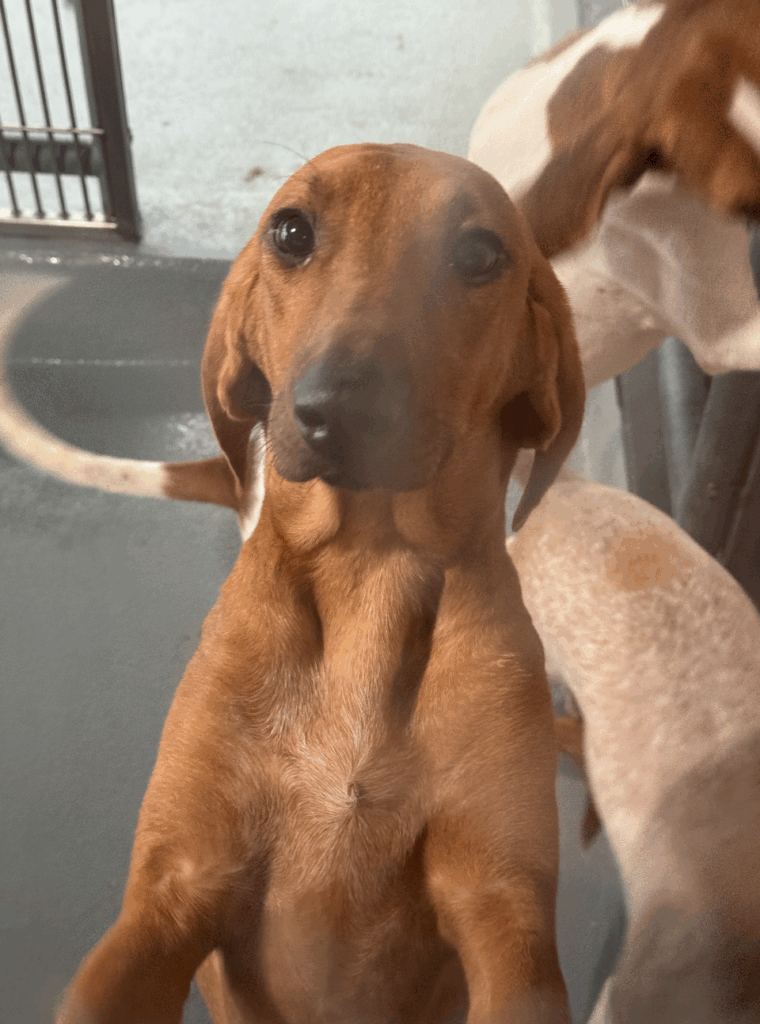
The horrifying cruelty prompted Premier Doug Ford to pledge to end invasive research on dogs and cats. And in spring 2026, Ontario delivered on that promise, amending the Animals for Research Act to prohibit invasive medical research on dogs and cats, subject to limited exceptions.
It was a historic victory for dogs and cats who face heartbreaking deprivation and cruelty inside labs.
And now, Nucro-Technics is asking a court to take it away.
What Is Nucro-Technics?
Nucro-Technics describes itself as a pharmaceutical contract research organization. In other words, pharmaceutical and other companies can hire Nucro-Technics to experiment on animals on their behalf.
The company operates a roughly 60,000-square-foot facility in the Toronto area and says it has more than 170 staff. Its macabre services include toxicology, bioanalytical testing, genetic toxicology, chemistry, and microbiology. It works with pharmaceutical, biotechnology, and medical-device companies.
And to carry out its mission, Nucro-Technics conducts disturbing, painful tests on dogs.
Nucro-Technics Tortures Dogs
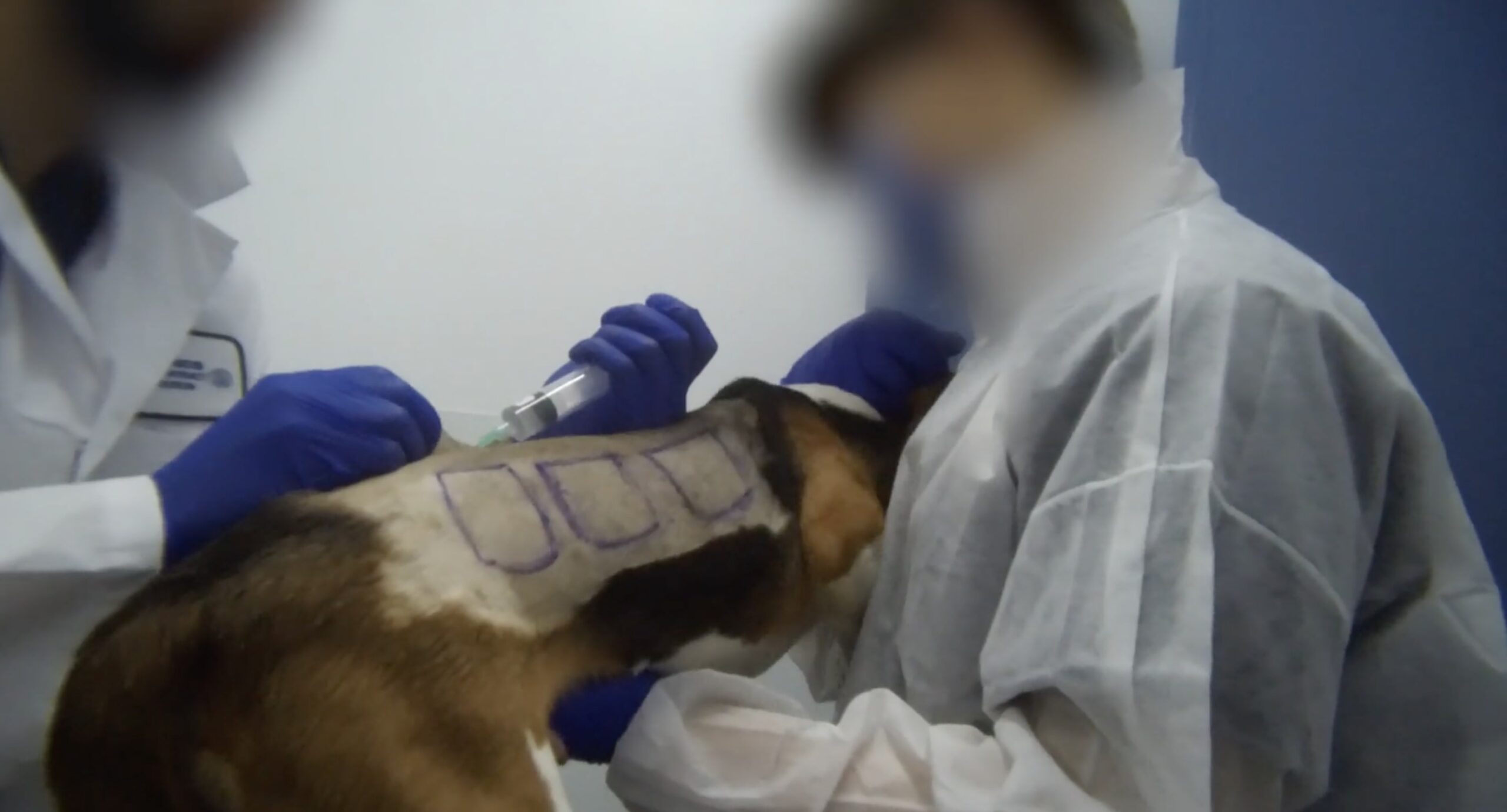
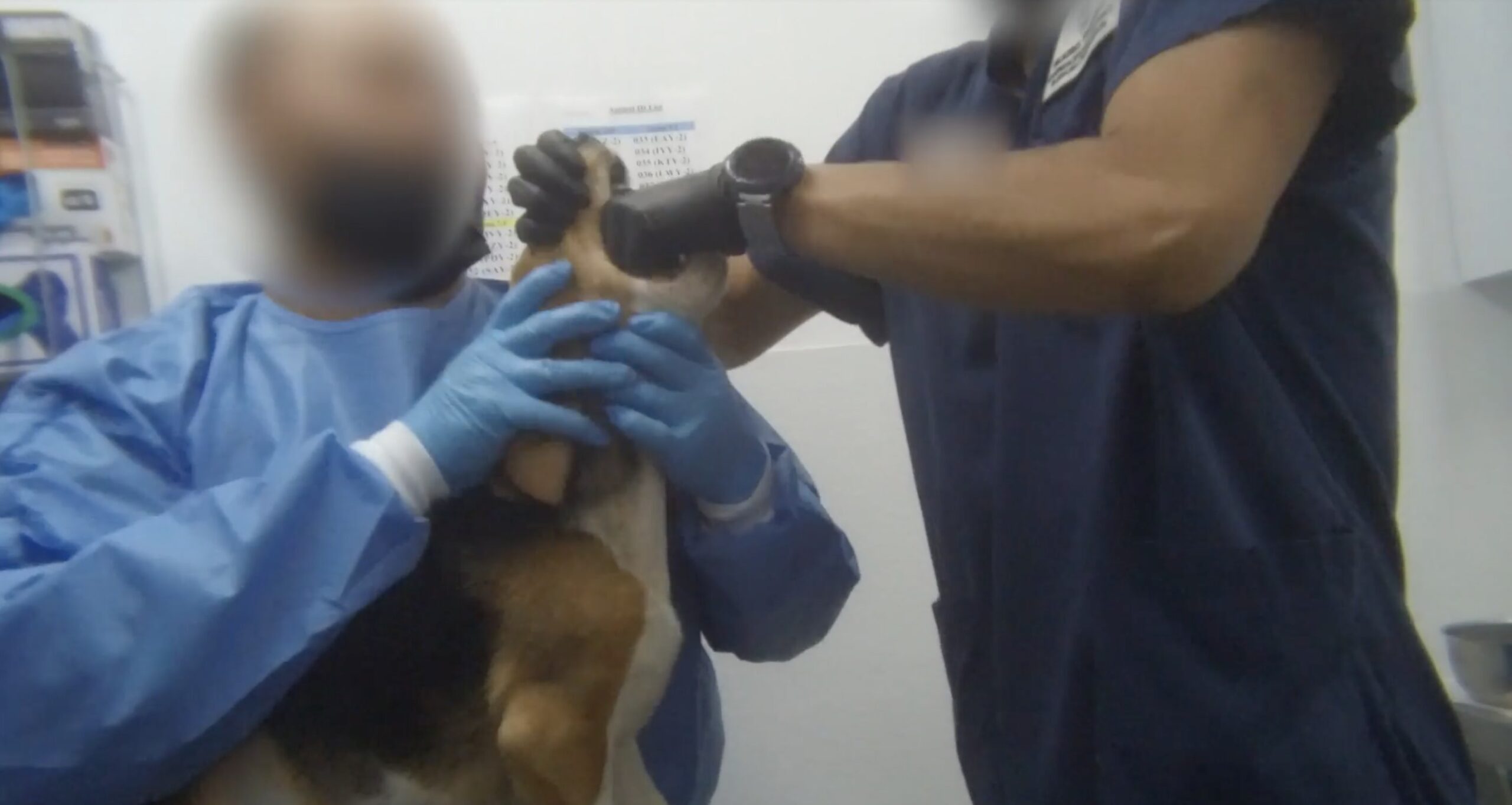
Last Chance for Animals sent an undercover investigator into Nucro-Technics for several months in 2023. The investigator documented pharmaceutical testing involving beagles as young as six months old.
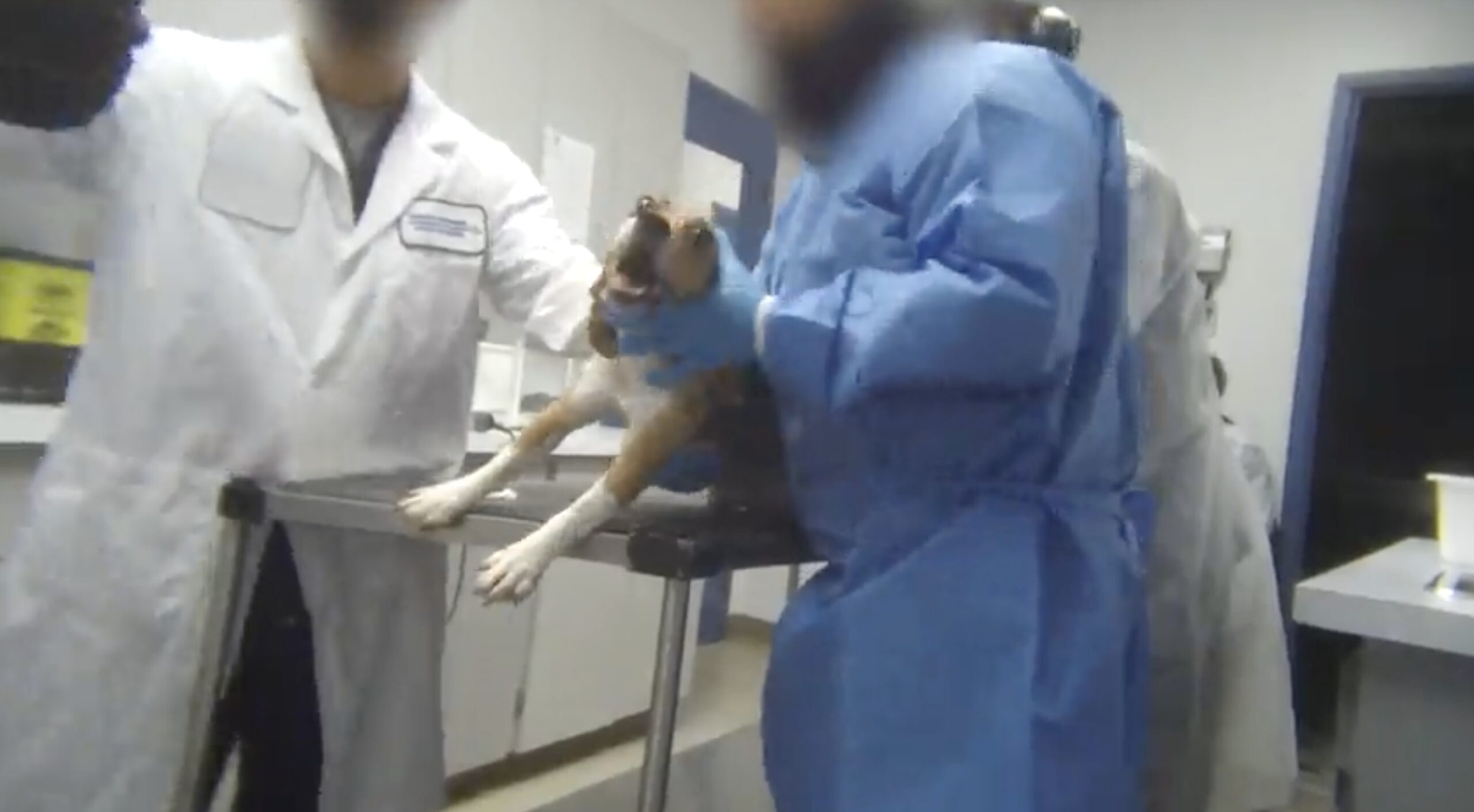
The dogs were subjected to procedures including injections, oral dosing, and gavage—where dogs had a tube shoved into their stomachs—as well as blood draws, catheterizations, and electrocardiograms.
The investigation documented dogs struggling and crying during procedures, vomiting and collapsing after exposure to test substances, and displaying repetitive pacing while confined in cages—a sign of mental distress. In one incident, a tube was accidentally inserted into a dog’s lungs rather than the stomach.
At the end of studies, the beagles were killed, necropsied, and discarded.
These are exactly the kinds of heartbreaking experiments that Ontario’s new law is designed to prevent.

Nucro-Technics Bought Beagles from Ridglan Farms
Nucro-Technics has also purchased beagles from the notorious Ridglan Farms since 2013, a large-scale dog breeder in Wisconsin that was recently forced to shut down after nearly a decade of serious concerns over animal cruelty.
Ridglan has faced serious allegations concerning its treatment of dogs, and agreed to surrender its breeding license rather than face potential criminal charges.
Ridglan performed eye surgeries on dogs without anesthesia or pain medication, while dogs thrashed and cried in pain, and severed the vocal cords of dozens of dogs every month to reduce barking, without anesthesia or pain medication.
The Canadian Council on Animal Care, which oversees animal-care standards at accredited research institutions, later said that Canadian institutions should not be procuring research animals from Ridglan based on the information that had emerged.
In the spring of 2026, around 1,000 members of the public attempted to rescue the 1,500 dogs who were still trapped at Ridglan and could be used in tests. Due to public pressure, the traumatized dogs were rescued and adopted by loving families.
We Aren’t Going Back
Ontario has taken a historic step toward a future where dogs and cats are no longer subjected to invasive medical experiments. We believe the province was well within its constitutional authority to do so. Animal Justice is Canada’s leading animal law organization, and we have been fighting for these protections from the beginning.
We helped bring the hidden suffering of dogs in Ontario laboratories into the public eye. We pushed the Ontario government to act. We testified before lawmakers. We advocated for stronger legislation and regulations. And now, if permitted to intervene in the case, we will bring our legal expertise to the courtroom to help the government defend the law.
Dogs and cats are sentient beings who can experience pain, fear, distress, and suffering. They are not disposable tools for experimenters. We fought hard to get these protections onto the books. Now we’ll fight to make sure they stay there.
We’ll keep you updated on next steps. In the meantime, you can keep pressure on Nucro-Technics to rehome the dogs in its lab instead of killing them before the Ontario law takes effect.
Banner: Last Chance for Animals
Frequently Asked Questions:
Why is Nucro-Technics suing Ontario?
Nucro-Technics is challenging Ontario’s new restrictions on invasive medical experiments involving dogs and cats. The company argues that Ontario did not have the constitutional authority to enact the law, claiming it falls within the federal government’s criminal law power and conflicts with federal drug approval and safety laws. Animal Justice lawyers disagree.
What does Ontario’s ban on dog and cat experiments do?
Beginning January 1, 2027, Ontario’s new law prohibits many forms of invasive medical research on dogs and cats, subject to limited exceptions. Ontario is the first province in Canada to enact such a ban.
What happened to dogs at Nucro-Technics?
A 2023 undercover investigation by Last Chance for Animals documented pharmaceutical testing on beagles as young as six months old at Nucro-Technics. Dogs were subjected to procedures including injections, oral dosing, tubes shoved down their throats, blood draws, catheterizations, and electrocardiograms. Footage showed dogs struggling and crying during procedures, vomiting and collapsing after exposure to test substances, and repeatedly pacing in cages. The dogs were killed at the end of experiments.
Where did Nucro-Technics get its beagles?
Nucro-Technics has purchased beagles from Ridglan Farms, a large-scale dog breeder in Wisconsin, since 2013. Ridglan faced serious allegations over its treatment of dogs and ultimately agreed to surrender its breeding license to avoid prosecution.
Why did Ontario ban invasive experiments on dogs and cats?
The law followed growing public concern about the treatment of dogs and cats in laboratories. In 2025, Animal Justice helped whistleblowers expose a secret dog laboratory at St. Joseph’s Hospital in London, Ontario, where dogs were subjected to painful heart attack experiments and killed. Following public outrage, the hospital ended its dog research program, and the Ontario government later moved to ban invasive medical research on dogs and cats.
What is Animal Justice doing about the Nucro-Technics lawsuit?
Animal Justice will seek leave to intervene in the case. If permitted by the court, Animal Justice lawyers will bring their animal law expertise to the case to help defend Ontario’s new protections for dogs and cats.

