
Key Takeaways:
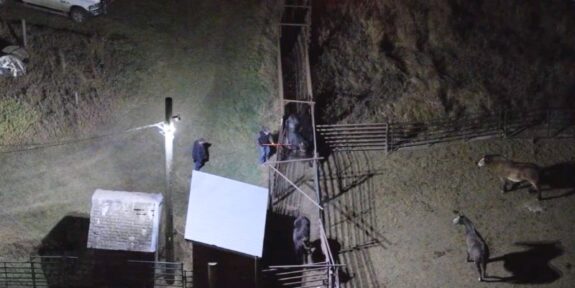
- Footage from Animal Justice shows horses at an Alberta feedlot being hit and jabbed with rods.
- The footage shows horses at Flewelling Ranches Ltd. being beaten while loaded onto transport trucks headed for Edmonton airport.
- The horses were later shipped to Japan to be fattened and slaughtered for meat.
- Live horse exports to Japan cause psychological distress, serious injuries, and even death to horses.
- Under Canadian law, horses can be transported for up to 28 hours before they must be provided with food, water, and rest, causing major physical and psychological distress.
- Animal Justice has filed complaints with authorities and is calling for charges.
Disturbing footage obtained by Animal Justice reveals horses being violently struck at an Alberta-based feedlot supplying horses for Canada’s live horse export industry.
Flewelling Ranches Ltd., located in Lacombe, Alberta, is a prominent slaughter-horse feedlot. Horses are raised at the feedlot before being transported to an Edmonton airport and shipped live to Japan for slaughter.
The footage shows horses fleeing in fear from workers wielding sticks and striking them repeatedly on their hindquarters, bodies, and even their sensitive faces.
In one particularly concerning clip, two horses become wedged in a narrow corridor. A worker then repeatedly and violently stabs one horse with a rod while they are unable to move.
Dozens of horses were forced onto trucks and shipped to Japan for slaughter.
It’s illegal to cause horses harm during transport, and Animal Justice has filed a legal complaint with authorities. This is yet another example of cruelty in Canada’s rotten live horse export industry.
Suffering in Canada’s Live Horse Exports
The horses are forced in groups onto transport trucks headed for Edmonton airport, where they will be crammed into wooden crates and loaded onto aircraft for the gruelling journey to Japan. Many suffer injuries during transit, and some die from stress, exhaustion, dehydration, or their injuries before or shortly after reaching their destination.
Flewelling Ranches Ltd. has previously attempted to hide critical records about alleged transport violations from the public. It appears that this exporter repeatedly exceeded the legal time limit of 28 hours when shipping horses to Japan. During the journey, horses are denied food, water, and rest for the entire duration.
For grazing animals that need to eat frequently, this prolonged period without food causes significant physical suffering. It can also contribute to damage and pain in the sensitive lining of their stomachs.
The relentless journey takes a severe toll on horses, causing extreme fatigue and psychological distress. Cramped conditions and long hours in transit can lead to devastating falls, serious injuries, and even death.
This new footage exposes even more cruelty in Canada’s live horse export industry and the abuse horses endure along the way. It also highlights a troubling lack of accountability for the suffering and harm inflicted on these animals.
It’s Time to Ban Live Horse Exports
Horses are emotional, sentient individuals and deserve to be treated with compassion. The Canadian government promised to ban live horse exports years ago. It’s time to follow through!
Be a voice for horses and call for an end to this cruel industry.
Frequently Asked Questions:
What happened to horses at Flewelling Ranches Ltd. feedlot in Alberta?
Undercover footage obtained by Animal Justice revealed that horses at Flewelling Ranches Ltd. in Lacombe, Alberta, were subjected to violent physical abuse. Workers were documented repeatedly striking and poking horses on their bodies, hindquarters, and faces with stick-like objects before forcing them onto transport trucks. Flewelling Ranches Ltd. has also previously attempted to hide critical records about alleged transport violations from the public.
What happens to horses exported live from Canada to Japan?
Horses exported from Canada are shipped in wooden crates in cargo planes to Japan, without food, water, or rest for the entire journey. Injuries and death from these shipments are extremely common. In Japan, they are fattened before being killed for their meat. These horses are often eaten as a raw delicacy in expensive restaurants.
Is live horse export legal in Canada?
Yes. Under current legal regulations, horses can be transported for up to 28 hours without access to food, water, or rest, causing severe physical and psychological harm.
Why is live horse transport so harmful to horses?
Horses face extreme stress and physical suffering during transport. They are crowded into wooden crates for journeys lasting over 24 hours, which can lead to severe fatigue, stomach pain, psychological distress, serious physical injuries from falling, or death from exhaustion and dehydration.