

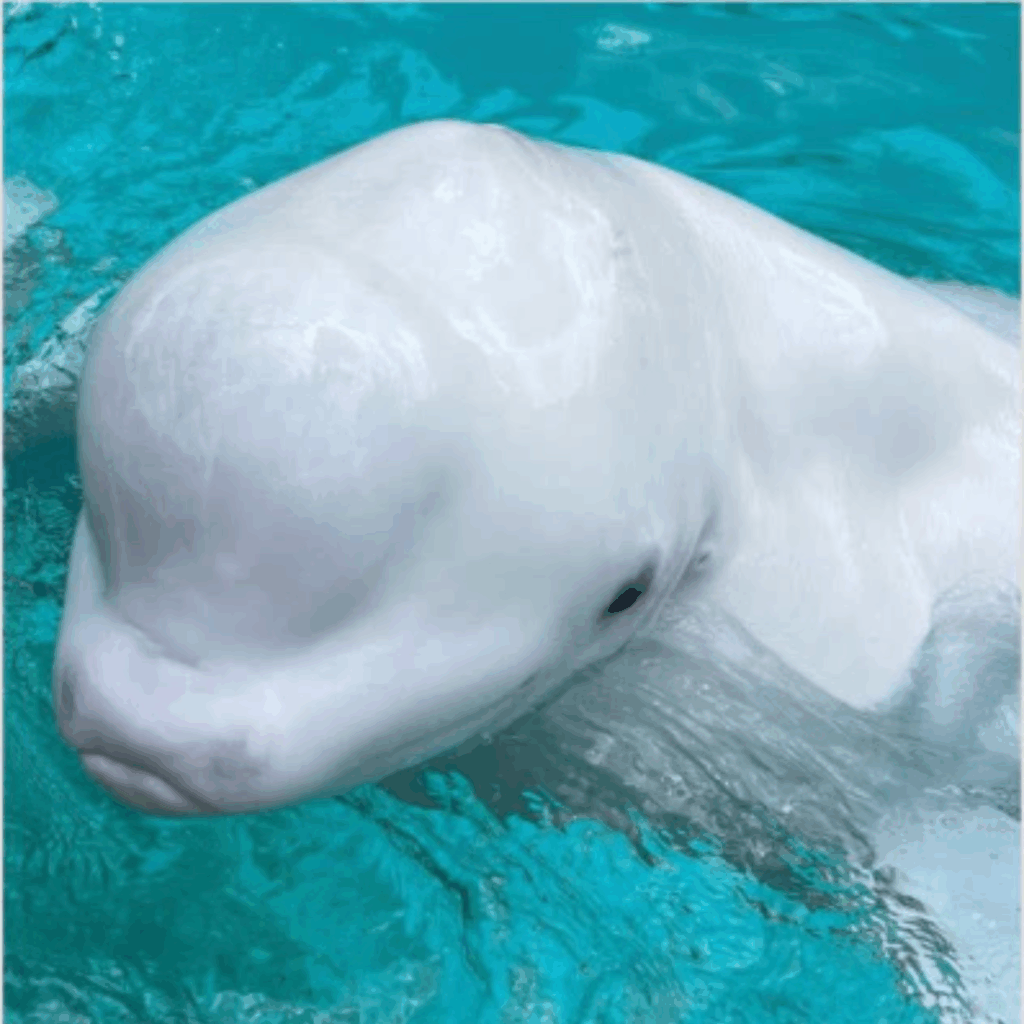
Four of Marineland’s last surviving beluga whales and one dolphin have died after being shipped to Shedd Aquarium in Chicago and Oceanogràfic València in Spain.
A 23-year-old female beluga named Peekachu died at the Shedd Aquarium less than two weeks after being transferred from Marineland.
Shortly afterward, Rain, a 20-year-old female beluga who had been transferred from Marineland, also died at the aquarium. In addition to this, Beethoven, a 34-year-old beluga who had lived at Shedd Aquarium for decades, died the same day.
Necropsy reports from Shedd Aquarium found significant to severe chronic inflammatory disease in Peekachu’s and Rain’s gastrointestinal systems, which was likely present for months or years. Stress can play a significant role in the development of the disease. Peekachu’s stomach contained bird feathers, sticks and large, porous rocks, while Rain’s contained flecks of what might be paint. Captive cetaceans are known to ingest objects such as these out of stress. The objects were ingested at Marineland, raising serious concerns about the lack of care the animals were receiving prior to transport.
On September 18, Jelly Bean, a 19-year-old female beluga, died less than a month after her shipment from Marineland to Oceanogràfic València in Spain. Staff at the aquarium said Jelly Bean was experiencing feeding difficulties and died “suddenly and unexpectedly” just a few days later.
Three days later, Osiris, a 26-year-old female beluga, died at Shedd Aquarium after showing sudden changes in her behaviour and respiratory patterns.
Shortly afterward, Echo, a 30-year-old female dolphin, died at Oceanogràfic de València. She arrived at the aquarium in a compromised state of health, and with serious vision problems that may have been linked to the poor water quality at Marineland, which has been well-documented over the years. Echo was also reportedly subjected to frequent attacks by other dolphins in Marineland’s tanks.
Canada Allowed Whale & Dolphin Export Despite Risks
Canada granted export permits for Marineland to ship all 30 remaining belugas and four dolphins after the now-for-sale theme park threatened to kill them.
Reports suggested that many whales at Marineland may have been suffering from poor health, yet Canada approved all of its belugas for export. Transport is extremely dangerous for whales and can even be deadly for animals who are already sick.
Staff at Shedd Aquarium said that Peekachu, who was blind in one eye, wasn’t eating well, and a blood test revealed that she was dehydrated. She died suddenly.
The aquarium is conducting necropsies to determine the causes of death for Rain and Beethoven, but the results have not yet been released.
Peekachu was captured from the wild as a baby in Russia in 2004. The following year, she was sent to Marineland, where she spent more than 21 years in captivity. At Marineland, she gave birth to two babies—Penny-Wink, who died around the age of seven, and Balor, who was recently shipped to Georgia Aquarium. People who knew her say she was “fierce, yet gentle,” and “as smart as can be.”
Rain was also captured from Russia in 2008 and spent the rest of her life in captivity. Despite her slender build, she was known to be “fierce when needed.” She gave birth to Zephyr in August of 2019, who was also recently relocated to Georgia Aquarium.
Jelly Bean was born in 2007 at Marineland and never knew life outside of a concrete tank. She was regarded as a “fan favourite” due to her extremely personable nature. She gave birth to Bertie Botts in 2019, who was relocated to Seaworld in San Antonio this year.
Osiris was captured from the wild as a baby in Russia in 2003 and was sent to Marineland, where she spent around 23 years in a concrete tank. She was described as kind, patient, and highly social.
Echo was caught as a baby in Russian in 2000. She spent the rest of her life in concrete tanks and was forced to perform for many years.
The government has stated that the health of the whales and dolphins would be assessed prior to transport, but Peekachu, Rain, Jelly Bean, Osiris and Echo’s deaths suggest that their health was likely deeply compromised.
Animal Justice sent a letter after Peekachu’s death asking the Fisheries Minister to open an investigation and allow an independent government review of Peekachu’s veterinary, transport, and necropsy records. Additionally, we urged the government to pause the transfer of Marineland’s remaining six belugas until thorough, independent assessments confirmed they were healthy enough for transport.
Unfortunately, our calls were ignored. All of the remaining belugas were shipped to aquariums in the US, leaving Canada with no captive whales or dolphins.
No Captive Whales or Dolphins Remain in Canada
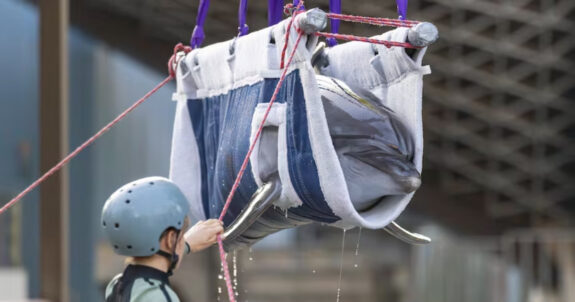
On August 26, Marineland shipped four dolphins and two belugas to Spain, which means no captive dolphins remain in Canada. Workers loaded the whales and dolphins into transport tanks on trucks before beginning their international journey to Oceanogràfic in València, Spain.
In 2019, Canada passed landmark legislation banning the breeding of whales and dolphins in captivity. The legislation was intended to help bring an end to the cycle of captive breeding and ensure that these highly intelligent, social animals would not continue to be born into a lifetime of confinement.
Despite this, the Canadian government reportedly allowed Marineland to export all of its whales and dolphins without restrictions on breeding—even though the last time export permits were issued to send whales to Oceanogràfic València in 2019 and Mystic Aquarium in 2021, there was a no-breeding agreement.
Without clear no-breeding conditions for these exports, there is a very real concern that the cycle Canada sought to end could continue elsewhere.
On August 31, the final shipment of Canada’s captive whales left Marineland. Canada’s cruel era of whale and dolphin captivity has officially come to an end.
Two of the belugas were sent to Shedd Aquarium in Chicago, where Peekachu, Rain and Osiris died. The remaining four were sent to SeaWorld in San Antonio.
A Sanctuary Was Offered
A sanctuary in Nova Scotia, currently being built by the Whale Sanctuary Project, could have offered a seaside home for approximately ten of Marineland’s beluga whales. This was a chance for these animals to experience something closer to their natural environment—a life in a netted-off ocean cove in a space more than 100 times bigger than a tank at Marineland.
After receiving necessary provincial permits last fall, the Sanctuary has begun construction and is fundraising to make the site operational as soon as possible. But neither Marineland nor any level of government has stepped up to provide loans or financial support for the Sanctuary to ensure it can open soon enough to help Marineland whales retire there.
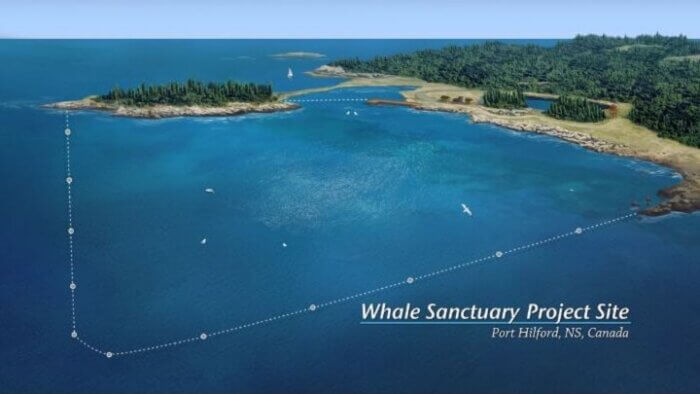
Instead, the Canadian government issued permits allowing the animals to be moved to aquariums in the US and Spain after Marineland threatened to kill all of its whales. Reports suggest that Marineland needed to remove all remaining animals in order to finalize a multi-million dollar real estate deal to sell its property. Rather than moving these animals toward a future outside of captivity, the transfers will simply move them from one tank to another. Sadly, given that Marineland has decided to move the animals offsite before the sanctuary is operational, the move was likely the least worst option for any animals healthy enough to be transported, given that they cannot be released into the wild.
Given the dangers of transporting sick whales and dolphins, export permits should not have been granted for animals in compromised health and they should have been given the care needed to improve their health prior to being transported anywhere. Animal Justice has long called on Ontario’s animal welfare services to use its legal authority to provide urgently needed care to any whales and dolphins in distress and send Marineland the bill for that care.
Take Action for Marineland Whales & Dolphins
We must ensure whales and dolphins being exported from Marineland do not become the foundation for another generation born into a life of misery in a tiny tank.
Send a message to the receiving aquariums demanding a commitment to never breed Marineland’s belugas and dolphins!
Banner: Carlos Osorio | The Canadian Press