
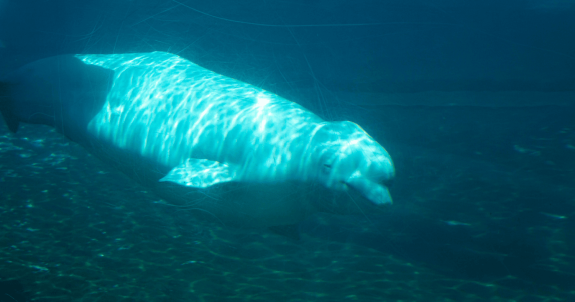

Federal Fisheries Minister Joanne Thompson announced that she had granted “conditional approval” for Marineland to send 30 belugas and four dolphins to several US aquariums—SeaWorld, Georgia Aquarium, Shedd Aquarium, and Mystic Aquarium. Marineland had once again threatened to execute the animals unless the federal government fast-tracked its application for permits.
Marineland’s repeated death threats are troubling and unacceptable. Marineland spent decades raking in millions of dollars by harming intelligent, social animals for entertainment. It is appalling that the roadside zoo has not set aside a fraction of its profits to fund a safe retirement for the animals. Instead, it first tried to sell the belugas to a subpar aquarium China—a country with no animal welfare laws—and then threatened the lives of the animals once again to extract speedy approval for US export permits. Meanwhile, Marineland has refused all requests to find home for the whales at a seaside sanctuary.
In 2019, Canada became a global leader by banning whale and dolphin captivity, including breeding these animals and forcing them to perform for entertainment. Legally, the government can only approve an international transfer if it’s in the best interests of each individual animal. If the government has decided that the transfer meets this legal test, then it will be essential to include a no-breeding condition on the permits, so that the whales and dolphins can’t be used to breed another generation of captives who will suffer in miserable tanks. Animal Justice also expects that the government will require an individual health assessment to ensure that each animal is healthy enough to be transported. Sadly, at least 20 whales have died at Marineland since 2019.
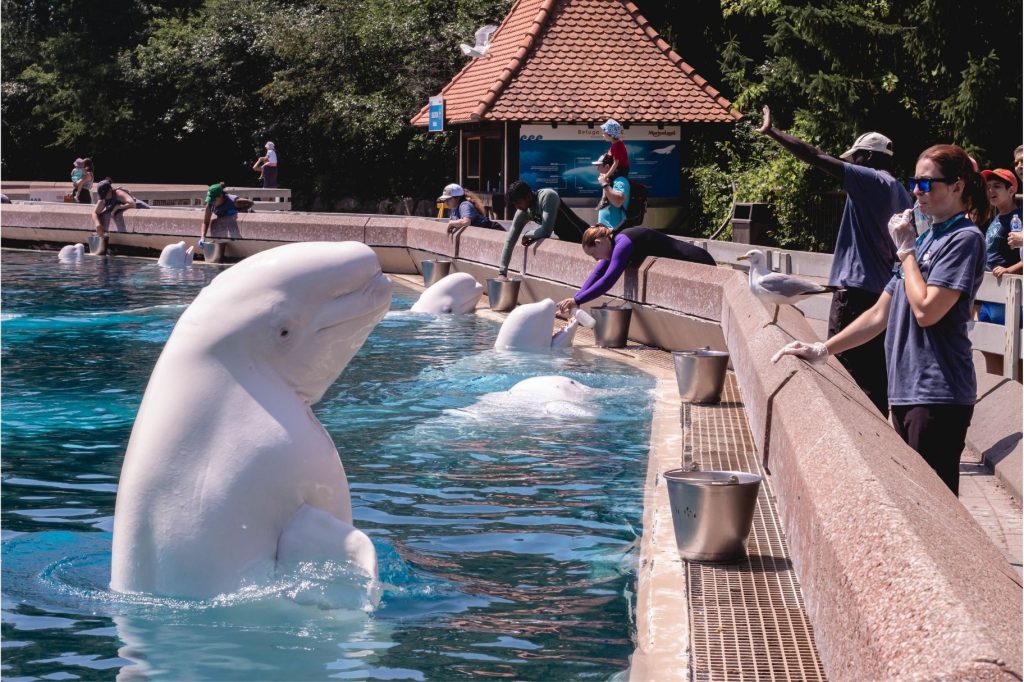
Canada Has a Legal Duty to Protect Marineland Belugas
In 2023, Fisheries Minister Joanne Thompson rejected Marineland’s plan to sell the beluga whales to China because it wasn’t in the best interests of the whales. The proposal failed to demonstrate that the animals would be protected from captive breeding and entertainment use.
Those same risks remain today. The United States has no national ban on cetacean breeding, so Canada must ensure the animals won’t be bred if they’re exported.
A Humane Solution Already Exists
Marineland continues to ignore a solution much closer to home that would guarantee the whales’ best interests are put first.
The Whale Sanctuary Project in Port Hilford, Nova Scotia, recently received provincial approval for its site. This 100-acre seaside refuge will offer a natural home 100 times larger than the concrete tanks at the notorious marine park.
France has already set a powerful example. The French government is working to move its last two captive orcas to the Nova Scotia sanctuary. It is heartbreaking for the whales that Marineland refused to work collaboratively to find the whales a home at a sanctuary, and disappointing that governments did not do more to make the sanctuary a reality.
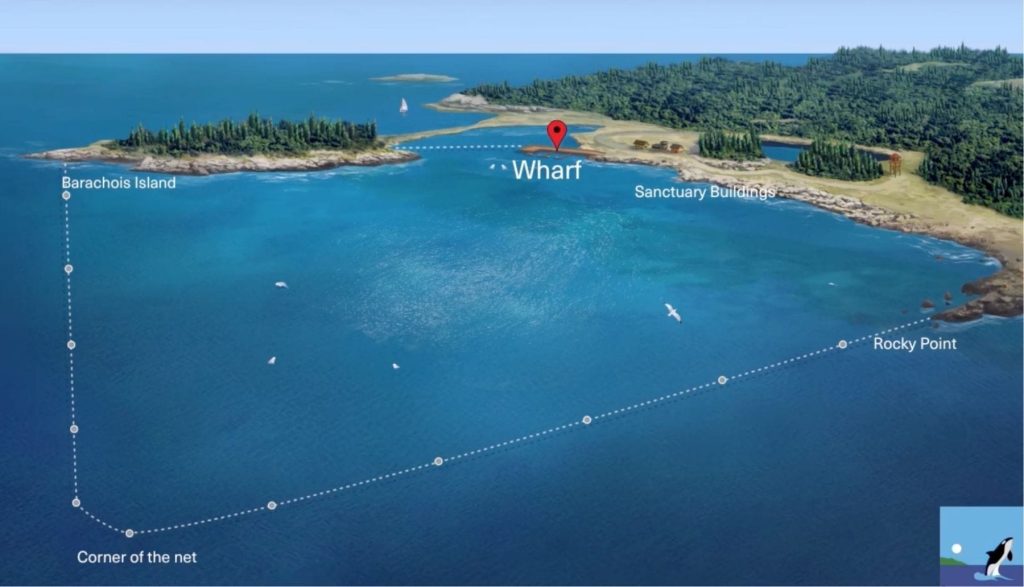
Credit: Whale Sanctuary Project.
Ontario Has the Power to Seize the Animals
The Ontario government also has the power to intervene. Under provincial laws, officials can seize animals in distress. They can provide necessary care and bill the costs back to the park. With Marineland sitting on property worth hundreds of millions of dollars, there is no excuse for the province to allow this crisis to continue.
The Time to Act is Now
Since 2019, 20 whales and dolphins have died at Marineland.
Urge Minister Joanne Thompson to require an individual health assessment for each animal, and ensure that any move is truly in the best interests of these animals, and ensure they will not be bred in the US. This generation of whales must be the last to suffer in miserable tanks.