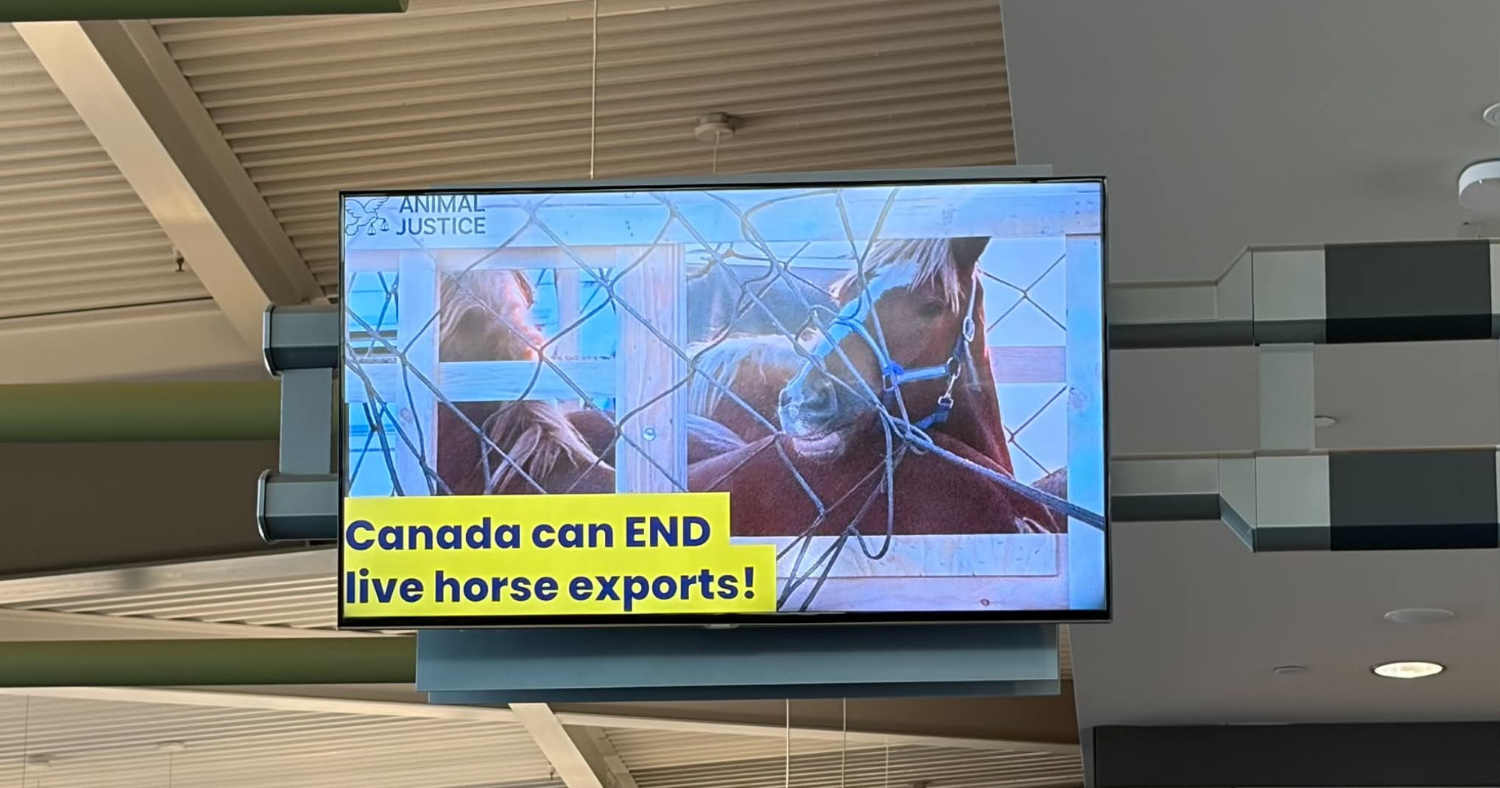


Animal Justice has secured an important victory for horses and transparency in Canada’s cruel live horse export industry.
Last week, Flewelling Ranches Ltd, a prominent Alberta horse exporter, withdrew its court case after attempting to keep critical records about apparent transport violations hidden from the public. It appears that this exporter has repeatedly exceeded the legal time limit for travel while sending horses overseas, and Animal Justice was requesting records to gain more information.
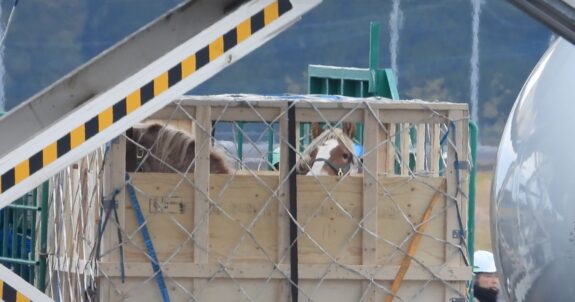
Every year, Canada ships thousands of horses to Japan, where they are slaughtered and eaten. These horses endure long, gruelling journeys in cramped wooden crates without adequate access to food, water, or rest. Injuries and deaths during transport are tragically common.
For years, this industry has operated with too little scrutiny and accountability, even when laws are broken. Transparency is essential to hold exporters accountable and ensure animal protection laws are actually being enforced.
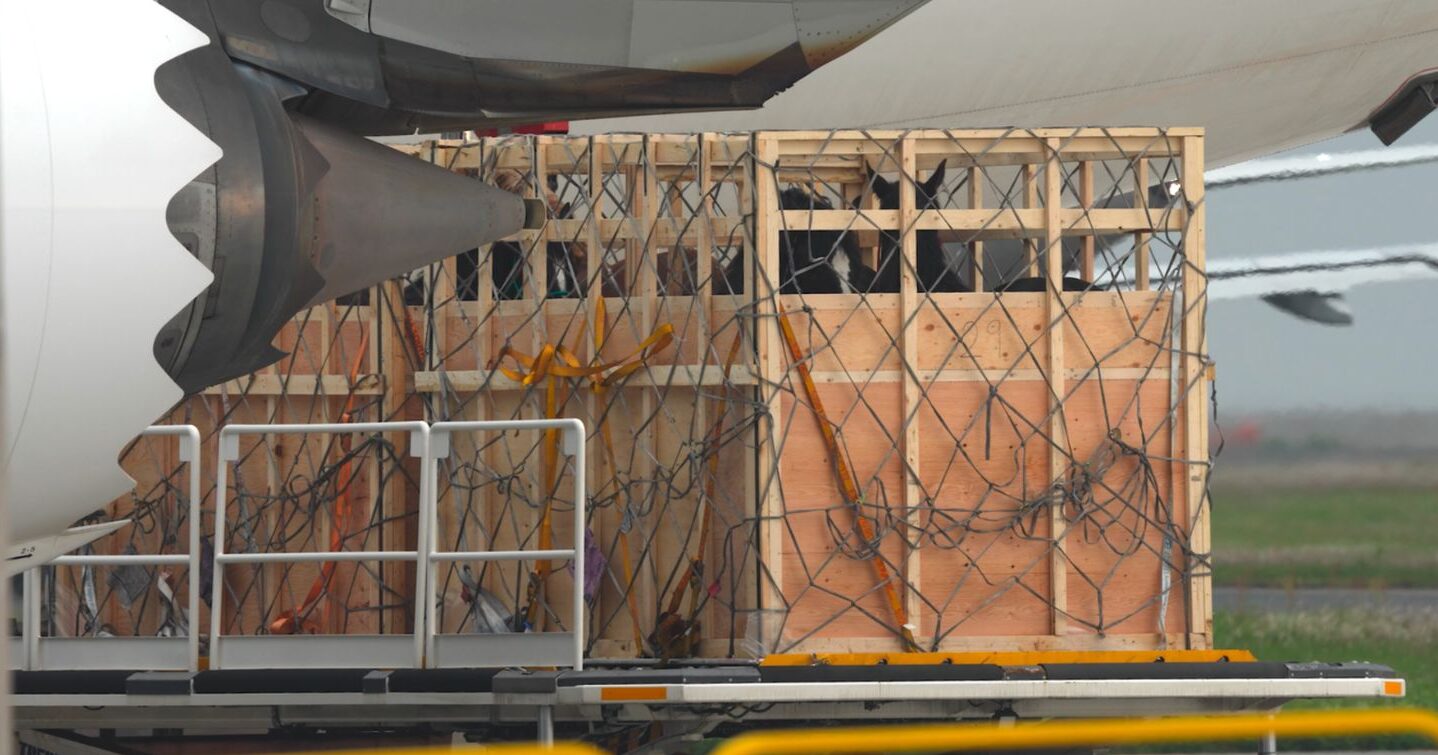
Photo: Life Investigation Agency
A Fight for Critical Records
Last year, Animal Justice filed an access to information request with the Canadian Food Inspection Agency (CFIA), requesting records about the exporter.
The CFIA decided to release the records, but the exporter fought back and even filed a court case in an attempt to keep these records hidden. Our legal team refused to back down, and the exporter ultimately withdrew its case.
The Public Deserves Transparency
Access to government records plays a critical role in ensuring groups like Animal Justice can fight to protect animals.
Without transparency, serious animal welfare concerns remain hidden. Companies can avoid penalties for harming animals and other misconduct, and enforcement failures can go unnoticed.
Earlier this year, Animal Justice released a damning report analyzing data from the Japanese government, obtained with the help of the Life Investigation Agency, our partners in Japan. The findings revealed shocking suffering among horses exported from Canada.
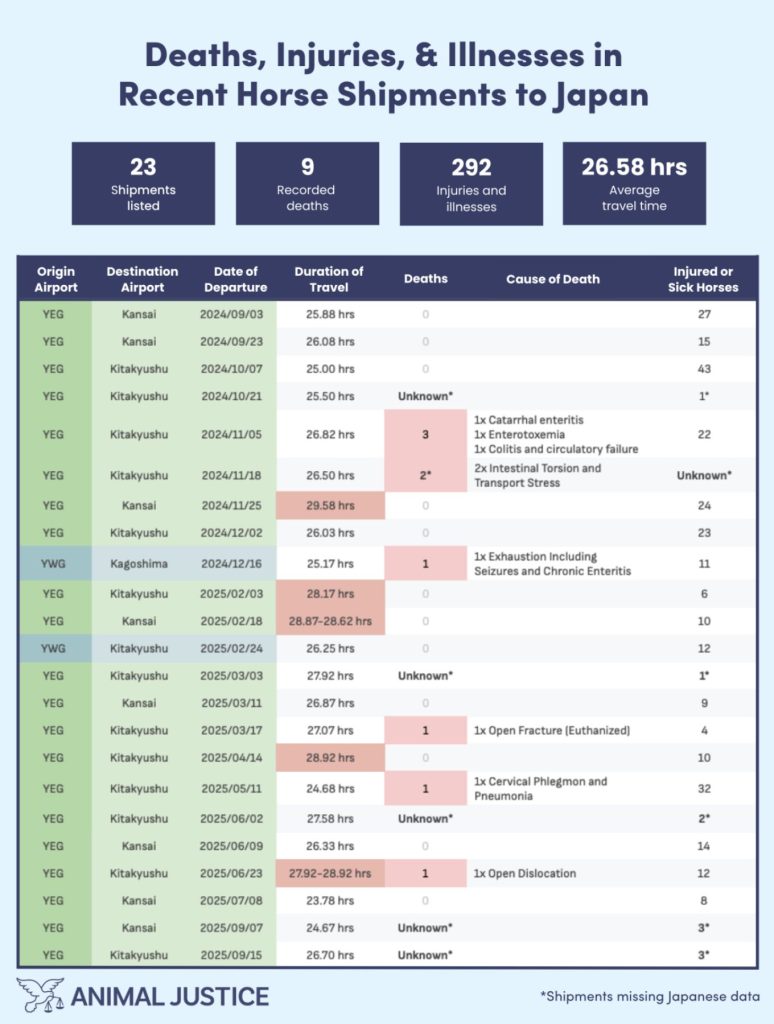
From September 2024 to September 2025:
- At least nine horses died as a result of transport
- At least 29 horses collapsed
- More than 290 other horses suffered serious injuries or illnesses, including dangerous fevers, bleeding wounds, and even missing parts of hooves and ears
- Two horses were euthanized shortly after landing due to severe leg injuries
- One horse was unable to stand, and was likely removed from the plane in a forklift
- Another horse was forced to stand despite significant bleeding
In all of these cases, Canadian exporters reported no injuries during the flights.
And while Canada’s animal transport laws forbid exporters from subjecting horses to more than 28 hours without food, water, or rest—at least five shipments did so during this time period.
Unfortunately, government records were unavailable or illegible for many of the shipments, so these disturbing figures are likely just the tip of the iceberg.
It’s Time to Ban Canada’s Live Horse Export Industry
The federal government promised to ban live horse exports for slaughter in 2021, but has yet to follow through on that promise. In the meantime, more than 11,000 horses have been shipped to their deaths.
This legal victory is an important step forward, but the fight is not over. Canada must end the export of horses for slaughter and protect these animals from heartbreaking suffering.