

When Canada passed legislation to ban testing cosmetics on animals in late 2023, animal lovers across the country celebrated a hard-won victory. However, a deadly loophole remained: Botox. For years, Botox and other injectable anti-wrinkle neurotoxins were still allowed to be tested on animals, because they were technically classified as a drug rather than a cosmetic. As a result, thousands of animals used in Botox animal testing lost their lives in agonizing “batch testing”—even when the product was used for purely aesthetic reasons.
Closing the Botox Animal Testing Loophole
While Botox is a household name for reducing wrinkles, scientists originally developed it for medical conditions like eye muscle disorders and migraines. Because doctors and medspas often use it “off-label” for cosmetic purposes, Botox animal testing continued, sneakily bypassing the 2023 cosmetic testing ban.
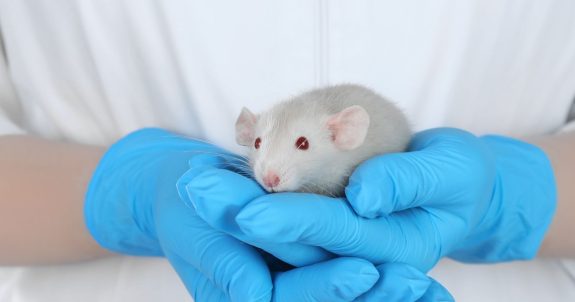
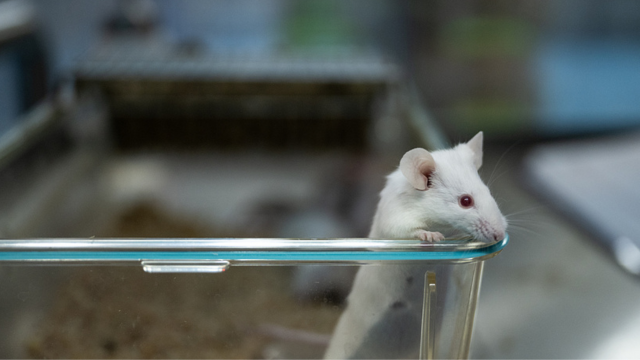
Botox is made from the botulinum toxin, a potent neurotoxin produced by bacteria that paralyzes muscles, preventing them from contracting. For decades, every single batch of Botox was tested on animals, primarily to measure the potency and safety of every new batch. Tragically, mice were subjected to the brutal “LD50” (Lethal Dose 50%) test.
In these horrific experiments, laboratory workers inject animals with the toxin to see how much it takes to kill half of them. The animals suffer through progressive muscle paralysis and slow suffocation while fully conscious, over the course of several days—one of the most harmful and painful forms of animal testing known to science.
This extreme cruelty occurred despite the fact that Health Canada approved animal-free, cell-based alternatives for Botox batch testing years ago.
AbbVie Ends Botox Animal Testing
Today, after months of engagement with the company and after repeatedly pushing for transparency, Animal Justice is thrilled to celebrate a massive win for animals. AbbVie—the global pharmaceutical giant behind Botox—has finally confirmed to Animal Justice that it no longer uses animal-based routine batch testing for Botox.
While competitors like Ipsen (Dysport) and Merz (Xeomin) had already confirmed to Animal Justice their move to animal-free routine batch testing, AbbVie’s confirmation of this shift is a critical step in ensuring the neurotoxin market in Canada will finally stop contributing to extreme animal suffering.
Why Canada Needs Stronger Animal Testing Laws
This victory is significant, but the broader landscape of animal testing laws in Canada remains a growing crisis. In 2024 alone, over 3.7 million animals were used in Canadian laboratories. This represents an alarming 18.5 percent increase from the previous year. Shockingly, the federal government does not adequately regulate or oversee the use of animals in research.
Current animal testing laws do not protect animals from the highest levels of pain. For example, recent data reveals that more animals are being used in procedures classified as causing severe distress. Furthermore, Canada’s only national science centre devoted to replacing animal testing recently closed due to a lack of federal funding. This is unacceptable. We must move toward modern, non-animal research methods like cell cultures, organs-on-a-chip, and advanced AI models. These methods are more ethical and accurate for human biology.
Take Action: Tell Canada to Fund Cruelty-Free Science
The end of Botox animal testing proves that industry accountability works, and that an animal-free future is possible for science and pharmaceuticals. But the fight is not over. We need you to demand the federal government prioritize and fund cruelty-free science.
Join us in demanding sustainable funding for animal-free research and a national roadmap to end animal testing.