


Update: The consultation period is now closed.
Key Takeaways:
- The NFACC Code of Practice for the Care and Handling of Sheep allows for cruel practices within sheep farming in Canada.
- Wool production is not a harmless by-product of the industry. Sheep bred to produce heavy fleeces require shearing, and fast-paced shearing practices often result in deep wounds and extreme stress.
- Lambs can be killed using manual blunt-force trauma, usually by smashing them against a hard surface or using a hammer to kill them.
- Sheep are forced into cramped housing, are roughly handled, endure long transport times without food or water, and face deplorable conditions at auctions.
- Lambs are subjected to mutilations, including tail docking and castration, without pain relief.
- Animal Justice is calling for stronger protections for sheep, including mandatory pain relief for painful procedures, improved housing and auction standards, competency training for farm personnel, environmental enrichment, and a ban on manual blunt-force trauma.
Sheep farming in Canada is rife with cruelty. Canadian farms operate with no federal laws to protect animal welfare—a fact that shocks many Canadians. Instead of being governed by strong animal protection laws, the industry largely regulates itself through the National Farm Animal Care Council (NFACC)—an industry-dominated body that develops voluntary codes of practice for the treatment of farmed animals.
This leaves Canada’s farmed animals vulnerable to serious harm, cruel practices, and a lack of meaningful legal protection.
The Code of Practice for the Care and Handling of Sheep is currently being updated. The Code serves as the primary guideline for farmers raising hundreds of thousands of sheep annually for food in Canada.
Members of the public are invited to take part in the consultation process, with a deadline of October 8, 2026. But calls to improve conditions for animals are usually ignored. NFACC is notorious for prioritizing industry interests over the well-being of animals.
Without serious reform to Canadian legislation and NFACC codes, Canada will continue to severely lag behind peer countries by failing to adopt modern farming standards, and animals will continue to suffer.
NFACC Codes Allow Cruel Practices
The NFACC Sheep Code permit practices that cause extreme pain and suffering. Sheep farmers engage in disturbing practices like killing lambs through blunt-force trauma—typically by striking them with a hammer or slamming them against a hard surface—as well as tail docking, castration, ear notching, and other mutilations without appropriate pain medication.
Killing sheep with blunt-force trauma is so cruel that it has been banned in many other countries. It’s even been prohibited in other NFACC codes, such as the goat code. If NFACC recognizes this practice as inhumane for other animals, why is it still acceptable for sheep?
The majority of NFACC’s governing members financially benefit from the factory farming industry with only two member seats held by animal welfare organizations. Our resource NFACTs details how the industry writes its own rules and prevents any real protections for farmed animals across Canada.
Cruelty in Canada’s Wool & Sheep Industry
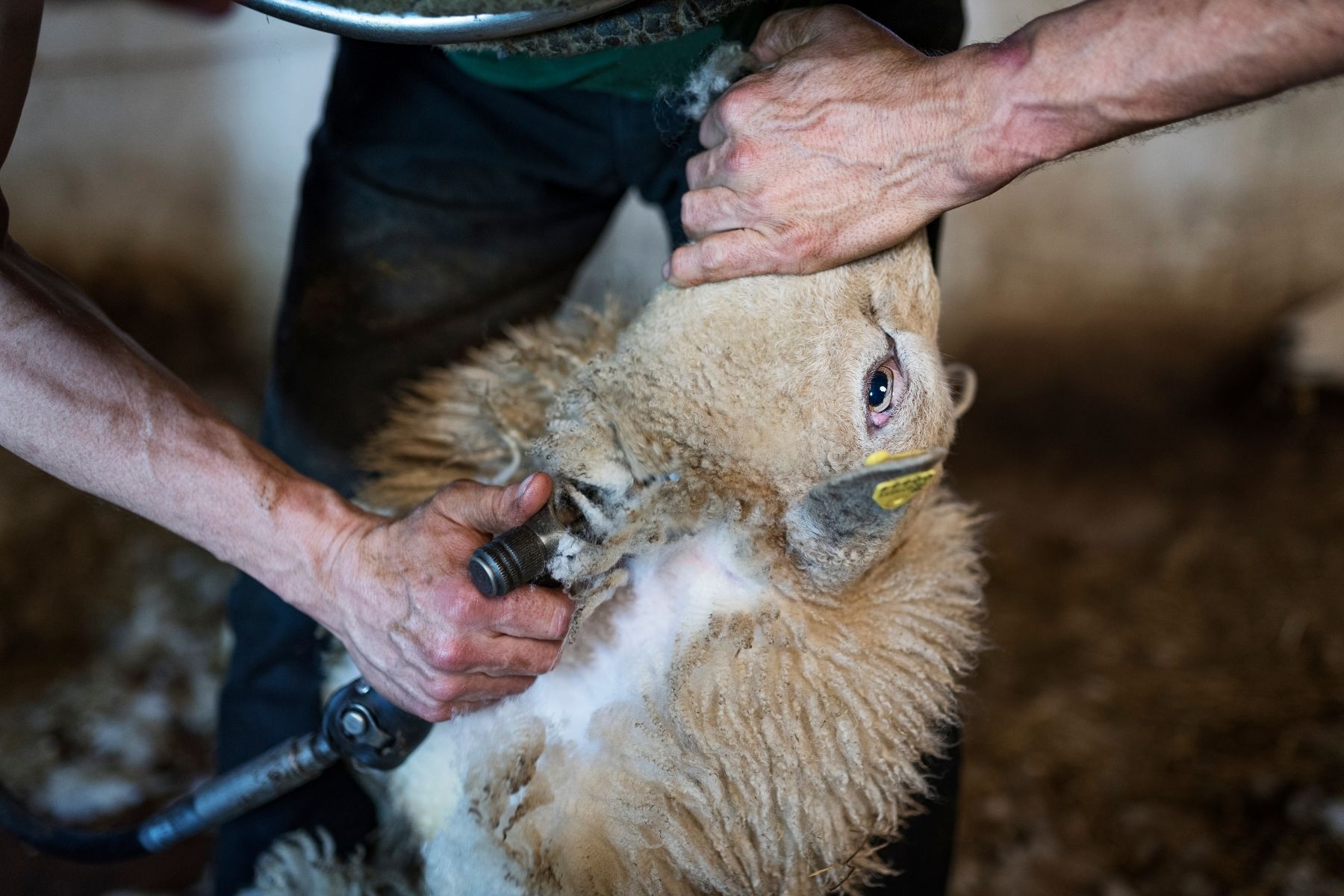
Modern sheep farming in Canada subjects hundreds of thousands of sheep and lambs to harsh conditions and cruel practices. Even wool production, often thought to be harmless, causes significant suffering. Sheep have been selectively bred to produce unnaturally heavy fleeces, which can leave them vulnerable to overheating and skin conditions. As a result, shearing becomes a necessity. However, because shearers are paid by the volume of wool they remove, the process is fast-paced and violent. Rapid handling often results in deep, bloody gashes and causes severe stress for the animals.
On top of this, lambs routinely undergo painful mutilations like tail docking and castration via tight rubber bands and cutting, often without pain relief. Sheep farmers also still notch sheep ears without pain relief. Troublingly, this is all allowed under the current draft Sheep Code.
Many sheep spend much of their lives indoors on slatted floors without dry bedding, forced to breathe toxic ammonia fumes from their own waste. They face extreme feed and water deprivation prior to shearing and during long-distance transport, causing serious distress and metabolic disruption.
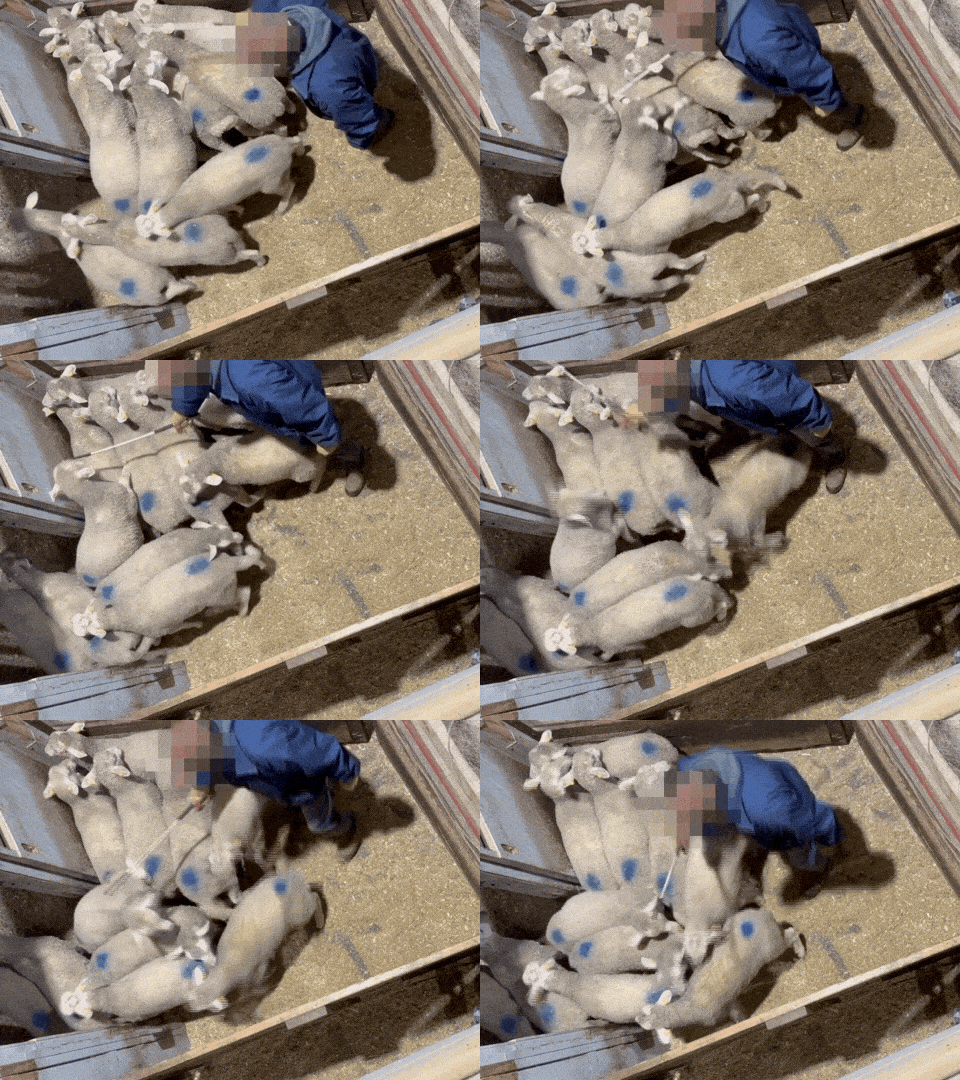
At an auction in Quebec, Animal Justice documented sheep being hit with rods on their faces and backs.
It’s Time to Update NFACC’s Sheep Code
Animal Justice is calling for necessary changes to NFACC’s sheep Code to ensure basic welfare needs aren’t disregarded. This includes:
- Mandatory overhead shade/shelter, dry bedding, and strict temperature thresholds to decrease the risk of injury and psychological harm when sheep are housed in cramped pens.
- At least two distinct forms of enrichment (such as long-stemmed straw or forage items) for all indoor production systems to enable natural foraging, lying, and thermoregulation behaviours.
- Mandatory pain relief for castration and tail docking.
- A ban on manual blunt-force trauma to kill lambs.
- Annual competency training for all farm personnel to reduce animal stress during handling and lower risk of injury.
Take Action to Protect Canada’s Sheep
Sheep are sentient, emotional beings who experience fear and pain. They deserve to be treated with dignity and to be protected by strong laws, not weak, voluntary standards designed by the industry itself.
Frequently Asked Questions
Does Canada have federal laws protecting farmed animals?
No. Instead, farmed animal care is guided by completely voluntary standards set by the National Farm Animal Care Council (NFACC). NFACC is composed mostly of groups and individuals profiting from Canada’s animal agriculture industry.
What is the NFACC Code of Practice for the Care and Handling of Sheep?
The NFACC Sheep Code is a voluntary code of practice that provides recommended standards for the care and handling of sheep and lambs in Canada. The code allows for practices that are heavily regulated or banned in other countries, including killing lambs using manual blunt-force trauma.
How are farmed sheep treated in Canada?
Sheep and lambs experience cruelty and troubling conditions. They are subjected to tail docking, ear-notching, and castration without pain relief. They are often housed in cramped conditions on slatted floors without dry bedding surrounded by toxic ammonia fumes. Sheep also endure rough handling during shearing, long transportation without food or water, abusive auction conditions, and a complete lack of environmental enrichment.
Are painful procedures performed on sheep without pain relief?
Under current NFACC standards, pain relief is not required for extremely painful procedures such as castration, tail docking, and ear notching. Animal Justice is calling for mandatory pain relief for these procedures.
Is wool production harmless?
No. Even though many assume wool production is harmless, it causes intense suffering for sheep. Sheep are bred to produce unnaturally dense fleeces which have to be sheared to avoid overheating and skin conditions. Shearers are paid by the volume of wool and therefore work at a fast pace, roughly handling sheep and regularly resulting in deep bloody gashes and emotional distress.