

Key Takeaways:
- Ontario is proposing to ban the slaughter of horses, donkeys, and mules at provincially licensed slaughterhouses, as well as the processing, packaging, and distribution of their meat.
- Banning provincial slaughterhouses alone leaves a dangerous loophole that allows equines to be sold or trucked through Ontario to slaughter facilities in Quebec, Western feedlots, or overseas export flights to Japan.
- Horses sent to slaughter endure gruelling journeys crammed into crowded wooden crates without food, water, or rest, leading to severe injuries, dehydration, and high stress.
- US states like California, New Jersey, and New York have already outlawed the sale, possession, export, and transport of horses intended for slaughter to stop their highways from being used as a slaughter pipeline.
- Animal Justice is urging the public to submit comments thanking Ontario for this step forward while demanding the province close a loophole by prohibiting the sale and transport of equines for slaughter by October 23, 2026.
Ontario is taking an important step toward protecting horses by proposing a ban on horse slaughter at provincially licensed meat plants. The proposed changes would apply to all equines, including horses, donkeys, and mules. Animal Justice welcomes this proposal, which the province notes was prompted by public concern over horse welfare.
But there is a major loophole: horses can still be sold and transported within and through Ontario on their way to slaughter elsewhere.
Animal Justice is urging the public to ask Ontario to ban the sale and transport of horses for slaughter as well. The comment period closes October 23, 2026.
The Proposed Horse Slaughter Ban
Ontario is proposing to amend regulations under the Food Safety and Quality Act to ban the killing of horses and other equines at Ontario-licensed slaughterhouses, as well as processing, packaging, or distributing meat from these animals at provincially licensed meat plants—including meat received from federally licensed slaughterhouses. This is an important step toward bringing Ontario’s laws in line with public values and protecting gentle horses from being violently slaughtered in the province.
Ontario Is Still Tied to the Trade
Canada’s remaining federally licensed horse slaughterhouse is located in Quebec, but Ontario is still deeply connected to the horse slaughter industry.
Horses from Western Canada, as well as the US, where horse slaughter is no longer permitted, can be trucked through Ontario en route to Quebec for slaughter. But Ontario isn’t just a transit route. Horses raised in Ontario are sent to Quebec for slaughter, and even sold to companies that export horses for slaughter overseas.
The two main draft horse breeders supplying Canada’s horse export-for-slaughter industry are located in Ontario. Horses from these breeding facilities are sent to feedlots in Manitoba and Alberta in order to be shipped overseas for slaughter—a notoriously cruel practice that puts horses at serious risk of collapsing on flights and even dying during transport or shortly after landing in Japan. Those who survive frequently suffer serious injuries and illness in the days after landing due to the conditions in which they are transported.
Banning horse slaughter at Ontario-licensed meat plants would not stop horses from being sold and transported in Ontario for slaughter somewhere else.
By taking the next step and prohibiting the sale and transport of horses for slaughter, or fattening for slaughter, Ontario could go even further and protect horses from being subjected to long and gruelling journeys for slaughter.
Long Journeys Put Horses at Risk of Injury & Suffering
Horses sent to slaughter can face gruelling, multi-day journeys before they ever reach the slaughterhouse. They are transported in conditions that are starkly different from horses transported for sporting events or for other purposes. Confined on a moving truck for hours at a time, they may struggle to keep their footing as the vehicle accelerates, brakes, and turns. They can become distressed, exhausted, dehydrated, or injured along the way.
Horses can fall or collide with the truck or other animals, while horses travelling together can bite, kick, or injure one another when they are stressed or frightened and unable to move away. By the time they arrive, some horses are suffering from bruising, wounds, dehydration, and fatigue. Even short journeys can be extremely stressful and dangerous for horses. Horses shipped overseas for slaughter are transported in bulk loads that can exceed 100 horses, with 3-4 crammed together in disposable wooden crates.
One Canadian study of nearly 4,000 horses transported to slaughter found that 95 percent of those horses came from just five US states, with median journey times ranging from 15 to 36 hours. The longer the journey, the greater the likelihood of horses suffering injuries along the way. Investigations by Animal Justice and Japan-based Life Investigation Agency have repeatedly shown that shipments of horses exported for slaughter overseas frequently exceed the legal limit of 28 hours for transporting horses without food, water, and rest.
Horses shouldn’t have to endure gruelling, multi-day journeys to slaughter. Ontario could go further and protect these gentle, sensitive animals from the suffering they experience caused by transporting them to slaughter.
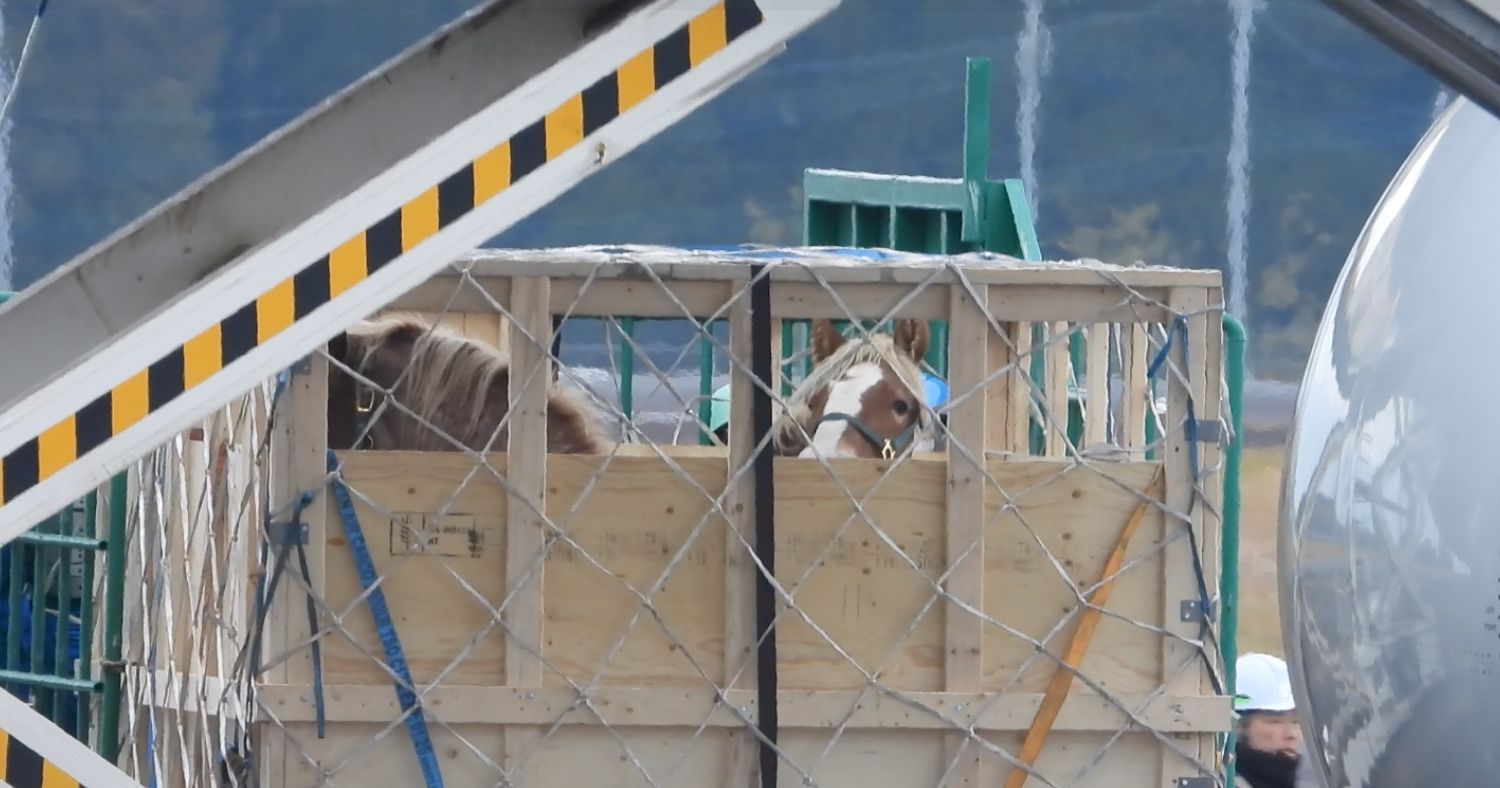
Photo: Life Investigation Agency
Other Jurisdictions Prohibit Transport for Slaughter
Ontario wouldn’t be the first jurisdiction to recognize that banning slaughter alone isn’t enough.
California makes it a felony to possess, import, export, or sell horses, ponies, burros, or mules with the intent that they will be killed, where a person knows or should know the animals will be used for human consumption. Similarly, New Jersey prohibits knowingly transporting horses for slaughter for human consumption; when signing the law in 2012, then-Governor Chris Christie stated that it “ensures that our highways will not be used to transport horses to slaughter” to states without a similar ban.
New York State prohibits not only horse slaughter, but also the transportation, sale, purchase, or possession of horses intended for slaughter. When the law was signed in December 2023, its sponsors were clear about why: New York had become “part of the slaughter pipeline” to Quebec, with horses inhumanely transported and crammed in trailers for periods that can exceed 24 hours. The New York law made headlines when New York State Police intercepted a shipment of 25 horses bound for Canada and arrested the driver.
Additionally, Great Britain makes it an offence to transport, or organize the transport of, horses and other animals considered livestock from or through Great Britain to destinations outside the British Islands, where the person knows, or could reasonably be expected to know, that the animals are intended for slaughter. In introducing the legislation, the UK government stated that its aim was to end the unnecessary stress, exhaustion, and injury caused by the trade.
Ontario Should Stop Horses From Being Transported to Slaughter, Too
Animal Justice strongly supports Ontario’s proposed slaughter and processing ban. But protections shouldn’t stop at the slaughterhouse door.
We are urging the province to take the next step and prohibit the sale and transportation of horses, donkeys, and mules for slaughter. These vulnerable animals deserve better than exhausting journeys that end at a slaughterhouse.
Frequently Asked Questions:
What is Ontario proposing regarding horse slaughter?
Ontario is proposing to amend regulations to ban the slaughter of horses, donkeys, and mules at provincially licensed meat plants. The proposed ban would also prohibit facilities from processing, packaging, or distributing horse meat received from other locations. However, horses can still be transported within and through Ontario to slaughter in other provinces and sold to companies that export horses for slaughter overseas.
Does this proposed ban mean horse slaughter will be completely stopped in Ontario?
Almost. While the proposed changes prevent horses from being killed or processed in Ontario-licensed plants, they do not ban the slaughter of horses for personal consumption.
Where are horses transported to if they aren’t slaughtered in Ontario?
Horses are primarily transported to Canada’s remaining horse slaughterhouse in Quebec or exported live to Japan for slaughter. Because of Ontario’s central geographic location, horses from Western Canada and the US (where horse slaughter is prohibited) are routinely trucked through Ontario en route to Quebec. Ontario is also home to prominent draft horse breeding facilities that supply live export shipments.
Why is transporting horses for slaughter an animal welfare issue?
Horses transported for slaughter endure severe distress. They are often confined in overcrowded trailers for 15–36 hours without adequate food, water, or rest. Sudden stops can cause panic, falls, fighting, trampling, dehydration, and serious injuries. During air transport to Japan, horses are shipped in bulk loads of up to 100 or more horses with 3-4 crammed together in wooden crates. Shipments regularly exceed the 28-hour legal limit for transport without food, water, and rest and horses suffer from extreme anxiety and frequently collapse and suffer injuries. Some even die during transport or shortly after from causes like “shipping fever,” extreme stress and dehydration, and even painful miscarriages.
Have other jurisdictions banned the transport and sale of horses for slaughter?
Yes. The US does not slaughter horses, though horses continue to be sent to Canada and Mexico for slaughter. Several US states have recognized that prohibiting local slaughter isn’t enough without addressing transport. California prohibits the import, export, or sale of equines with the intent that they will be killed and New Jersey prohibits knowingly transporting horses for slaughter for human consumption. New York State also prohibits transporting horses for slaughter. In September 2026, charges were laid under that law when a truck was found transporting horses through the state destined for slaughter in Quebec.
How can the public help ensure Ontario bans horse slaughter?
The Ontario government is accepting public feedback on its regulatory proposal until October 23, 2026. You can submit a public comment supporting this important proposal and urging the Ministry to extend the proposal by prohibiting the sale and transport of horses, donkeys, and mules for slaughter.