

At Animal Justice, we believe every animal deserves to live free from suffering. Our goal is to secure legal protections for animals to ensure they aren’t harmed. However, we also recognize the urgent need to make farmed animals part of the national conversation. We must alleviate the immense suffering caused by cage confinement right now on factory farms across Canada.
Cage confinement is the most widely criticized practice on modern farms. As a result, “cage-free” egg sourcing commitments are the most widely adopted welfare policy for corporations around the globe. This focus aims to do the most good for the largest number of animals.
Globally, billions of hens currently spend their entire lives trapped in wire cages. They are unable to spread their wings or feel the ground beneath their feet. We can shift the intensity of this suffering with a single corporate policy or piece of legislation. While banning cages doesn’t stop animal cruelty, it is a step in the right direction.
Banning cages on farms helps:
- Reduce immediate suffering
- Make positive change over time
- Elevate animal welfare as a political and corporate responsibility issue
- Expose cruelty and increase public awareness
- Support our work to secure stronger laws protecting animals
Campaigns to ban cage confinement are not about endorsing “better” forms of cruelty. Instead, they expose the brutal reality of industrial animal agriculture. They can drive incremental, yet significant, changes that reduce the pain and misery of millions of animals.
Reducing Immediate Suffering Through Banning Cage Confinement
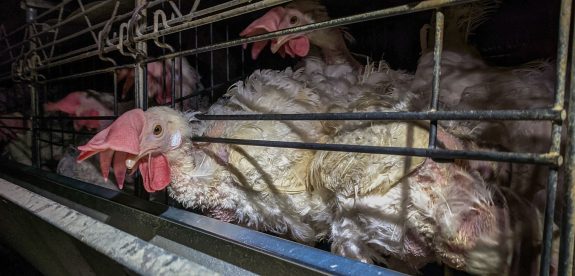
Hens in wire cages suffer severe pain, illness, and constant distress. Cage systems, whether conventional or “enriched”, severely limit the behavioural freedom of hens. Life in a cage doesn’t allow hens to express natural behaviours that are essential for their well-being, such as nesting, foraging, perching, scratching, wing flapping, and dustbathing.
Cage confinement leads to serious illnesses and injuries. These include osteoporosis and bone disorders, bone fractures resulting from brittle bones, and foot disorders such as toe pad hyperkeratosis, painful lesions, and bumblefoot caused by standing on wire flooring. Caged hens often experience frustration and boredom due to overcrowding. This frequently results in abnormal, harmful behaviours like feather pecking and cannibalism.
Even “enriched” cages cause significant harm. According to the Welfare Footprint Project, hens in enriched cages experience 5,000+ more hours of pain in their lifetime than hens in open barns. A 2021 meta-analysis also found that mortality rates decrease when indoor cage-free systems are well-managed, with mortality rates decreasing by 4–6 percent over a decade. These systems offer a higher ceiling for improved welfare.
Scientific consensus on this issue has grown significantly across interest groups along with implementation support to ensure welfare benefits are maximized. The Global Coalition for Animal Welfare (GCAW), an industry-led working group, explicitly states that “cage systems for laying hens… severely restrict behavioural freedom and prevent hens from expressing highly motivated behaviours”. Likewise, the European Food Safety Authority (EFSA) is clear that cages should no longer be used. The EFSA also advocates for lower stocking densities and natural light, stopping painful mutilations like beak trimming, and adding other welfare monitoring.
Making Positive Change Over Time
Some might ask why we push for incremental changes like bans on cage confinement instead of only advocating for an end to all farming, or veganism. We do this, in part, because incremental change has a real and immediate impact on the lives of millions of animals suffering right now. Even seemingly small acts, like providing water for thirsty pigs on trucks, alleviates immense suffering for individual animals. If we imagine ourselves in the position of animals in the food system, we believe that they would want advocates working to remove their greatest sources of pain and suffering while addressing the broader systemic issue of animal exploitation.
While there are many welfare issues on egg farms, phasing out cages can significantly improve conditions for individual animals and raise minimum standards. Some companies with policies that ban cages also reduce egg sourcing to accelerate progress, while companies facing public pressure around animal welfare often offer more plant-based options.
The animal agriculture industry pushes back against these reforms and avoids mention of cages altogether in their public communications. This is because transitions away from cages require investment in new infrastructure. Industry concern is a strong indication that these reforms are significant and our campaigns play a vital role in pushing the food industry toward higher standards.
Elevating Animal Welfare as a Political & Corporate Responsibility Issue
We demand companies include animal welfare alongside their other sustainability goals. This ensures animal welfare is treated as seriously as other social and environmental issues and has a place in corporate reports to business stakeholders. Consequently, companies with poor animal welfare practices increasingly appear as higher-risk to investors. Today, over 2,600 companies have committed to ban cages, including 130 in Canada. We want these companies to invest in animal welfare and explore alternatives, rather than profit from the cruellest practices.
In addition to commitments from the private sector, many countries and states have passed laws that ban cages. For instance, the United Kingdom’s new animal welfare strategy will phase out all cage systems. The UK’s Secretary of State for Environment, Food and Rural Affairs sees the change as part of the region’s broader progress toward animal welfare, stating, “We’ve already acted to improve zoo standards, end puppy smuggling and protect livestock from dog attacks. Now, we’re planning to ban caged hens, cruel snares, trail hunting, and curb low welfare dog breeding.”
This work has elevated farmed animal welfare as a political issue. Our campaigns that oppose cage confinement work to ensure that Canada is part of this movement and doesn’t continue to fall behind the rest of the world.
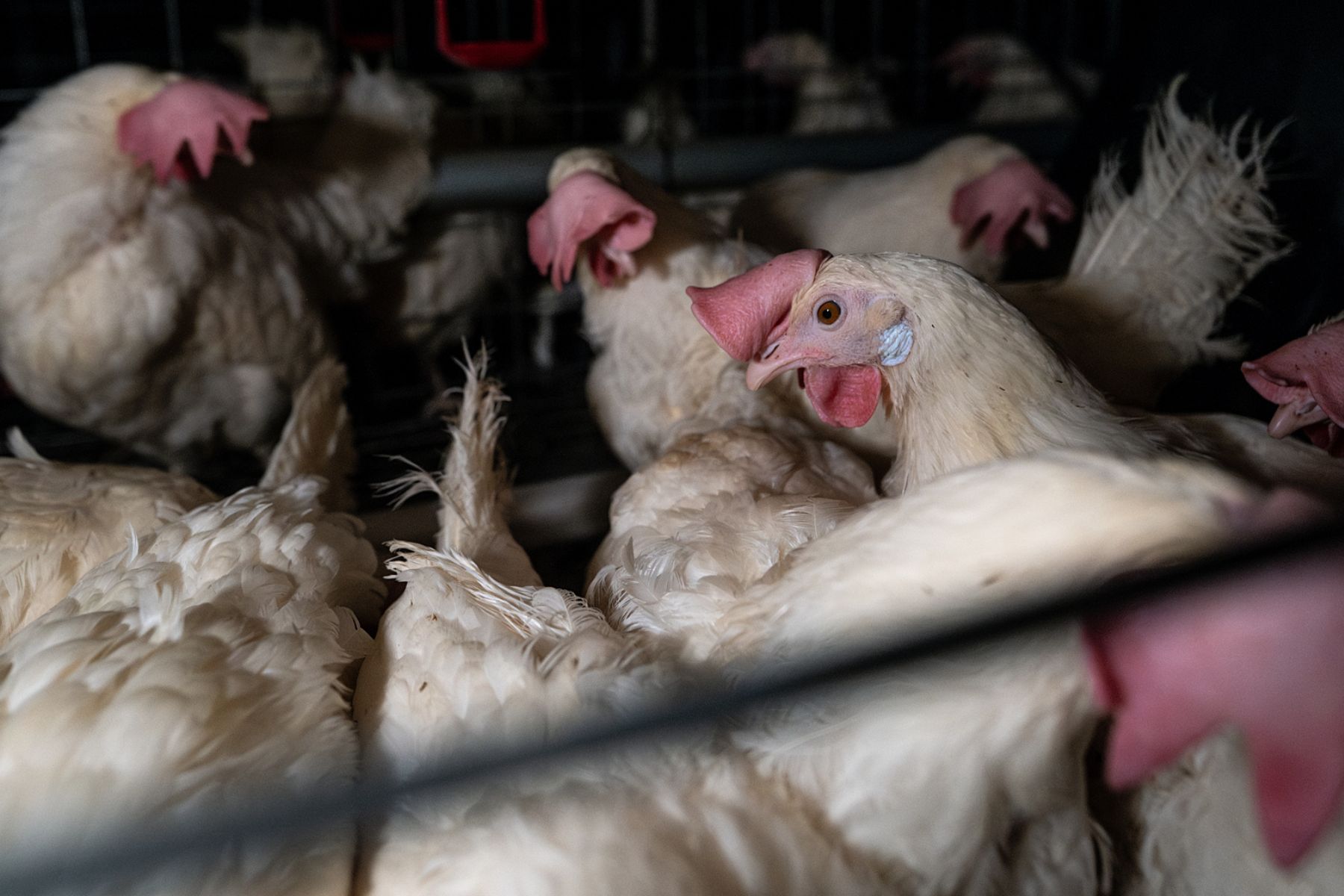
Photo: Abigail Messier | Open Wing Alliance | We Animals
Exposing Cruelty & Increasing Public Awareness
A large majority of the public opposes cage confinement for animals. Campaigns focused on intensive confinement effectively expose factory farming’s hidden horrors. When paired with undercover investigations, campaigns focused on cages help drive public awareness and build societal values around farmed animals. Together, these efforts help make farmed animals part of the national conversation.
Countries with higher animal welfare standards also tend to have higher rates of meat reducers. Research also shows that appeals to animal welfare effectively drive change in individuals. A 2021 meta-analysis of 100 studies that assessed inventions designed to reduce meat consumption found that appeals to animal welfare were consistently effective at driving behaviour change.
Small actions like supporting welfare reforms often spark greater empathy, openness toward more animal issues, and dietary changes.
Our Approach to Corporate Animal Welfare Campaigns
At Animal Justice, our campaigns focus on systemic issues like intensive confinement. We aim for major industry shifts while raising public awareness. We believe true reform means fundamental changes to Canada’s food system.
Our strategies aim to redirect industry profits away from the cruellest practices. We also promote vegan choices and see our campaigns as a stepping stone. This ensures our efforts synergize with broader animal rights goals, while also generating media attention and encouraging a deeper consideration of animal issues among Canadians.
We are in this for the long-haul to transform how society treats animals. Animal Justice works to ensure all sectors impacting animals—food companies, legislators, farmers and consumers—take responsibility for their impact. While some believe we don’t go far enough, others think we ask too much. Striking this balance is an ongoing negotiation, and we may not always agree with one another. We think this is what makes the animal advocacy movement creative, growth-minded, and resilient.
Learn more about how Canada is failing farmed animals—and how we can fix it together.
Banner: Existence | We Animals
Frequently Asked Questions
Why does Animal Justice campaign to end cage confinement?
Millions of hens spend their entire lives trapped in wire cages, unable to spread their wings or feel the ground beneath their feet. Banning cages can reduce immediate suffering, make positive change over time, elevate animal welfare as a political and corporate responsibility issue, and increase public awareness.
Does banning cages end animal cruelty?
No. Banning cages does not end animal cruelty, but it is a step in the right direction. Phasing out cages can significantly improve conditions for individual animals, raise minimum welfare standards, and increase awareness of cruelty endured by animals confined in intensive farming systems, helping to drive broader behavioural and policy change.
How does cage confinement harm laying hens?
Cage systems severely limit hens’ behavioural freedom. They prevent hens from expressing natural behaviours that are essential for their well-being, including nesting, foraging, perching, scratching, wing flapping, and dustbathing.
Cage confinement also leads to illnesses and injuries, including osteoporosis, bone disorders, fractures, and foot disorders. Overcrowding can cause frustration and boredom, which frequently result in feather pecking and cannibalism.
Do enriched cages still harm hens?
Yes. Enriched cages still severely restrict hens’ behavioural freedom and cause significant harm. According to the Welfare Footprint Project, hens in enriched cages experience more than 5,000 additional hours of pain over their lifetimes compared with hens in open barns.
Why does Animal Justice support incremental changes such as cage bans?
Incremental changes can have a real and immediate impact on the lives of millions of animals suffering right now. Animal Justice believes animals in the food system would want advocates working to remove their greatest sources of pain and suffering while also addressing the broader systemic issue of animal exploitation.
Why are corporate cage-free commitments important?
Animal Justice demands that companies include animal welfare alongside their other sustainability goals. This helps ensure animal welfare is treated as seriously as other social and environmental issues and has a place in corporate reports to business stakeholders.
More than 2,600 companies have committed to ban cages, including 130 in Canada.
How do campaigns against cage confinement increase public awareness?
Campaigns focused on intensive confinement expose factory farming’s hidden horrors. When paired with undercover investigations, campaigns focused on cages can drive public awareness, build societal values around farmed animals, and help make farmed animals part of the national conversation.
What is Animal Justice’s approach to corporate animal welfare campaigns?
Animal Justice’s campaigns focus on systemic issues such as intensive confinement. We want major industry shifts while raising public awareness.
Our strategies aim to redirect industry profits away from the cruellest practices. Animal Justice also promotes vegan choices and sees these campaigns as a stepping stone that works alongside broader animal rights goals.