

Update: The consultation period is now over. Click here for more ways to help animals.
Despite last year’s hard-won victory for ground squirrels, the City of Winnipeg is once again pushing a lethal plan forward. According to the city’s recently-released plan, beginning March 2, 2026, ground squirrels in parks and sports fields will be massacred using poisoned baits and a suffocating foam pumped directly into their burrows—leaving many animals to suffer and die over the course of days.
Poisoning & Suffocation: Winnipeg’s Proposed Plan
Under the proposal, staff will scatter anticoagulant poison baits containing chlorophacinone, known as “Rozol”, inside burrow systems. The affected ground squirrels will suffer weakness and lethargy, lose their coordination, and experience muscle tremors as they slowly lose the ability to form blood clots and eventually die of uncontrolled internal bleeding. Coyotes, birds of prey, and potentially even cats and dogs will consume the baits and poisoned bodies, causing these “non-target” animals to suffer painful symptoms and even die.
Pumping the suffocating foam, called “RoCon”, into burrows will cause unimaginable fear and panic as ground squirrels and their young suffocate. For the foam to cause a quick death, all airflow must be blocked by sealing every entrance hole across complex burrow systems—a process that is notoriously botched, leaving animals to endure multiple attempts at suffocation or poisoning.
This plan is the predictable and irresponsible result of the City’s continued failure to pursue humane, science-based solutions. It appears to have been developed without public input or independent expert review, and ignores humane and more effective alternatives.
Last year, Manitoba’s Environment Minister rejected the City’s cruel and ineffective plan to use “Giant Destroyer” gas bombs to kill ground squirrels after significant public pushback. Now, the public has until January 28th to weigh in on this most recent, and likely even more harmful, proposal.
Cruel & Irresponsible
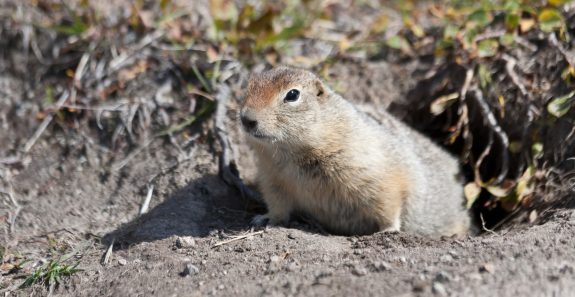
Ground squirrels are an iconic prairie species. These intelligent and curious animals live in underground burrow communities in short grass prairies, as well as some urban and suburban environments.
The anticoagulant poison the City proposes to use is not only archaic and cruel to ground squirrels, but is also dangerous to other animals. Non-target animals, including birds and small mammals, can consume poisonous baits directly, or become poisoned by scavenging the bodies of poisoned ground squirrels or hunting live ground squirrels weakened and anemic due to the poisons. Coyotes, rabbits, birds of prey, and even companion cats and dogs are all at risk.
Dogs who ingest chlorophacinone may show no signs at first, but then develop bruising, coughing, and weakness days later, often requiring veterinary treatment even at a low dose. Cats exposed to chlorophacinone may experience lethargy, respiratory distress, and internal bleeding.
Winnipeg plans to kill ground squirrels in target areas between March 2 and October 30, a lengthy period of time that raises serious welfare concerns. Given ground squirrels’ life cycle, this timing means that poisonous baits used in the late spring will result in the slow, painful deaths of not just adult animals, but entire families. Poisoning their mothers will cause young kits to slowly starve. After June, many adult squirrels are already back in hibernation, making the continued use of lethal poisons essentially pointless. They’d kill only the young of the year, 70-90 percent of whom will not survive their first hibernation anyway.
Better Solutions Exist
A more effective approach would be to hire experienced biologists or other experts to live-trap animals if absolutely necessary in March, before young are born. Local experts reached out to City Council last year to assist in efforts to develop a humane approach to ground squirrel management. Yet it appears the City failed to seek expert input when developing this year’s plan.
Ultimately, humans have a responsibility to coexist with the animals who share our communities. Rather than reactively killing ground squirrels and other animals, the City should invest in long-term strategies to prevent overpopulation in problematic areas. Habitat modification, public education, and timely, humane intervention are key.
Take Action for Ground Squirrels!
It’s not too late to stop this harmful plan to kill ground squirrels with horrific anticoagulent poisons and suffocating foam. Though the City did not consult the public, there is a mandatory 15-day provincial consultation period under Manitoba’s Environment Act. This provides one final window of opportunity for concerned community members to speak up for ground squirrels.
Please take a moment to tell Manitoba that poisoning ground squirrels and their young, as well as other animals throughout the ecosystem, is unacceptable, and that the City should take a step back and consult independent experts to develop a humane, science-based, and sustainable plan to manage ground squirrel populations in 2026 and into the future.