

A whale sanctuary by the Whale Sanctuary Project has been approved by the Nova Scotia government and is currently under construction in Port Hilford Bay.
The whale sanctuary once represented a beacon of hope for beluga whales trapped at Marineland in Niagara Falls. For years, advocates fought to give these captive whales a kinder future.
1. What Happened to Canada’s Last Captive Whales?
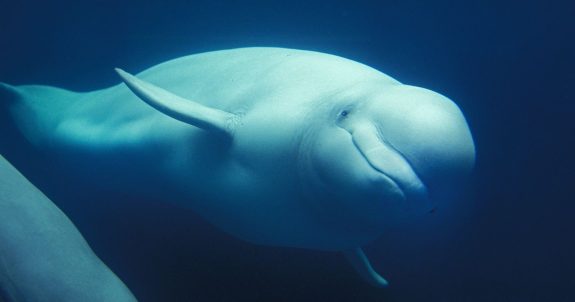
Marineland shipped all 30 of its surviving belugas—the last captive whales in Canada—to aquariums in the US and Spain between July 21 and August 31, 2026. Whales were transferred to Shedd Aquarium in Chicago, SeaWorld San Antonio, Georgia Aquarium in Atlanta, SeaWorld San Diego, and Oceanogràfic in València, Spain.
Since the exports, four of Marineland’s beluga whales and one dolphin have died.
Peekachu, a 23-year-old female beluga, died less than two weeks after her arrival in Chicago on August 25, 2026. According to staff at Shedd Aquarium, Peekachu had not been eating well, and a blood test revealed that she was dehydrated.
On September 2, 2026, Rain, a 20-year-old female beluga, also died at Shedd Aquarium. Beethoven, a 30-year-old beluga who had lived at the aquarium for decades, died the same day. The aquarium is conducting necropsies to determine the causes of death for both of them.
Necropsy reports found chronic gastrointestinal disease in Peekachu and Rain that could have been present for months or years. Stress can play a significant role in the development of this disease. Peekachu’s stomach contained feathers, sticks, and large rocks, while Rain’s contained paint chips. Captive whales have been known to ingest objects like these out of stress. The objects were likely ingested at Marineland, raising serious concerns about the lack of care these animals received.
Jelly Bean, a 19-year-old female beluga, died on September 18—less than a month after arriving at Oceanogràfic in València. Staff at the aquarium said Jelly Bean died “suddenly and unexpectedly” after experiencing feeding difficulties in the days prior.
Osiris, a 26-year-old beluga whale, died at Shedd Aquarium on September 21. Before she died, animal care teams noticed she was not eating regularly and had sudden changes in her behaviour and breathing.
Shortly afterward, Echo, a 30-year-old female dolphin, died at Oceanogràfic de València. She arrived in a compromised state of health and with severe vision problems which may have been connected to the poor water quality at Marineland.
2. Did Export Permits Fail to Prevent Breeding Whales?
The Canadian government approved export permits after Marineland threatened to kill its surviving cetaceans. Troublingly, reports suggest they failed to include no-breeding and no-performance conditions in the permits—a decision that undermines Canada’s 2019 laws banning whale and dolphin captivity, breeding, and entertainment performances.
This stands in stark contrast to past export permits granted since 2019, all of which have been issued on the condition that belugas would not be bred at the receiving facility. Without these mandatory protections, aquariums in the US and Spain receiving Marineland’s whales could use them to breed a new generation of captive animals, defeating the intent of Canada’s national laws to phase out whale and dolphin captivity.
We must ensure this doesn’t happen.
Join us in demanding that every aquarium receiving Marineland’s whales and dolphins commits to never breeding them.
3. How Many Whales Can the Whale Sanctuary in Nova Scotia Home?
The whale sanctuary in Nova Scotia can welcome approximately 10 whales in a netted-off bay that is more than 100 times larger than the tanks at Marineland. This ocean sanctuary can give the whales room to swim, dive, and live naturally.
It’s heartbreaking that the whales previously at Canada’s Marineland will likely never experience this freedom. Instead of spending their final days in peace, the whales and dolphins have moved to other tanks and remain trapped in continuous confinement. Reports also suggest the park sent many of its remaining deer and elk to slaughter.
4. Why Weren’t Marineland Whales Sent to the Aquarium in China?
Marineland originally sought to export all 30 remaining belugas to Chimelong Ocean Kingdom in China. However, the Canadian government rejected the permits. Canadian law requires whale and dolphin export permits to be in the animals’ best interests or contribute to legitimate scientific research.
That decision was right—exporting these animals to Chimelong Ocean Kingdom would not have been in their best interests.
Chimelong breeds whales and dolphins and uses them in performances for entertainment. Canada banned these practices in 2019 to end cetacean captivity. On top of this, there are no animal protection laws in China. Transport is extremely stressful and dangerous for whales and dolphins, making the journey from Niagara Falls across the world to China particularly risky for these animals.
5. Is the Water Safe in Port Hilford Bay?
Some critics raised concerns about pollution from historical gold mining near Port Hilford Bay. However, independent environmental experts confirmed that the site is safe.
Experts conducted four years of research, including environmental assessments, biodiversity surveys, and acoustic monitoring. In 2024, they concluded that the water is healthy and suitable for whales. This is why the province has now given the Whale Sanctuary Project permission to proceed with construction.
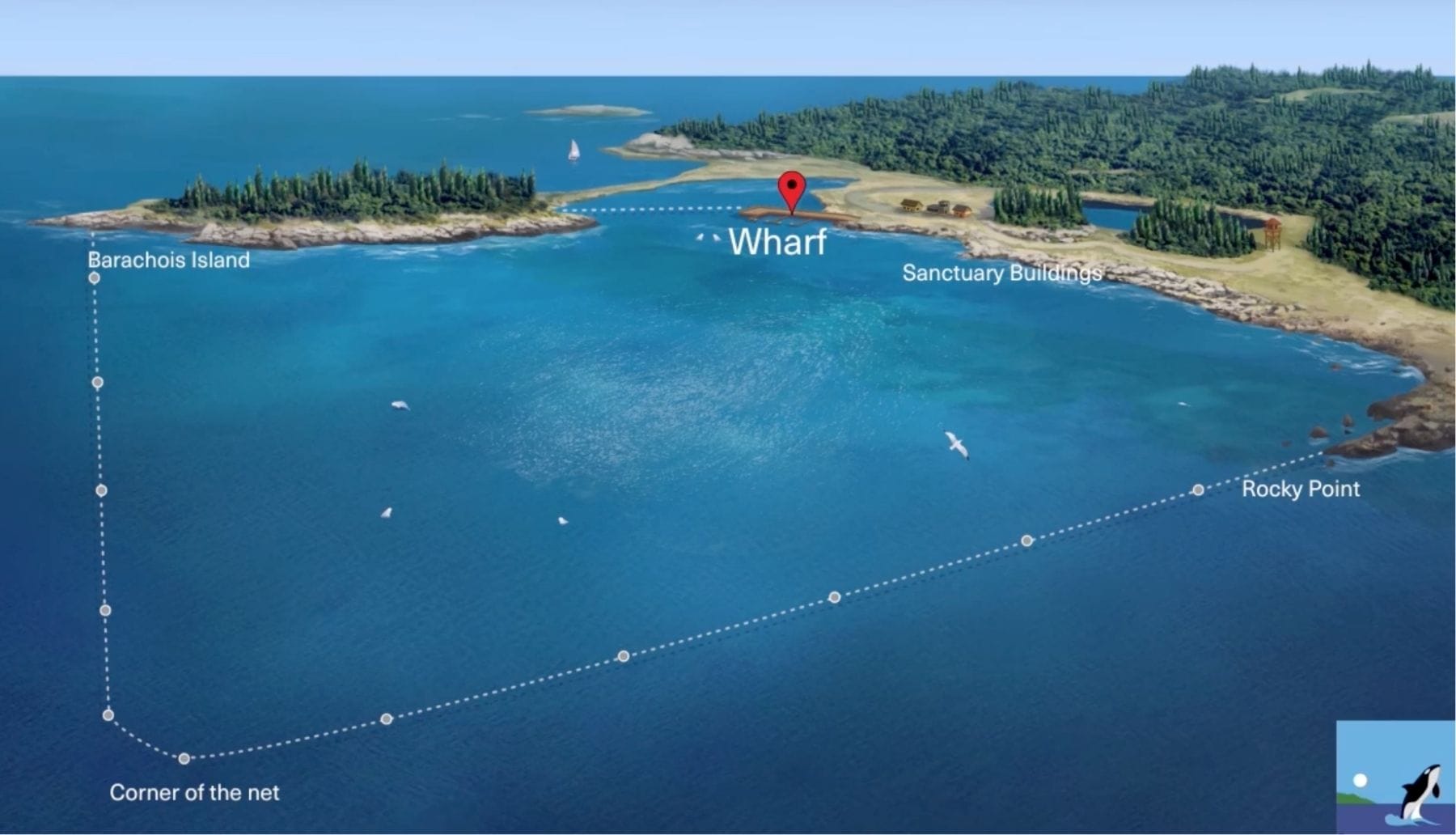
Photo: The Whale Sanctuary Project
6. Have Whale Sanctuaries Worked Before?
In Iceland, the world’s first seaside whale sanctuary cares for two belugas, Little White and Little Grey, who were rescued from a Shanghai marine park. The two belugas currently reside primarily in a landside facility while acclimating to the bay and while this pioneering project modifies its infrastructure to ensure the bay is a safe and sustainable home for these animals. Caretakers expect these whales to move into the bay permanently in 2027.
Although the process has taken longer than expected, it has provided valuable lessons about reintroducing captive whales to natural waters.
7. Can the Sanctuary Be Built Without Unanimous Landowner Approval?
Yes. The Nova Scotia government issued a 20-year lease for 80 hectares of land and sea in Port Hilford Bay, with an option to renew for another 20 years. This came after years of work to secure agreement from landowners with property adjacent to the bay.
8. What is Happening to Whales at Marineland Antibes in France?
In December 2025, the French government announced it was working with the Whale Sanctuary Project and Marineland Antibes to explore relocating France’s last two captive orcas, Wikie and her son Keijo, to the sanctuary in Nova Scotia. But in May 2026, France instead announced plans to send the orcas to Loro Parque in Spain, citing concerns about the condition of their tanks at the theme park and the sanctuary’s timeline for accepting them.
The decision has raised concerns as Loro Parque has a history of captive breeding and performances. Animal welfare advocates argue that moving Wikie and Keijo to another marine park could mean continuing the very conditions France’s ban on captive cetacean entertainment and breeding was intended to end.
Take Action for Whales
Marineland’s whales deserve more than being moved from one tank to another. As these long-suffering animals will not have a chance to retire to a seaside sanctuary, they should at least not be used to breed future generations who will endure life in tiny tanks.
Tell the US and Spanish aquariums receiving Marineland’s whales and dolphins: Don’t breed them. Let this generation be the last.