
Lire la version française ici.
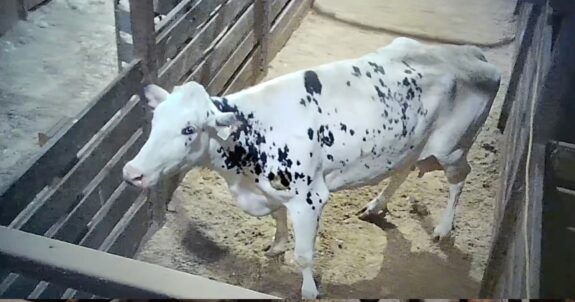
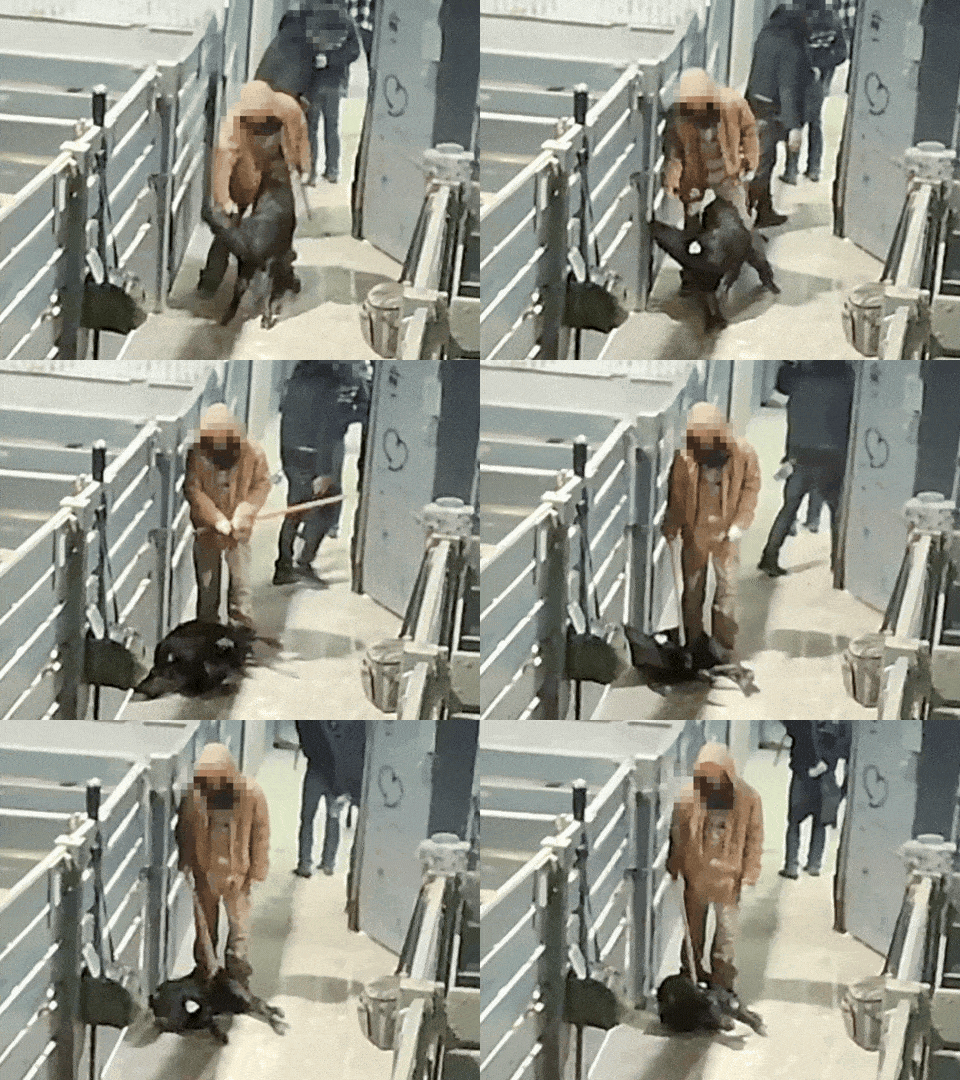
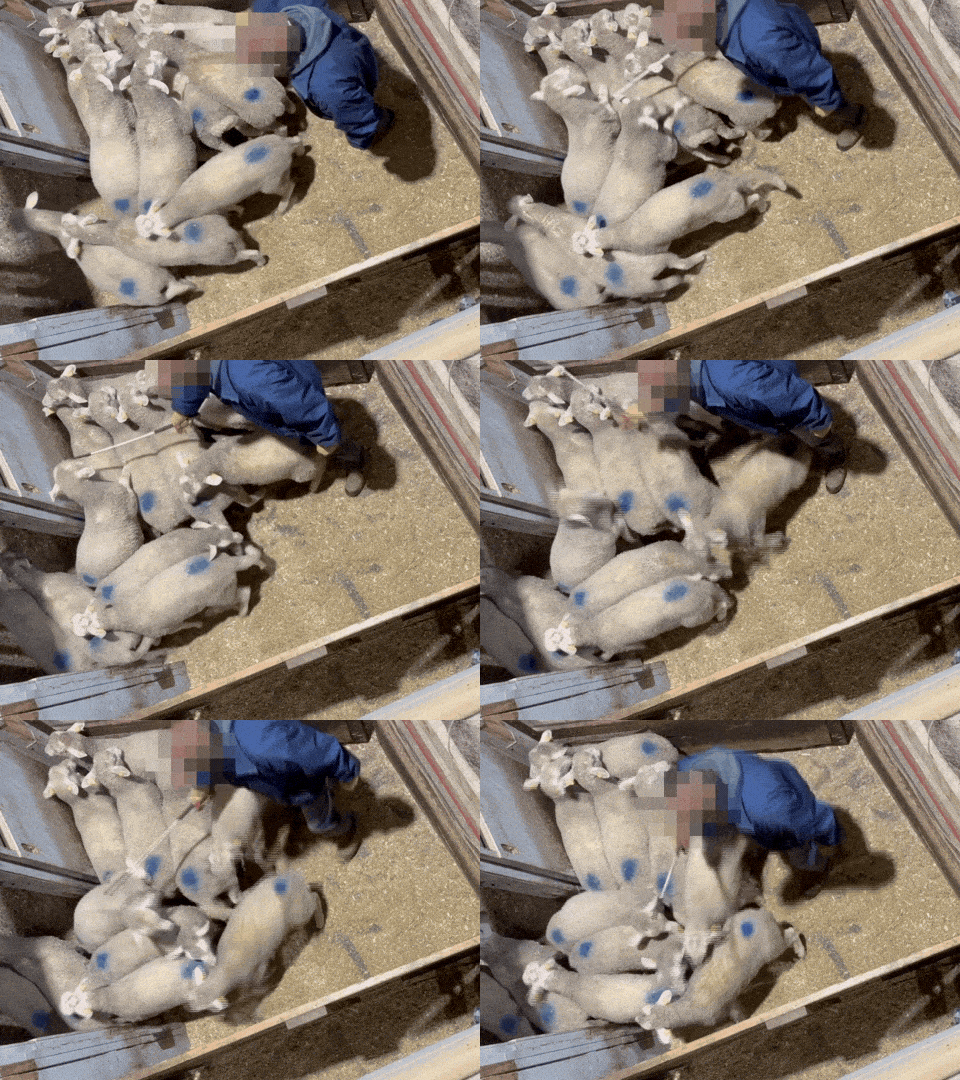
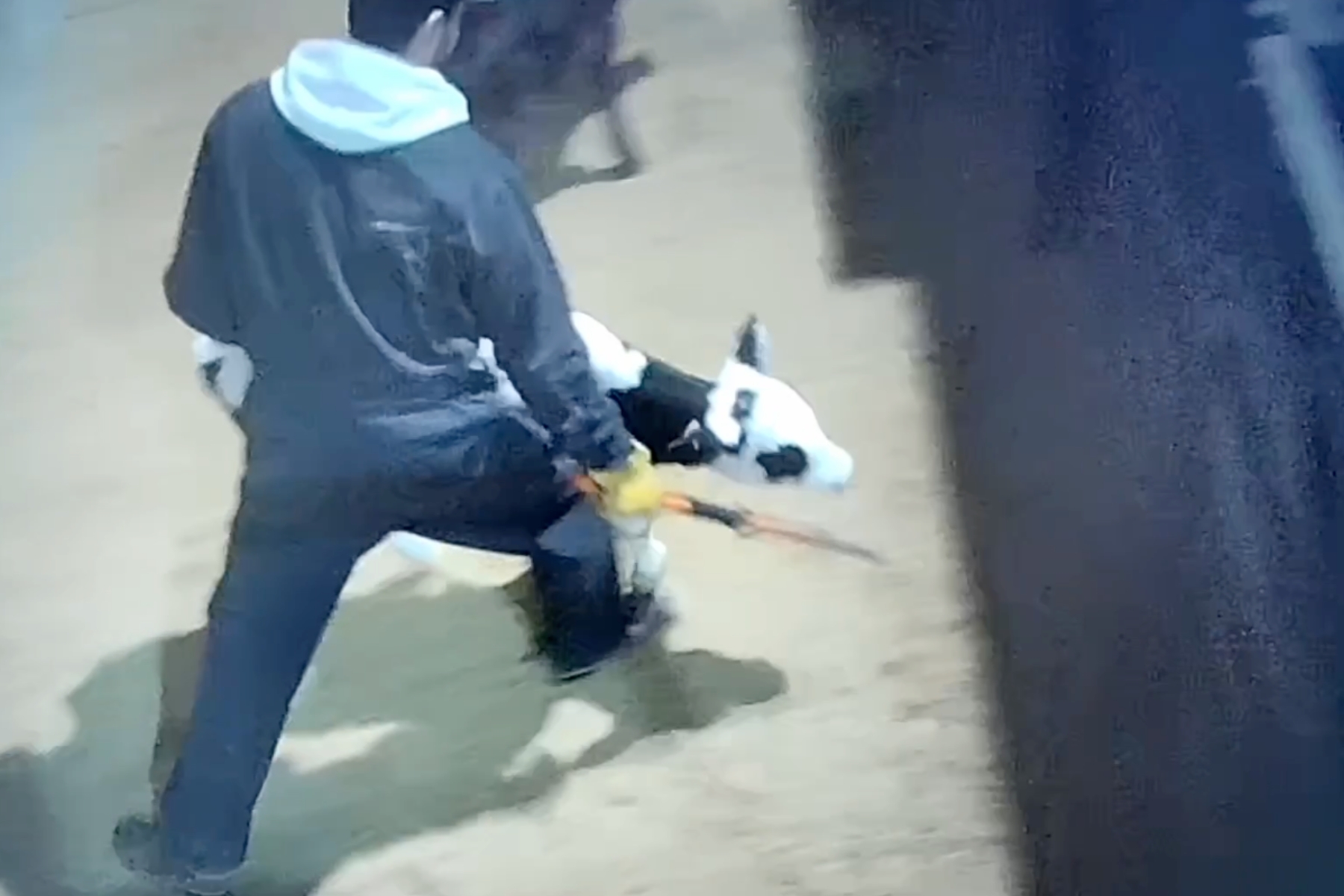
Shocking footage from a Quebec animal auction shows vulnerable baby cows, sheep, and cows being subjected to likely illegal and egregious abuse. The video, filmed in Saint-Hyacinthe, Quebec, shows terrified animals bellowing in distress as they are repeatedly hit with rods on their backs, sides, and sensitive faces.
This Animal Justice investigation has once again pulled back the curtain on the systemic cruelty and complete lack of government accountability in Canada’s animal agriculture industry.
But the most shocking revelation didn’t come from our cameras, it came from the government’s own files.
Access-to-information documents obtained by Animal Justice reveal that government inspectors with Quebec’s Ministry of Agriculture (MAPAQ) actually witnessed similar horrific abuse at this exact auction in 2025 and effectively did nothing to stop it or prevent it from occurring again.
Watch the Video
Calves & Sheep Beaten at Quebec Animal Auction
In early 2026, Animal Justice documented, over multiple days, the reality for farmed animals funnelled through this auction. These auctions are high-stress environments where frightened animals, many only days old, are treated as mere commodities.
Animals are typically sold at auction to other farms to be raised for meat, used for animal products or breeding, or to slaughterhouses where they are killed for their flesh.
Our investigation revealed:
- Routine violence: Handlers repeatedly hitting, prodding, kicking, and striking vulnerable calves, sheep, and cows with rods and their hands, including on their faces and backs.
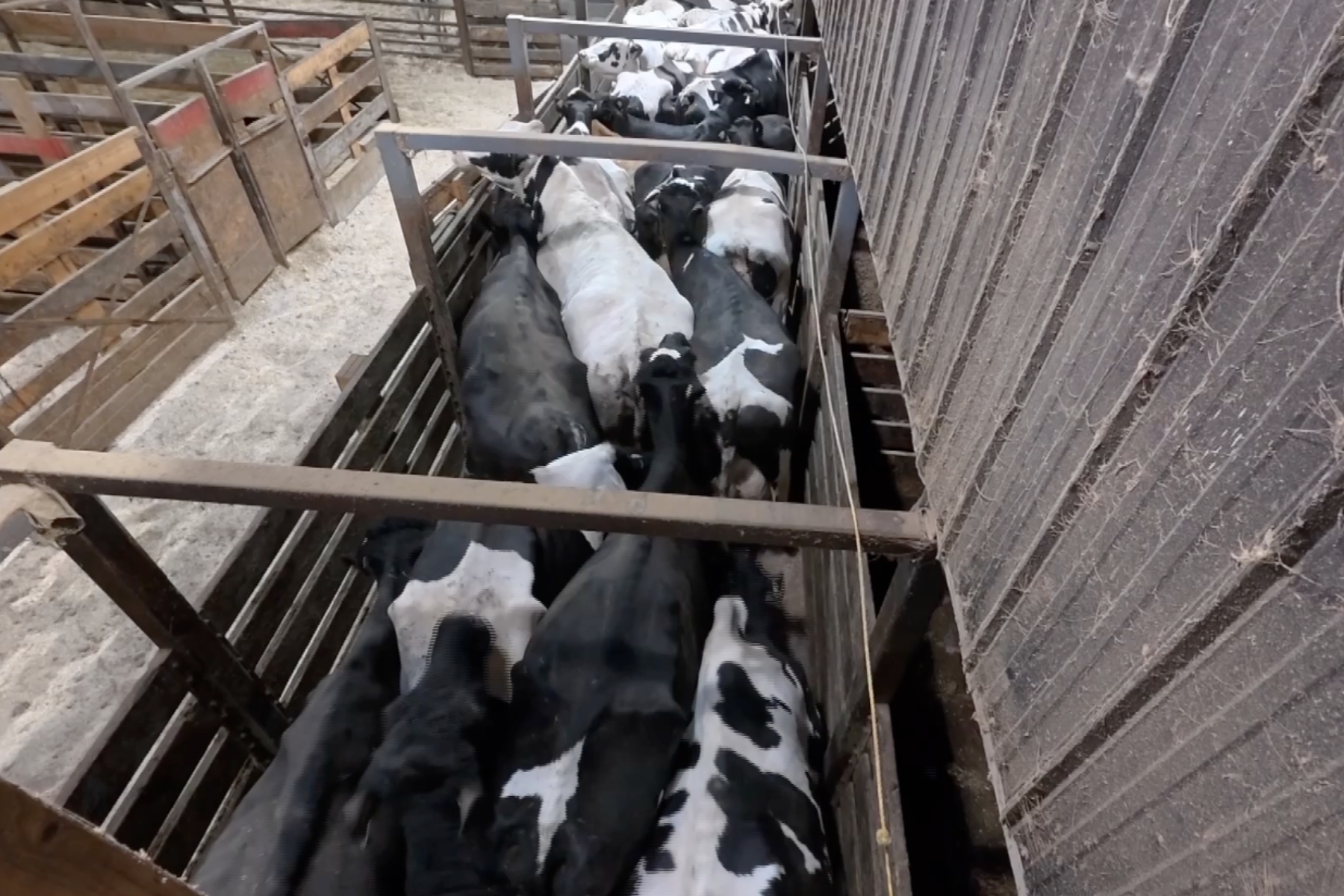
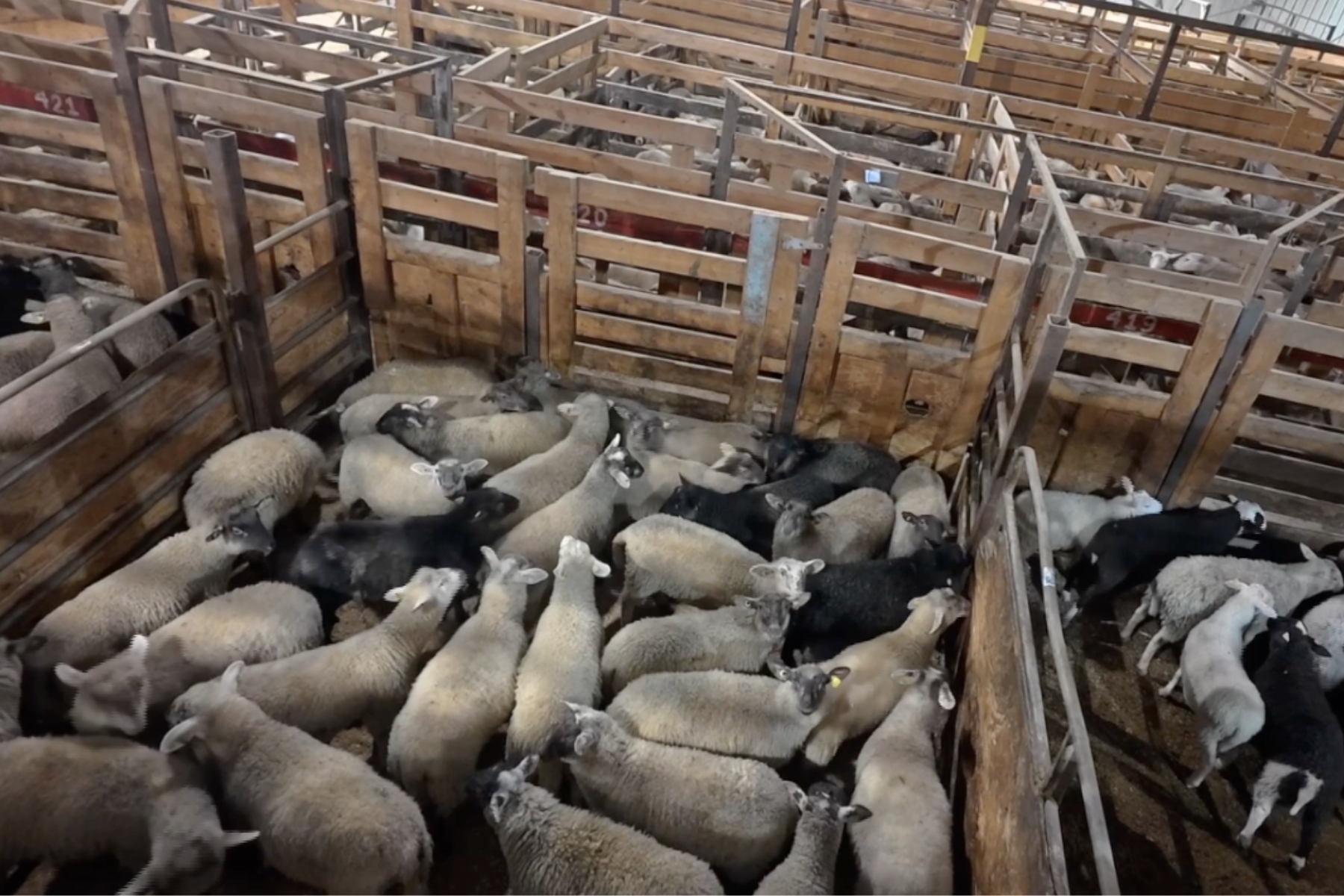
- Overcrowding: Animals crammed into tiny enclosures with little, if any, room to move.
- Violent handling: A goat and calf grabbed and yanked by the horn and ear.
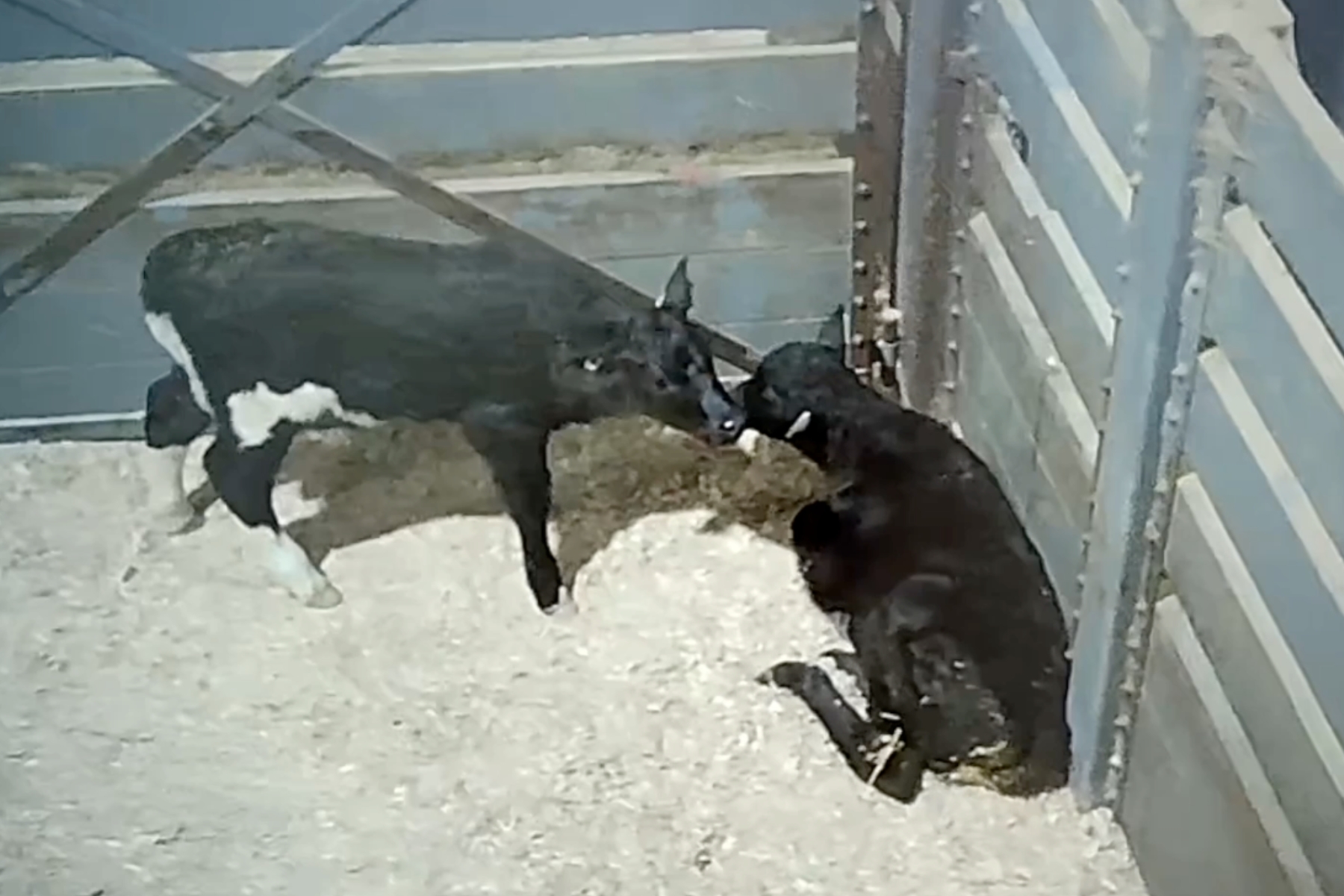
- Extreme fear and distress: Terrified animals bellowing, running frantically, and desperately trying to find safety.
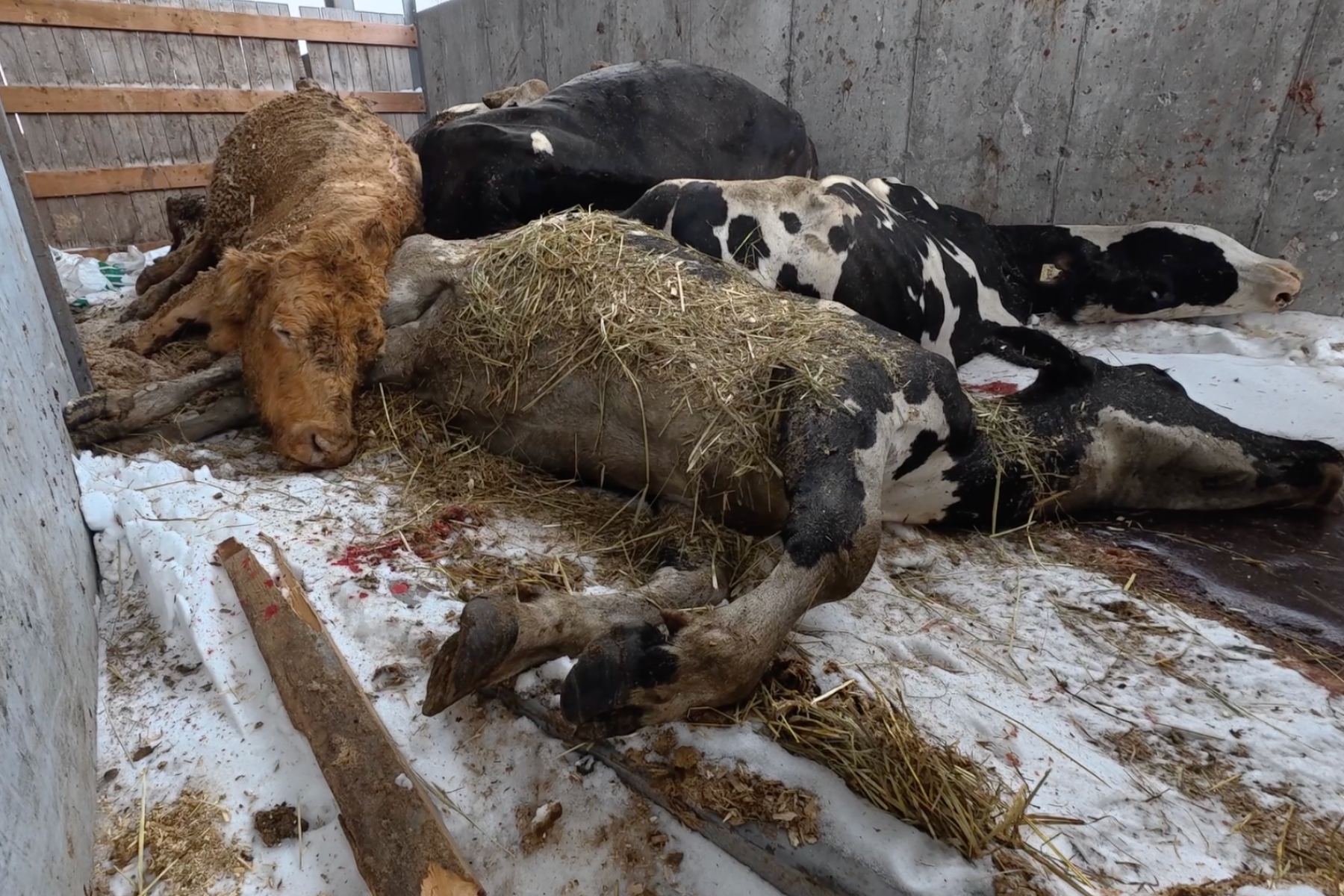
- Gruesome conditions: Dead animals on site and bloodstains visible on the auction grounds.
- Horrific abuse: Violations of some of the few legal protections that apply to farmed animals in Quebec.
Animal Justice filed an official legal complaint with MAPAQ, presenting clear evidence of these cruel handling practices. Yet, there is no indication that the provincial government has taken any meaningful action to hold the auction accountable or prevent this abuse from continuing.
Repeated Failure to Act: What MAPAQ Inspectors Saw in 2025
Animal Justice filed access to information requests to see what—if anything—provincial inspectors had been doing about the conditions and abusive handling that was documented at this facility. The records we received are absolutely damning.
According to an official inspection report dated June 9, 2025, MAPAQ inspectors personally witnessed and documented horrific abuse, even before Animal Justice ever became aware of the horrors taking place at this facility:
“An employee was observed in the receiving area using abusive force with a stick on small calves (striking them inside the ribs) and on adult cattle (striking them in the head). […] An employee at the sales pen is using a whip in an abusive manner. […]” [Translated to English]
The 2025 government records also documented:
- Severe overcrowding: Pre-sale pens for sheep were noted as non-compliant, with animal density noted as “too high.”
- Failure to isolate sick animals: Two weak, limping sheep were left without care and in the overcrowded general population instead of being isolated from the flock as required by law. Instead, inspectors watched and documented as these two suffering animals were cleared for shipping to a slaughterhouse.
Despite witnessing and documenting blatant abuse in their own report, MAPAQ did not appear to take any action that would stop the abuse or prevent it from occurring again.
The Root of the Problem: Industry Writes Its Own Rules
Despite witnessing horrific abuse in 2025 and receiving a complaint and footage from this same auction in 2026, government officials seemingly took no meaningful action.
It is the predictable result of a broken system where the animal farming industry is permitted to write its own rules, and where the government departments tasked with protecting animals are facing a massive conflict of interest.
In Quebec, and in the rest of Canada, the day-to-day welfare of farmed animals is not governed by robust, government-legislated standards of care. Instead, the government has passed off its responsibility to a private, industry-run body called the National Farm Animal Care Council (NFACC). Under this model, the very companies profiting from animal agriculture are the ones who decide what level of suffering is acceptable.
Compounding this failure is a structural conflict of interest within government oversight:
- At the provincial level, MAPAQ is legally responsible for promoting the economic growth, profitability, and competitiveness of the agricultural sector, yet it is also the agency responsible for enforcing provincial animal welfare laws on farms and at auctions.
- At the federal level, the Ministry of Agriculture (Agriculture and Agri-Food Canada) and the Canadian Food Inspection Agency (CFIA) are mandated to promote agricultural trade, industry growth, and export competitiveness, while simultaneously being tasked with regulating and enforcing Canada’s minimal and weak animal transport and slaughter laws.
When an industry is allowed to write its own rules — deciding what practices are acceptable no matter how much suffering they cause — and when economic promotion and animal protection are housed under the same roof, animal welfare is always sacrificed. Treating animal welfare as a variable to be balanced against efficiency, trade stability, and profit, and allowing the industry to decide what degree of distress is allowed, means that even egregious, documented abuse goes unpunished.
Take Action: Demand Real Laws & Independent Oversight
Farmed animals in Quebec, and across Canada, have virtually no legal protections. The basic rules that do exist are completely ignored by the industry and swept under the rug by conflicted government agencies.
In many cases, actions that would be considered illegal abuse if done to a cat or dog are perfectly legal when done to cows, chickens, and pigs.
This regulatory failure has left Canada lagging far behind other jurisdictions that have recognized the need for meaningful legal protection for farmed animals. The UK, the EU, New Zealand, and several US states have adopted legislation that mandates minimum animal welfare standards and credible enforcement mechanisms for farmed animals. The EU has a Commissioner for Health and Animal Welfare and Denmark created a Ministry for Nature and Animal Welfare which will take over responsibilities from the Agriculture Ministry related to animal welfare.
Canada cannot continue to let the fox guard the henhouse. Animal Justice is calling for a complete overhaul of how farmed animals are protected in Canada as outlined in Towards a National Framework for Farmed Animal Protection, a report jointly released by Animal Justice and other leading animal protection organizations.
We need comprehensive federal and provincial animal protection laws, independent standard-setting bodies free from industry capture, and specialized, public enforcement officers who answer to an independent animal welfare commissioner—not a Ministry of Agriculture.
Please, join us in demanding that the government enact real, enforceable laws and independent oversight to protect farmed animals.
Frequently Asked Questions
What was uncovered at the Quebec animal auction in Saint-Hyacinthe?
An investigation by Animal Justice uncovered horrific abuse at a Quebec animal auction in Saint-Hyacinthe. Video footage showed handlers striking calves, sheep, and adult cattle with rods, yanking animals by their ears and horns, and housing them in severely overcrowded pens. Bloody carcasses were also seen on the auction grounds. Government documents show MAPAQ (Quebec’s Ministry of Agriculture) inspectors witnessed similar abuse in 2025, including sick sheep left without care in overcrowded pens. The agency failed to take any meaningful action to prevent ongoing abuse at the animal auction.
How are animals handled at livestock auctions?
Animals at livestock auctions are typically handled roughly. Animal Justice’s exposé from a Quebec livestock auction showed animals experiencing extreme fear and distress, and physical abuse. Footage revealed handlers repeatedly hitting, kicking, and prodding vulnerable animals with rods on sensitive areas like their faces and backs.
Is farmed animal abuse common in Quebec?
Multiple undercover exposés have documented abuse and suffering of farmed animals in Quebec. This includes investigations at a veal farm in 2014, a pig farm in 2019, pig and turkey farms in 2024, and multiple pig, chicken, dairy cow, and turkey farms between 2020 and 2025. Farmed animal abuse often goes unpunished due to a lack of enforcement and regulatory loopholes. Many of the standard practices on farms and at auctions, no matter how much suffering they cause, would be illegal if inflicted on companion animals like dogs or cats.
Are farm animal protection laws effective in Canada?
Canada has no legislation regulating how animals are treated on farms. General animal protection laws as they apply to farmed animals are notoriously ineffective, and are known to be the weakest in the Western world. Standard practices for animals on farms are dictated by an industry-led body called the National Farmed Animal Care Council (NFACC), in the form of voluntary guidelines.
Who is responsible for Quebec animal welfare enforcement?
MAPAQ is legally responsible for enforcing Quebec’s animal welfare legislation. However, because MAPAQ is also tasked with promoting the agricultural industry’s profitability, this dual mandate creates an inherent conflict of interest that raises serious questions about enforcement.
Has livestock auction cruelty been documented in Canada?
Yes, livestock auction cruelty is a systemic issue across Canada. Because auctions prioritize fast-paced commercial sales, crowded conditions and violent handling practices are routinely used to force frightened animals through sales rings.
What is the NFACC’s role in animal welfare?
The National Farm Animal Care Council (NFACC) is a private, industry-led body that creates “codes of practice” for animal agriculture in Canada. This allows the animal farming industry to set its own rules which leads to economic profit being prioritized over animal protection.