

Most Canadians believe our country has strong animal protection laws for farmed animals. The reality is far more troubling: behind the closed doors of Canada’s farms, there is a staggering legislative void. Canada has no national laws regulating how animals are treated on farms. Instead, the government permits the animal agriculture industry to set its own voluntary standards through the National Farm Animal Care Council (NFACC)—a private industry-led body with no legislative authority.
To pull back the curtain on this hidden reality, Animal Justice is launching a new website: NFACTs. This site will serve as a resource for anyone looking to understand the truth about how animal agriculture is (mis)managed in Canada, and the role of NFACC in the absence of laws regulating the welfare of animals on farms. It exposes the failures of the current system and provides the transparency that the industry—and the government—have long avoided.
NFACC Codes of Practice
In the absence of government regulations, NFACC, a private, industry-dominated entity, has been left to fill the gap. It develops voluntary Codes of Practice for the treatment of most farmed animal species.
NFACC often presents itself as a neutral authority, but its structure and decision-making processes raise important concerns:
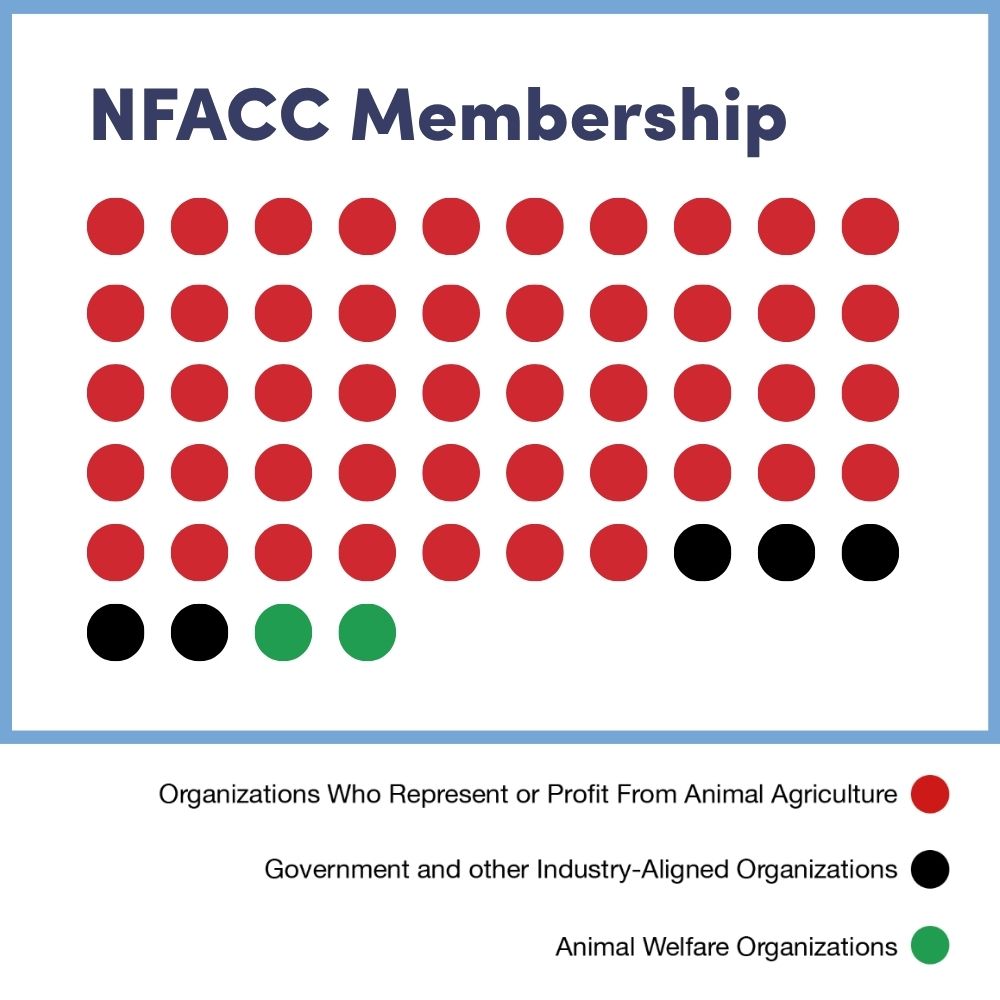
- The majority of members (87 percent) financially benefit from large-scale intensive factory farming.
- Only a very small number of seats (two) are held by independent animal welfare organizations.
- Its standards are voluntary, not law.
- It has no enforcement powers.
- It receives public funding while operating with limited public accountability.
Animal Justice’s new resource, NFACTs, breaks down how allowing the industry to write its own rules prevents real protection for animals on farms.
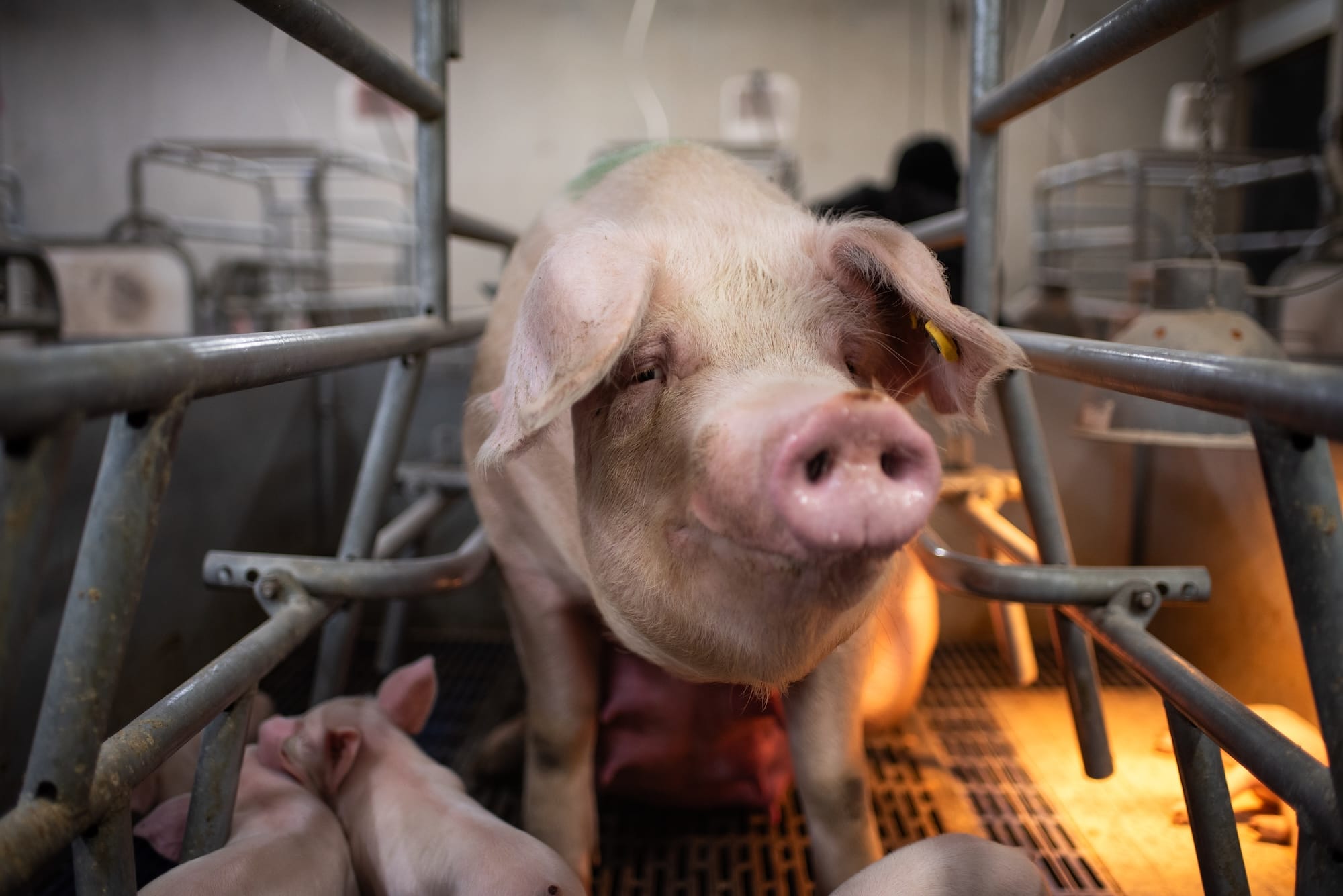
Photo: Balvik C. | We Animals
Understanding NFACC’s Codes of Practice
NFACC develops voluntary “Codes of Practice” which provide standards for the treatment of most farmed animal species.
While these codes are presented as authoritative requirements, they are not real animal protection laws—they are recommendations written by the very industries who benefit from them. For too long, the truth about how millions of animals are treated on Canadian farms each year has remained hidden behind NFACC’s superficial promise of better welfare. The NFACTs website is designed to provide a comprehensive overview of the systemic issues within NFACC and the NFACC Codes of Practice.
The NFACTS website explains:
- What species-specific Codes actually permit in everyday farming conditions
- Where scientific research and final standards diverge
- Practices still allowed despite widespread public concern
- How Code Committees are formed and how industry representation dominates decision-making
- How only a small number of welfare issues are chosen for scientific review, leaving many concerns unexamined
- The absence of consistent monitoring or enforcement mechanisms
- How Canadian standards compare with international best practices
NFACTs shows how the limitations of NFACC’s Codes of Practice translate into the everyday realities for animals.
While NFACC likes to position itself as “the national lead for farm animal care and welfare in Canada”, its Codes of Practice permit horrific acts, such as slicing off chickens’ sensitive beaks without anesthetic, confining pigs in tiny gestation crates that prevent them from turning around, and separating newborn calves and their mother cows.
Bringing Transparency to a Secretive Industry
Information about the lack of animal protection laws on farms and the industry’s ability to self-regulate was not available in one place. NFACTs brings that information together into one centralized resource. It is designed for anyone seeking clarity—whether they are encountering the issue for the first time or looking for deeper insight.
More than anything, it is a transparency tool. It gathers dispersed information into one coherent place so those seeking information can see the full picture of how the Canadian government is failing to protect animals on farms.
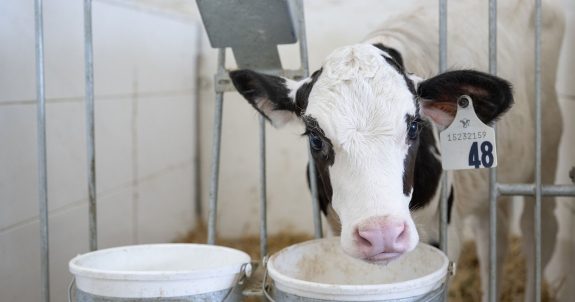
Banner: Calf in crate in Ontario prison farm. Jo-Anne McArthur | We Animals