

Key Takeaways:
- The University of Saskatchewan (USask) is building a new $15.6-million poultry research facility designed to house approximately 6,000 hens, including hens kept in “enriched” cages.
- Enriched cages are highly cruel. Each hen receives roughly the space of a legal-size sheet of paper, limiting her ability to move freely and perform important natural behaviours such as foraging and dustbathing.
- Cage-free housing is becoming increasingly common around the world. Thousands of companies have made cage-free commitments, several jurisdictions have banned cages, and 72 percent of Canadians support a national ban on caged housing for laying hens.
- The project is receiving $6.2 million from the federally funded Canada Foundation for Innovation (CFI). Animal Justice is calling on CFI and USask to ensure public research funding supports 100 percent cage-free housing rather than investing in cage infrastructure.
- Animal Justice is urging USask to remove cages from the facility’s plans and build a truly forward-looking research centre that prepares Canadian students and researchers for a cage-free future.
When the University of Saskatchewan (USask) announced plans for a new $15.6-million poultry research facility earlier this year, it was presented as an investment in the future of Canadian agriculture. The 24,000-square-foot facility will house approximately 6,000 hens. University administrators and industry representatives have framed it as a “first of its kind” project in North America that will position USask as a global leader in poultry research and animal welfare. However, the facility’s design includes caged housing—the most widely criticized practice in animal agriculture.
By building cages into a new facility, USask risks continuing to research and support outdated and cruel farming practices for decades to come.
Modernizing agricultural research infrastructure might sound positive on the surface. However, a look into the proposed plans reveals a troubling disconnect. Rather than looking ahead to the transition towards cage-free housing, USask is investing millions into increasingly obsolete infrastructure by including “enriched cages” in their facility plans.
The project received a $6.2-million investment from the federally funded Canada Foundation for Innovation (CFI). Additional funding is being provided by Saskatchewan Egg Producers and the University of Saskatchewan.
The Myth of “Enriched” Cages
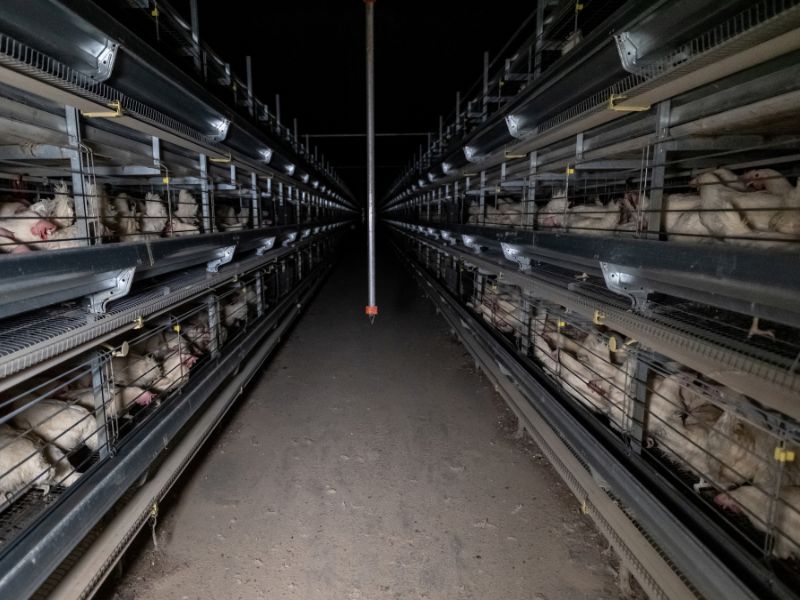
Cage confinement is among the most widely criticized practices in animal agriculture. Enriched cages are still cages, and are rapidly disappearing around the globe.
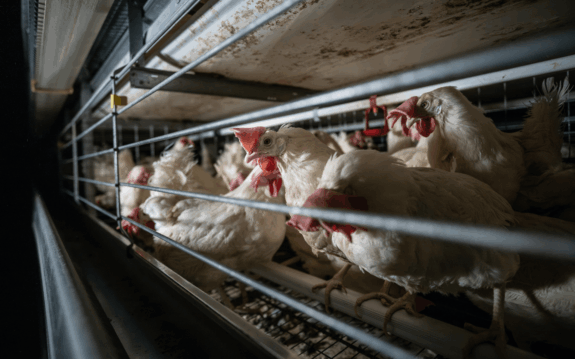
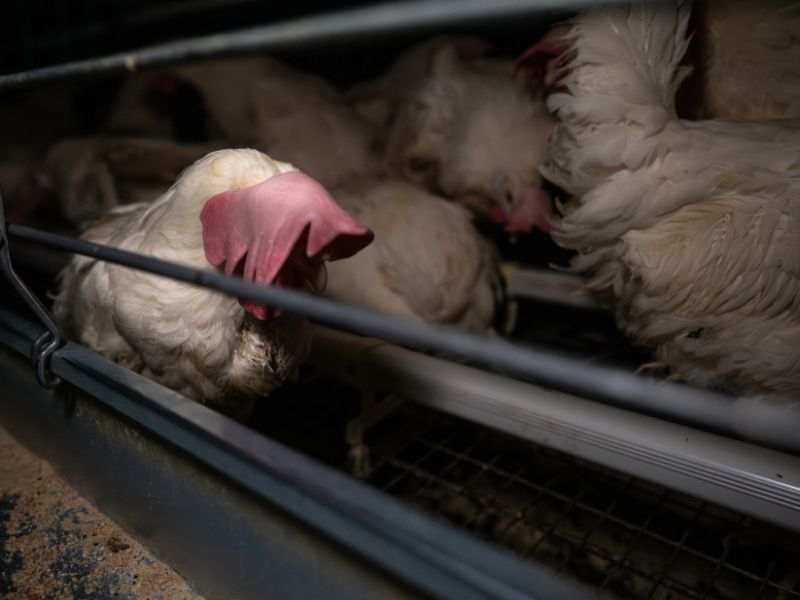
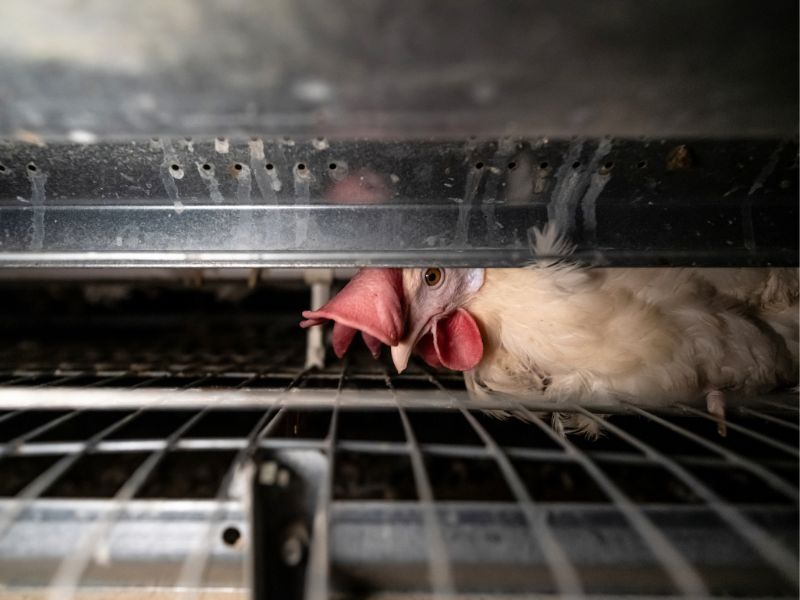
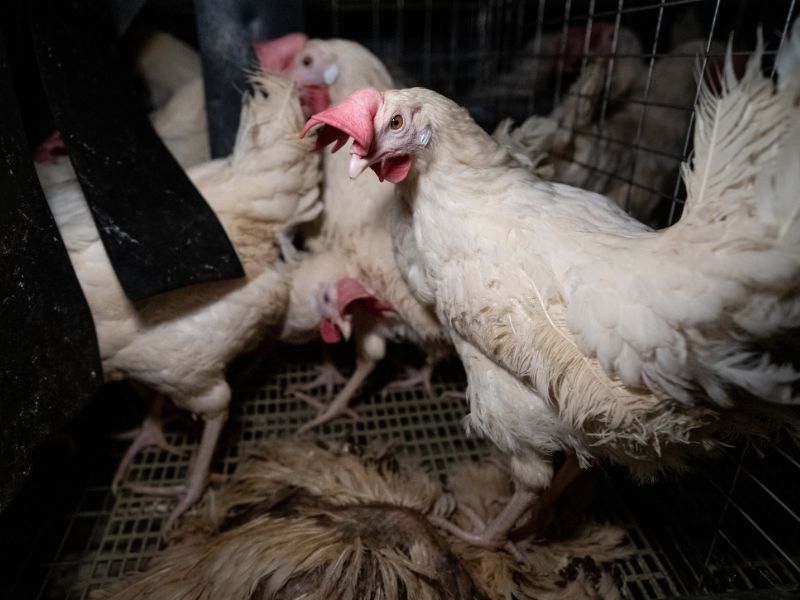
The industry often markets enriched cages as a humane alternative to conventional battery cages. But this is a dangerous mischaracterization. Enriched cages still allow for horrifying suffering. Each hen receives space no larger than a legal-size sheet of paper on wire flooring, with severely restricted movement.
Whether in conventional battery cages or enriched cages, hens are subjected to high rates of illness, injuries, and death.
Even the National Farm Animal Care Council’s (NFACC) current Code of Practice acknowledges that enriched cages fail to support the core behavioural needs of hens, such as dustbathing and foraging. Furthermore, the Global Coalition for Animal Welfare—an industry-led working group—has clearly stated that no cage system allows hens to express essential natural behaviours. Placing hens in slightly larger cages with minor additions does not create high-welfare farming. It simply perpetuates confinement under a softer PR label.
Animal Justice has formally urged USask administrators to reject this industry spin and commit to housing that reflects the current animal welfare science.
Out of Step with Global Standards & Market Realities for Cage-Free Housing
By committing funds to cage infrastructure, USask and the CFI are further positioning Canada as an international outlier in animal welfare research.
- Global Bans: Cages are already outlawed across the European Union, the United Kingdom, and 11 US states, with many jurisdictions banning the sale of caged eggs entirely. Countries like the UK (79 percent cage-free), the EU (62 percent), and the US (45 percent) are rapidly transitioning, while Canada languishes at just 20 percent.
- International Trade Risks: The European Commission’s EU Livestock Strategy is moving to phase out cages entirely while introducing equivalent import requirements for trade. Canadian producers risk facing severe non-tariff trade barriers if research and infrastructure fail to prioritize cage-free housing.
- Corporate Sourcing: Over 2,600 global companies—including more than 130 in Canada—have pledged to source 100 percent cage-free eggs.
- Canadian Consumer Sentiment: Major Canadian stores report that eggs from enriched cages account for a mere 2 percent of sales, despite making up a third of inventory. Meanwhile, 72 percent of Canadians support a national ban on all cages.
If the global standards and markets are moving away from cages, why should Canada’s future researchers be trained around them?
Investing in the Future Means Preparing for What Comes Next
A university research facility is not simply a snapshot of today’s agricultural industry. It is infrastructure that will shape what researchers study, what students learn, and what technologies are developed for decades.
Students graduating from USask will enter careers in a rapidly evolving global market. They need to understand cage-free systems, emerging welfare standards, changing consumer expectations, and international trade requirements. Students need hands-on experience with cage-free housing to gain skills that are internationally relevant.
Furthermore, Canada’s NFACC Layer Code of Practice is scheduled for a major review in 2027. Committing millions in public and institutional funds to cage infrastructure right before national standards undergo revisions is extremely short-sighted.
By building cages into a new facility, @usask risks continuing to support research into outdated and cruel farming practices for decades to come 👎 Share on XThe Role of Public Funding
This is also why the involvement of the CFI matters. CFI is contributing $6.2 million in federal funding to the project. The organization describes its investments as supporting research infrastructure that strengthens Canada’s capacity for innovation, global competitiveness, and transformative research. It is fair to ask how building new infrastructure around housing that is increasingly being phased out internationally advances those goals.
Animal Justice formally reached out to the CFI to demand accountability for public research dollars, urging the Foundation to withhold funding unless the facility is designed to be 100 percent cage-free. The Foundation replied, but has indicated no willingness to alter its funding terms.
Global leadership requires looking ahead. Governments, scientists, corporations, and consumers are increasingly moving toward cage-free production. Canadian researchers and students should be equipped to lead that transition.
A truly innovative research facility should prepare Canada for where agriculture is going, not where it has been.
Canada Has an Opportunity to Do Better
Animal Justice has raised these concerns directly with the University of Saskatchewan leadership and its Board of Governors. Despite our outreach calling for immediate design revision, the University has not indicated plans to make changes or remove cages from the facility’s design.
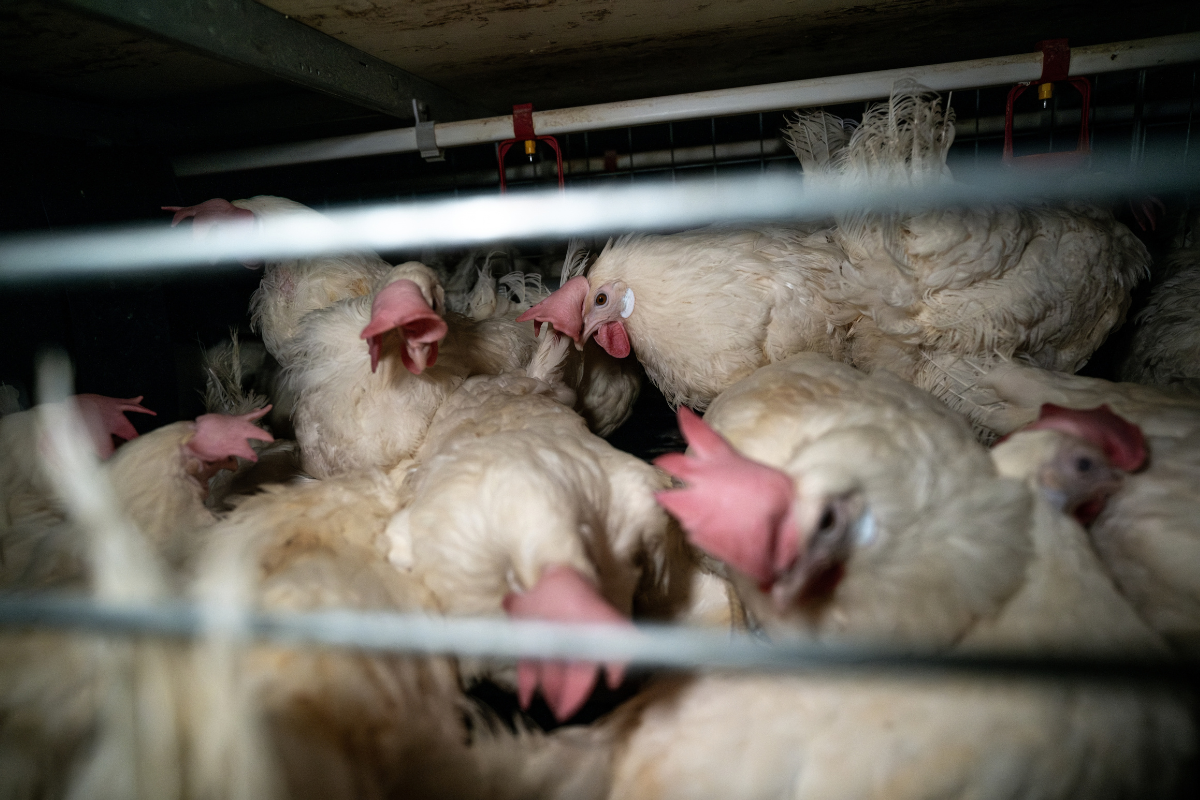
There is no future in caged housing. Major companies are demanding cage-free eggs. Consumers are increasingly choosing cage-free products. Scientists are identifying the welfare limitations of caged systems. And governments around the world are moving toward cage-free standards.
The question is not whether change is coming. It is whether Canada will actively prepare for it. A genuinely forward-looking research facility should equip students and researchers to lead the next generation. The University of Saskatchewan has an opportunity to build something that truly deserves to be called world-leading—and that starts by leaving cages in the past.
Tell USask to Build for a Cage-Free Future
Public research dollars should build Canada’s capacity to lead emerging welfare developments, not reinforce the status quo that includes cruel caged housing. Animal Justice has raised these critical concerns directly with USask leadership—now we need your voice.
Take action by sending an email to University of Saskatchewan leadership and the Board of Governors today. Urge them to remove cages from their facility plans and direct public research funds toward 100 percent cage-free housing instead.
Banner photo: Abigail Messier | Open Wing Alliance | We Animals
Frequently Asked Questions
What is the new USask poultry research facility?
- The University of Saskatchewan (USask) is planning a new $15.6-million, 24,000-square-foot poultry research facility that will house approximately 6,000 hens. The university has promoted the project as a major investment in poultry research and animal welfare, but its current design includes cruel caged housing.
What are enriched cages?
- Enriched cages are slightly larger than conventional battery cages and include features such as perches and nesting areas. But they are still cages that severely restrict hens’ movement and ability to perform important natural behaviours. Each hen receives roughly the space of a legal-size sheet of paper.
Why is Animal Justice concerned about cages at USask?
- Research facilities can shape what scientists study, what students learn, and what farming technologies are developed for decades. Animal Justice believes a new facility should prepare researchers for the transition toward cage-free housing rather than investing in infrastructure that perpetuates intensive confinement.
Are other countries moving away from cages?
- Yes. Caged housing for laying hens has been banned or restricted in a growing number of jurisdictions, while thousands of major companies have committed to sourcing cage-free eggs. Cage-free production is also significantly more common in places such as the United Kingdom, European Union, and United States than it is in Canada.
Is public money funding the USask poultry facility?
- Yes. The federally funded Canada Foundation for Innovation (CFI) is contributing $6.2 million toward the project. Additional funding is being provided by the University of Saskatchewan and Saskatchewan Egg Producers. Animal Justice has urged CFI to withhold its funding unless the facility is designed to be 100 percent cage-free.
What is Animal Justice asking USask to do?
- Animal Justice is calling on USask to remove cages from the facility’s plans and commit to 100 percent cage-free housing. A new research facility should prepare Canadian students and researchers for emerging animal welfare standards and a global food system that is increasingly moving away from cages.