


Key Takeaways:
- Animal Justice has filed a complaint with the Manitoba Ombudsman after Manitoba Agriculture repeatedly refused to release basic details about the number of mink farms in Manitoba, and how many animals they kill for fur.
- Minks bred for fur are crammed into tiny, filthy wire cages with little to no enrichment.
- Animals on fur farms are typically killed by gassing, anal electrocution, and neck-breaking.
- Caging thousands of stressed animals creates a high risk for zoonotic disease outbreaks.
- Fur farming generates toxic runoff, endangering local waterways, soil quality, and surrounding wildlife.
- Multiple European nations, Canadian provinces like British Columbia, and major fashion brands are banning or phasing out fur farming due to ethical, health, and environmental concerns.
Animal Justice has filed a formal complaint with the Manitoba Ombudsman over the province’s refusal to release basic information about Manitoba mink farms. The Ombudsman is an independent office of Manitoba’s legislative assembly that investigates wrongdoing by public bodies.
For the second year in a row, Manitoba Agriculture has refused to release basic information about mink fur farms in the province—claiming it could harm companies’ business interests.
Our 2026 request sought the number of mink farms registered in Manitoba and their corporate names, as well as the number of animals actually kept at the farms. These are facts that virtually all other businesses in the province are required to make public. The most recent federal data, now six years old, showed three mink farms in Manitoba killing at least 25,000 minks each year.
Mink fur farms pose serious threats to public health, animal welfare, and the environment. Manitobans deserve transparency about this secretive, harmful industry operating in their province.
Rampant Cruelty on Canadian Mink Farms
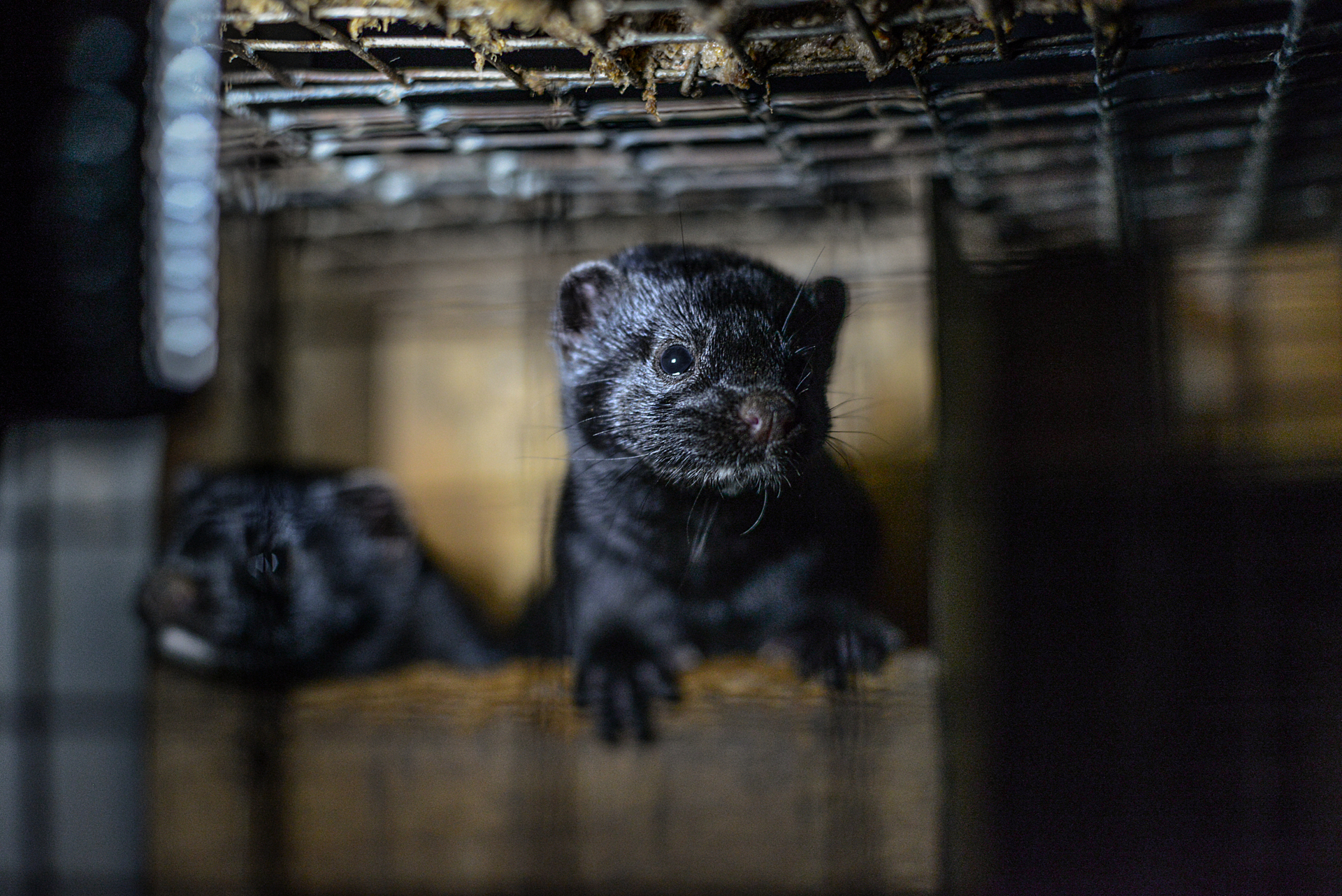
Minks bred for fur are crammed into tiny, filthy wire cages devoid of any stimulation. They’re often kept outdoors without any protection from extreme weather. Despite being semi-aquatic animals, minks bred for fur never get an opportunity to swim in appropriate water.
Multiple investigations on Canadian fur farms have shown that cruelty and poor conditions are the norm.
- In 2014, a joint investigation by the Montreal SPCA and The Fur-Bearers documented shocking conditions on mink and fox fur farms across Canada, including severe injuries, cannibalism, and untreated infections. Dead animals were left to rot in cages with living animals.
- In 2017, a Quebec fur farmer investigated by the Montreal SPCA in 2014 pleaded guilty to animal cruelty charges, after foxes and minks were found malnourished, dehydrated, and suffering on his fur farm. Two foxes had to be euthanized on the spot. This case marked the first known time a Canadian fur farmer had been convicted of animal cruelty.
- In 2017, an investigation of five Ontario mink farms documented minks confined in tiny, filthy wire cages, including animals with open wounds and severe injuries, dead minks left in cages, and waste-filled areas infested with maggots. Animal advocate Malcolm Klimowicz, who obtained the footage, faced criminal charges after entering farms, but was later acquitted. The farms faced no legal repercussions for cruelty.
- In 2021, Ontario’s Millbank Fur Farm was convicted and fined for violating provincial animal protection laws. The factory fur farm, which confines and kills 40,000 minks annually, was charged following an undercover investigation by Last Chance for Animals. Photos and videos recorded over the course of a year showed minks in tiny cages suffering from untreated, festering wounds and displaying repetitive behaviours indicative of psychological distress.
Minks are typically killed at around six months old by carbon monoxide, while foxes are usually killed by anal electrocution. Other common methods of killing fur-bearing animals include neck-breaking. Animals are slaughtered by farmers without oversight by government inspectors.
Mink Fur Farming & Pandemics
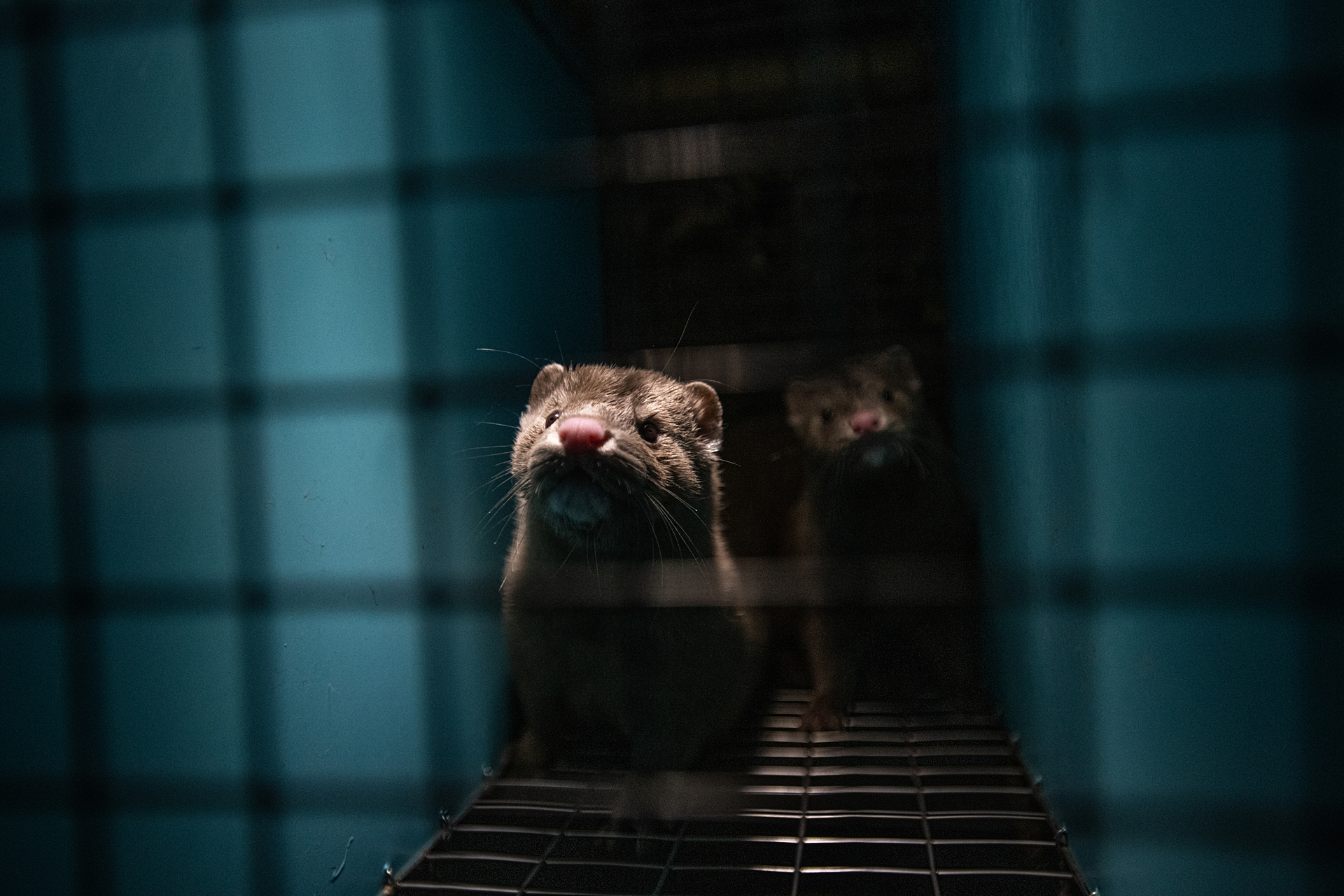
Intensive farming of minks for fur creates a perfect storm for zoonotic disease outbreaks. Minks are particularly biologically susceptible to human and avian viruses, creating an environment where different viruses can swap genes and create novel hybrid strains.
In factory farming conditions, where thousands of stressed minks are kept in very close quarters, infections can spread rapidly. Experts warn that minks, likely more than any other farmed animal, pose a risk for the emergence of outbreaks and the evolution of future pandemics.
During the height of the COVID-19 pandemic, outbreaks were found at multiple mink farms in Canada and abroad, which led to severe restrictions or bans on mink farming in countries like the Netherlands, Denmark, as well as British Columbia, Canada.
Environmental Impact of Mink Farming
Mink fur is vastly more environmentally intensive and less efficient than other textiles like cotton, polyester, and even wool. Every stage of mink fur production requires significant resources that impact the environment, from massive amounts of feed to the toxic chemicals used for processing the animal’s detached skin and fur.
In Nova Scotia, where most of Canada’s fur farms are located, waste runoff from mink farming operations has been flagged as a threat to water and soil quality, posing serious risks for fish, birds, other wildlife, farmed animals, humans, and the environment.
Other countries have already taken action to outlaw the barbaric practice of industrial fur farming. Bans are in place in Austria, Bosnia and Herzegovina, Belgium, Croatia, Czechia, Luxembourg, the Netherlands, Northern Ireland, North Macedonia, Serbia, Slovenia, and the United Kingdom. Denmark put a moratorium on mink farming until 2022 in response to COVID-19 viral mutations on mink farms. Many American cities and states are banning the sale and production of fur. Meanwhile, major fashion houses and retailers are ditching fur over animal cruelty concerns.
Banner: We Animals
Frequently Asked Questions:
Why is Animal Justice filing a complaint against Manitoba mink farm operations?
Animal Justice filed a formal complaint with the Manitoba Ombudsman because Manitoba Agriculture has repeatedly refused to disclose basic public information about local mink fur farms. Provincial officials have repeatedly shielded these operations from public oversight, arguing that disclosing basic business registry data would harm the commercial interests of fur producers.
How are animals treated on commercial fur farms?
Minks bred for fur are crammed into tiny, filthy, wire cages devoid of any stimulation. They’re often kept outdoors without any protection from extreme weather. Investigations into Canadian fur farms have revealed cannibalism, untreated infections, and dead animals left rotting in cages with living animals. At roughly six months old, animals are slaughtered using methods such as carbon monoxide gassing, anal electrocution, neck-breaking, or poisoning, all without routine government inspection or oversight.
Are fur farms harmful to the environment?
Yes. Fur farming requires substantial resources, including feed production and toxic processing chemicals to preserve animal pelts. Waste runoff from intensive operations can contaminate local soil and water systems and poses a serious risk to fish, birds, farmed and wild animals, humans, and the environment.
Could fur farms trigger future pandemic threats?
Yes. Minks are highly biologically susceptible to human and avian respiratory viruses. Factory farming conditions, where thousands of stressed minks are kept in very close quarters, creates ideal environments for viral mutations. Experts warn that minks, likely more than any other farmed animal, pose a risk for the emergence of outbreaks and the evolution of future pandemics.
Is fur farming still legal in Canada?
Fur farming remains legal under federal Canadian law. British Columbia phased out mink farming following pandemic-related viral outbreaks. However, fur farming continues in provinces like Manitoba, Ontario, and Nova Scotia—even as dozens of international jurisdictions move to ban industrial fur production entirely.