

Animal Justice is appealing a disappointing court decision that found a live horse exporter not guilty of violating federal transport laws. We believe this ruling overlooks critical legal obligations to protect animals during transit.
In February 2024, a judge allowed Animal Justice to lay a criminal charge against Carolyle Farms over a live horse shipment that lasted well over 33 hours. This exceeded the legal 28-hour limit for horses to go without food, water, or rest.
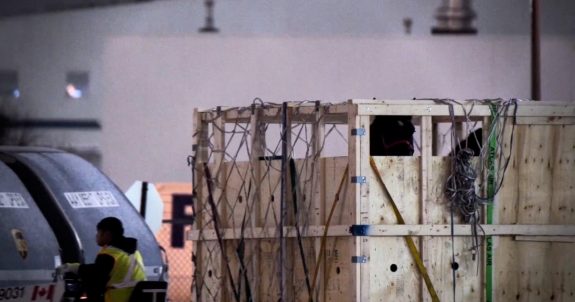
The incident took place on December 12, 2022, as Carolyle Farms exported horses from the Winnipeg airport to Japan, where they would be slaughtered and eaten. A heavy snowstorm made a scheduled stop in Anchorage, Alaska, impossible. However, the horse exporter did not cancel or postpone the shipment. Instead, the company rerouted the flight through Seattle. It was clear at the time that this decision was made that it would push the travel time well beyond the legal limit. During the gruelling journey to Japan for slaughter, three horses tragically collapsed in wooden crates on the plane.
In February 2026, Animal Justice took Carolyle Farms to trial for failing to have a contingency plan in place to prevent suffering should something go wrong during the export of the horses.
This marked a rare use of the private prosecution process, where charges are laid by a private individual rather than government authorities. This case was likely the first private prosecution involving farmed animals to ever reach trial in Canada.
Ultimately, the Court acquitted the company, concluding that Carolyle Farms was not responsible for having a contingency plan for the entirety of the journey. The Court emphasized that even the regulator, the Canadian Food Inspection Agency (CFIA), appeared to be confused about the duty of companies involved in transport to have a contingency plan.
However, Animal Justice is concerned that this ruling appears to run contrary to the language in the regulations, which exist to prevent animal suffering in the event that unforeseen delays complicate animal transport. This legal safeguard is essential to prevent animal suffering when foreseeable delays, such as winter storms, occur, and to ensure animals are protected for the entirety of their long journey overseas.
Kaitlyn Mitchell, Director of Legal Advocacy, shares an update from the courthouse:
The Failure of Federal Oversight
The trial highlighted a troubling lack of enforcement by the CFIA. During testimony, CFIA staff admitted they approved the shipment despite knowing it would go over the 28-hour legal limit for transport without food, water, and rest. They also confirmed that no contingency plan was on file for the full duration of the trip.
Thousands of Canadian horses are shipped in wooden crates to Japan every year to be slaughtered for sashimi. These animals endure immense stress, and every extra hour in a crate increases the risk of injury or death. Data from the Japanese government shows that in just one year, at least nine horses died as a result of transport and at least 29 collapsed during flights. More than 290 other horses suffered serious injuries or illnesses including many horses with dangerous fevers, bleeding wounds, and even missing parts of ears and hooves.
Animal transport laws are only effective if they’re enforced and exporters are held accountable. Animal Justice remains committed to ensuring that legal protections for animals are upheld. We will continue to fight in court to ensure live horse exporters cannot bypass safety regulations.