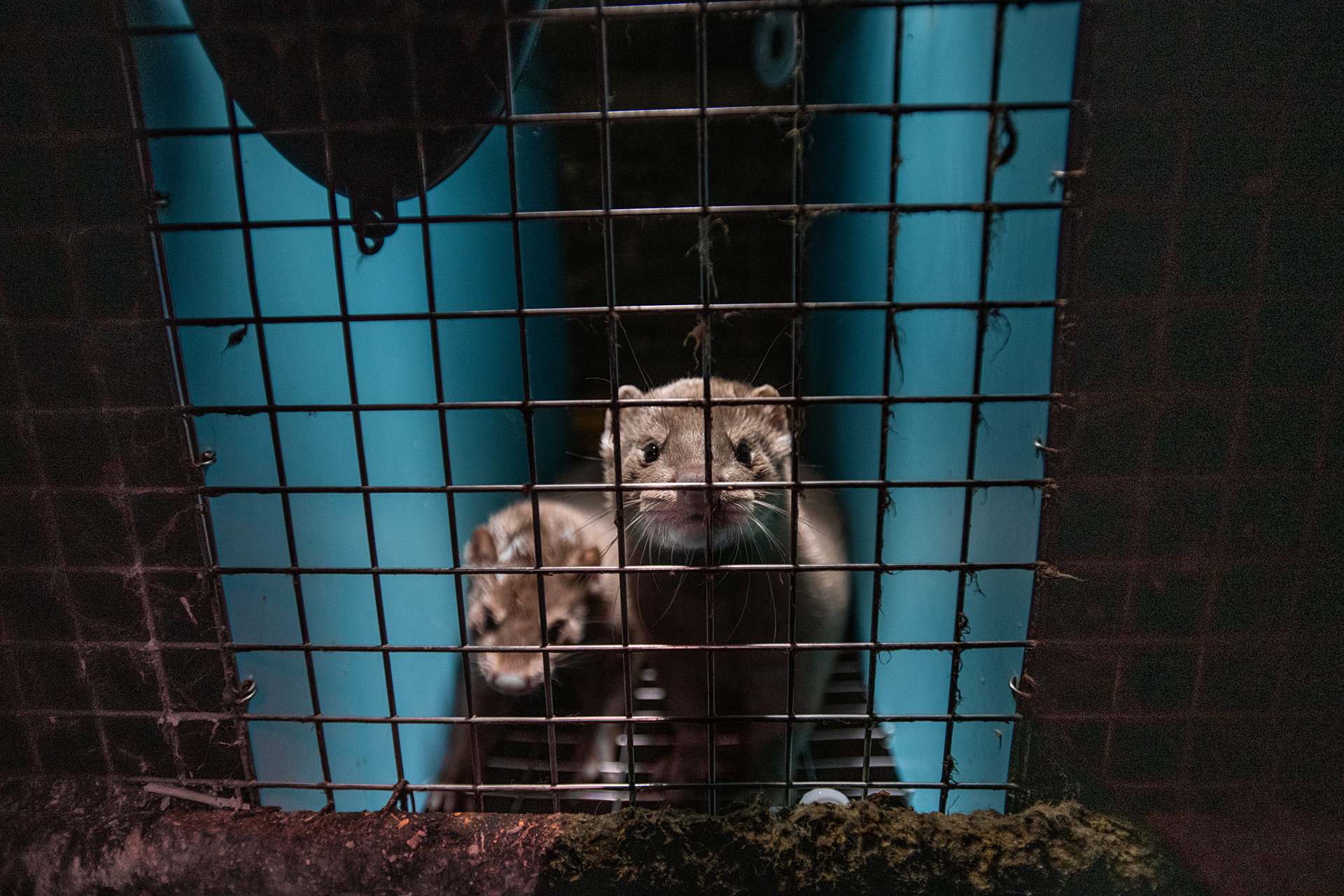



The fur trade is in steep decline, with fur farming now banned in a growing number of jurisdictions. This reflects growing concern by the public over the inherent cruelty of caging foxes, minks, wolves, and other wildlife in tiny, barren cages on fur farms before brutally killing and skinning them for their fur.
Not only does fur farming cause indefensible animal suffering, it also poses serious risks to human health and pollutes the environment. Despite fur farms being banned in the United Kingdom, Ireland, Norway, Italy, and most recently Poland, this cruel and outdated industry still operates in Canada.
Expert Insights on the Fur Industry
Animal Justice recently hosted a panel of movement leaders to discuss strategies for change. The panel featured Lesley Fox, Bogna Wiltowska, Rebecca Loviconi, Alanna Devine, and Dr. Sara Dubois. Together, these leaders shared vital insights into the legal and advocacy tools needed to protect animals and end the fur industry.
Speakers
- Lesley Fox — Executive Director of The Fur-Bearers
- Bogna Wiltowska — Investigator & campaigner at the forefront of Poland’s fur farm ban
- Rebecca Loviconi — Director of the award-winning documentary “Slay”
- Alanna Devine — Director of Advocacy at Animal Justice
- Dr. Sara Dubois — Biologist and Senior Director of Animal Welfare Science & Standards at BC SPCA
- Host — Kimberly Carroll, Animal Justice
Key Takeaways
- Fur farming involves the confinement and suffering of wildlife for their fur.
- Countries worldwide are increasingly banning fur farming practices.
- The conditions on fur farms are inherently cruel and lead to severe animal suffering.
- Investigations and documentaries play a crucial role in raising awareness about fur farming.
- Animal Justice and the Fur-Bearers are suing the Quebec government for inaction on fur farming, as conditions on fur farms seem to fall short of the province’s animal welfare laws.
- Public health concerns, including zoonotic diseases, are linked to fur farming.
- Advocacy efforts must be persistent and involve community engagement.
- Legislative changes are occurring, but more action is needed in Canada.
- Collaboration among various organizations enhances the effectiveness of advocacy.
- Every individual can contribute to the fight against fur farming in meaningful ways.
- Success stories from other countries can inspire and guide Canadian efforts.
Chapters
- 00:00 — Introduction to Fur Farming and Animal Justice
- 02:50 — Panelist Introductions and Backgrounds
- 06:03 — Understanding the Fur Farming Industry
- 08:58 — Current State of Fur Farms in Canada
- 12:06 — Conditions of Animals on Fur Farms
- 14:54 — Personal Experiences and Investigations
- 18:09 — The Psychological Impact on Fur-Bearing Animals
- 21:03 — Legislative Changes and Global Trends
- 23:48 — The Future of Fur Farming and Advocacy
- 48:09 — The Decline of Fur Farming and Its Impact
- 53:13 — Fashion Industry’s Role in Anti-Fur Campaigns
- 58:34 — The Importance of Investigations in Advocacy
- 01:01:30 — Zoonotic Diseases and Public Health Concerns
- 01:04:37 — Canada’s Unique Position on Fur Farming
- 01:09:11 — Momentum for Change in Canada
- 01:14:40 — Legal Actions Against Fur Farming
- 01:19:50 — Community Engagement and Grassroots Movements
- 01:24:36 — Learning from International Successes
- 01:26:36 — Empowering Individuals to Take Action