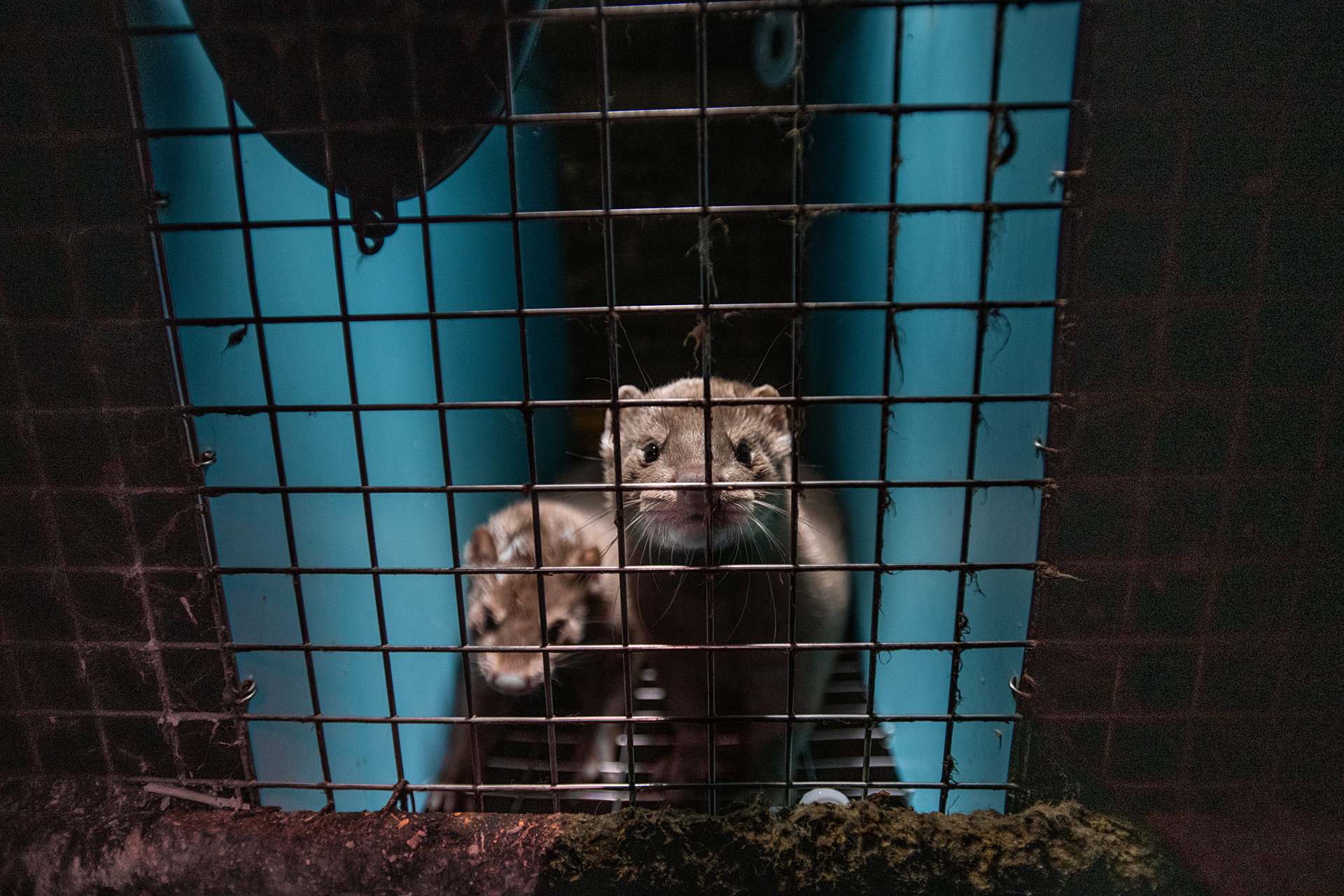

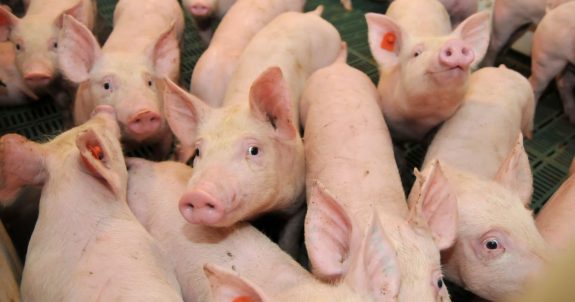

The Canadian animal agriculture industry is currently facing a public relations crisis. For decades, intensive farming practices have prioritized lowering costs over animal welfare, leading to modern farming conditions at odds with Canadian values.
While it is poor conditions that have raised public concern, the agriculture industry has responded to this challenge through public relations work, calling it a “public trust” crisis. Instead of making meaningful improvements, the industry is using agricultural front groups to spread propaganda and shield itself from accountability.
The Rise of the Industrial Factory Farm
Since the 1950s, the number of farms in Canada has dropped by 75 percent while the average farm size has tripled. Most farms are now large-scale industrial operations designed to maximize profit by using intensive methods. For instance, the average egg farm now houses 22,500 hens.
This industrial shift has resulted in tremendous, widespread animal suffering. Today, 863 million land animals are killed for food every year in Canada, compared to 45 million in the 1950s. Despite this scale, Canada lacks federal laws to protect the daily welfare of these animals on farms. Without government oversight, the industry has been left to set its own non-binding standards.
The Rise of Agriculture Front Groups
The use of front groups has long been part of the marketing playbook of industries that have fallen out of favour with the public, such as the tobacco and fossil fuel industries.
Front groups are organizations that intentionally appear independent and impartial but are actually funded and controlled by a specific industry, company, or political interest group to promote their agenda.
The front group approach spread to the agriculture industry in the 2000s when concerned consumers started to cast suspicion on “Big Ag” for its role in animal cruelty and environmental devastation. These organizations use defensive marketing to shape public opinion. They often have friendly-sounding names—think the Centre for Food Integrity, Farm & Food Care, or Agriculture in the Classroom. They claim to be independent despite being funded and directed by agribusiness interests.
Agricultural front groups are not working to fix the problems on factory farms. Instead, they seek to distract from criticism by using marketing campaigns that depict entirely positive images and narratives about modern farming. Common front group tactics include:
- Deny: They ignore or contradict facts that do not support industry interests
- Discredit: They undermine research and policies that are critical of industry practices
- Distract: They promote sanitized stories to hide the reality of animal abuse
Canadians care about how animals are treated and deserve a food system that is honest and transparent. While millions of animals suffer behind closed doors, it is up to us to prevent agricultural front groups from controlling the conversation.
The Desire to Avoid Regulation & Oversight
Part of the reason that industry invests in front group activity is to avoid regulation and public oversight. When farm practices come into question and agriculture corporations are no longer trusted messengers, they look for other ways to tell a positive story. The goal is to convince the public and government that everything is going well and there is no need for concern—or regulation.
The belief is that as long as industry maintains “public trust,” they can avoid new laws or public accountability for harmful practices. But this trust is built on a foundation of secrecy. The industry has even lobbied for “ag gag” laws to stop advocates and journalists from exposing animal cruelty. But undercover investigations continue to expose the grim reality of industrial farming. From “thumping” piglets to keeping hens in wire cages, the truth continues to come out. As awareness grows, the propaganda from agricultural front groups becomes less effective.
Join our Action Team for Upcoming Opportunities to Combat Misinformation
One of the best ways to combat the misinformation spread by front groups is through an informed public willing to use their voice to tell the truth. Join over 15,000 advocates in the Animal Justice Action Team to receive weekly high-impact actions you can take from home to drive real change for animals across Canada.