

Do you have firsthand knowledge of animal abuse, neglect or suffering in a Canadian medical/laboratory or farm? Email Animal Justice at [email protected]
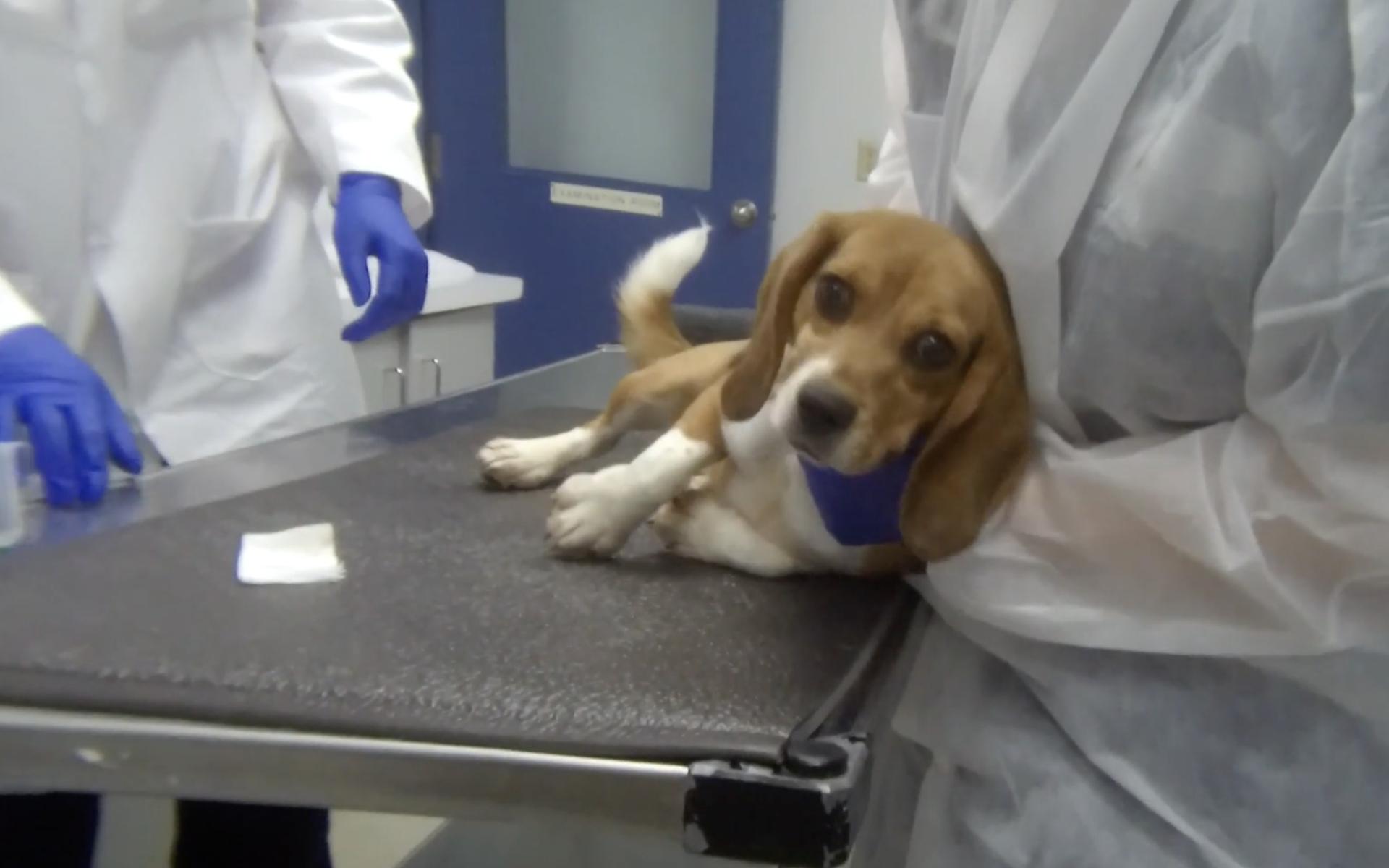
Earlier this year, two brave whistleblowers came forward to Animal Justice with shocking details of secret experiments on dogs, pigs, and rodents at St. Joseph’s Hospital in London, Ontario. Their testimony showed how far institutions will go to conceal animal suffering—playing loud music to drown out the cries of dogs, hiding dog food bags inside trash cans, and killing animals behind closed doors rather than rehoming them. This case revealed the urgent need for a whistleblower tip line for animal cruelty in Canada.
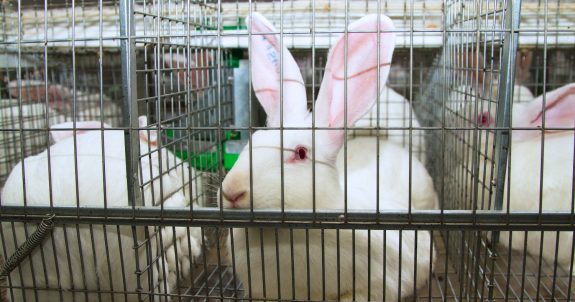
Thanks to these whistleblowers, Canadians learned the truth about disturbing cardiac experiments, and St. Joseph’s has since announced an end to its dog experimentation program. But the reality is clear: St. Joseph’s is not an isolated case. Across Canada, millions of animals suffer in labs, farms, breeding facilities, and other industries—out of sight and without accountability.
That’s why Animal Justice has launched a whistleblower tip line for hidden animal suffering.
Whistleblowers are a Lifeline for Animals
Whistleblowers play a vital role in protecting animals. Firsthand information can expose cruelty that the public was never meant to see, spark investigations, and lead to real, lasting change for animals.
Employee whistleblowers have documented abuse of pigs and piglets, goats, mink, calves, and chickens, as well as hidden suffering caused by standard industry practices such as grinding live baby chicks in macerators.
Animal Justice’s whistleblower tip line for animal cruelty provides a safe and confidential way for insiders—such as hospital staff, animal care attendants, researchers, or farm workers—to come forward. You can share what you’ve witnessed, and your identity will be protected to the best of our ability. You can remain anonymous if you choose.
If you have firsthand knowledge about animal abuse, neglect, or suffering in a Canadian medical/laboratory facility or farm, please don’t stay silent. Speak up today.
How to Report to the Whistleblower Tip Line for Animal Cruelty
Email us at [email protected] using a secure, personal email account on a private device (not a work computer or network).
Include as much detail as possible, such as:
- What happened, including details about the animals, their experiences, and the procedures used.
- Dates and locations of the incidents.
- Names of institutions, companies, or individuals involved.
- Any supporting evidence such as photos, videos, documents, or emails.
Tips supported by documentation are especially powerful in helping Animal Justice investigate and take action.
What We Can & Can Not Investigate
We carefully review all whistleblower tips. However, we cannot pursue:
- Rumours or speculation without evidence.
- Concerns that have already been reported or are public knowledge.
- Tips with too little detail to follow up on.
- Reports about lost pets, wildlife, or general animal welfare unrelated to systemic exploitation.
If you witness illegal animal abuse, please contact law enforcement immediately.
Please note: Animal Justice is not a law firm, and we do not possess law enforcement powers.