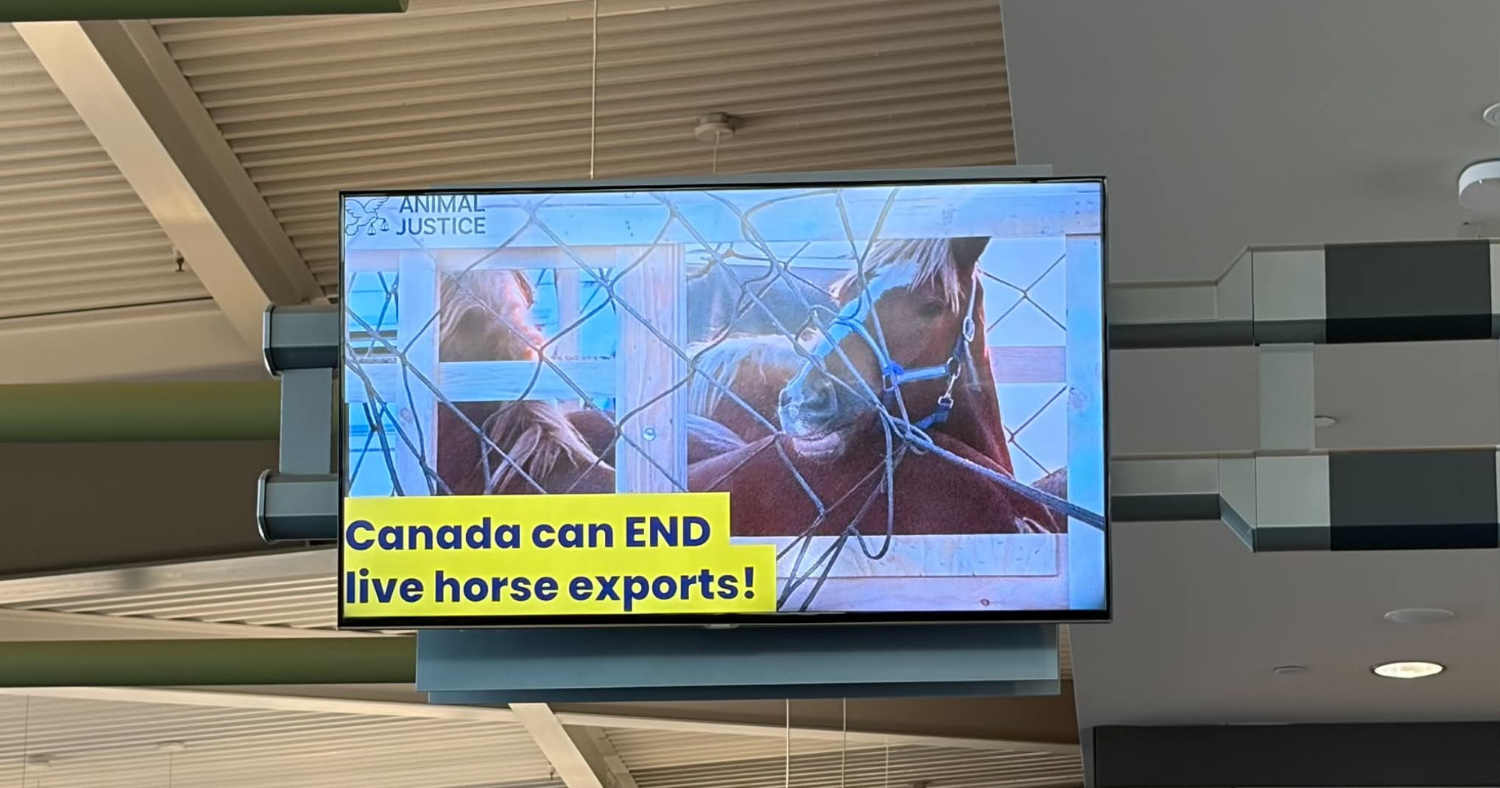



Horses hold a special place in Canadian hearts. Yet every year in Canada, thousands of gentle, intelligent horses are crammed into wooden crates for long, terrifying flights to Japan. These live horse export shipments subject animals to gruelling conditions only for them to be slaughtered for sashimi—a delicacy for the wealthy.
Panel Brings Together Top Leaders in the Fight for Horses
Animal Justice recently hosted a panel of movement leaders to discuss strategies for change. The panel featured singer/songwriter Jann Arden, Kaitlyn Mitchell of Animal Justice, MP Alexandra Mendès, equine vet Dr. Pamela Corey, and equine photographer Sandy Sharkey.
The panel focused on the urgent need to end live horse export for slaughter in Canada, highlighting the cruel conditions horses face during transport, which cause widespread injuries and death. Panelists shared personal stories, legislative challenges, and the importance of continuing to fight for these animals. The conversation emphasized the need for regulatory changes and encouraged citizens to engage with their MPs to push for a ban.
Speakers
- Jann Arden — Canadian singer/songwriter & founder of the HORSESHIT campaign
- Kaitlyn Mitchell — Director of Legal Advocacy, Animal Justice
- Alexandra Mendès — Member of Parliament for Brossard – Saint-Lambert
- Dr. Pamela Corey — Equine veterinarian
- Sandy Sharkey — Equine photographer & advocate
- Host — Kimberly Carroll, Animal Justice
Key Takeaways
- Live horse export is a cruel practice that needs to end.
- Thousands of horses are exported from Canada for slaughter each year.
- The transport conditions for these horses are inhumane and often exceed legal limits.
- Legislation to ban live horse export has faced challenges in Parliament.
- Public awareness and advocacy are crucial for change.
- Personal stories from advocates highlight the emotional toll of this issue.
- Regulatory changes may be a more effective path than new legislation.
- Engaging with MPs can lead to meaningful discussions and actions.
- The bond between humans and horses is significant and should be respected.
- Collective action from citizens can lead to substantial change.
Chapters
- 00:00 — Introduction to the Live Horse Export Issue
- 02:30 — Panelist Introductions and Personal Stories
- 05:21 — Understanding the Live Horse Export Process
- 15:55 — Investigation Findings on Horse Transport Conditions
- 22:01 — The Impact of Live Horse Export on Horses
- 27:18 — Legislative Efforts and Challenges
- 37:19 — The Path Forward: Regulatory Changes and Public Involvement
- 50:01 — Challenges in Horse Transport and Welfare
- 53:50 — Empowerment and Advocacy in the Fight for Animals
- 01:00:07 — Engaging Politicians
- 01:07:34 — Taking Action: Meeting with Your MP
- 01:17:04 — Understanding Horse Welfare and Advocacy
- 01:23:08 — Mobilizing for Change: Action Steps
Meet With Your MP: End Live Horse Export!
Meeting with your Member of Parliament is one of the most effective ways to help end live horse export. By requesting a meeting, either by email or phone, you can put this issue back on the political agenda and urge your MP to support a ban. Click here to find your MP!
When you meet with your MP, ask whether they’d be willing to ask the Prime Minister and Agriculture Minister to end live horse exports by amending the Health of Animals Regulations.
Together, we can push to finally end this cruelty and protect horses.