

Update: The consultation period is now closed. Click here for more ways to help animals.
Many Canadians are shocked to learn that no federal laws regulate the welfare of animals on farms. While existing laws prohibit suffering caused by some intentional cruelty, these laws exempt suffering caused by standard agricultural practices—a massive legal gap. Currently, the government hands the rulebook for farmed animal welfare directly to the industry, allowing the industry-dominated National Farm Animal Care Council (NFACC) to determine what practices are exempt from cruelty laws.
As with other farmed animals, no binding federal standards govern the daily treatment of horses, donkeys, and mules. NFACC is currently holding a public consultation on updates to its Equine Code of Practice. This gives the public an opportunity to have a say on what practices should not be accepted—including painful practices like branding, and forcing horses to live in narrow stalls where they can’t turn around.
Submit your feedback to NFACC by filling out the survey before March 12, 2026.
The Problem with Voluntary Standards
NFACC is an industry-dominated, non-government entity. It creates voluntary guidelines known as “Codes of Practice”—which prioritize profit over protection. When the industry revises these codes, the public has a direct opportunity to provide feedback. Let’s stand up for horse welfare in Canada and demand better for these sensitive animals.
End Extreme Confinement to Improve Horse Welfare in Canada
Extreme confinement remains a major threat to animals. Many horses spend their lives in “tie stalls” or standing stalls—narrow spaces that prevent horses from turning around, grooming, and engaging in natural behaviours. This restriction can cause significant mental and physical distress and the lack of movement can lead to health problems like lameness.
Tie stalls continue to be used in industries such as the PMU industry, which uses pregnant mares’ urine to produce estrogens for hormone drugs used in humans. The Equine Code of Practice guidelines must be updated to prohibit tie stalls and ensure that when confined indoors, horses have adequate space, and that they have daily opportunities to move freely outdoors.
Stop Painful Practices Without Anesthesia
Current industry standards allow painful procedures without mandatory pain relief. For example, hot iron branding and other forms of branding can cause immense suffering. Moreover, many invasive procedures still happen without proper anesthesia. The Equine Code guidelines must be updated to prohibit branding and other cruel practices like the use of electric prods; require that all surgical procedures (e.g. castration) be performed by veterinarians with appropriate anesthesia provided; and prohibit painful procedures such as tail docking.
Provide Shelter & Space on Feedlots
Horses raised for meat, as well as those later sold into the meat industry, endure miserable conditions in barren feedlots across provinces like Alberta and Ontario. These facilities offer minimal protection from weather extremes—such as prairie winters or Ontario’s humidity. As a result, horses suffer from severe environmental stress and injury.
To address the systemic issues on feedlots, the Equine Code of Practice must set higher baselines for housing and space sufficient to move freely and graze. Specifically, the updated guidelines must require sufficient shelter space to accommodate all horses at the same time. This ensures every horse can find protection from harsh elements. Additionally, the industry must provide dry lying areas for each equine when conditions are wet or muddy. These changes are vital to prevent painful lameness and chronic health problems.
End the Breeding of Horses for Slaughter
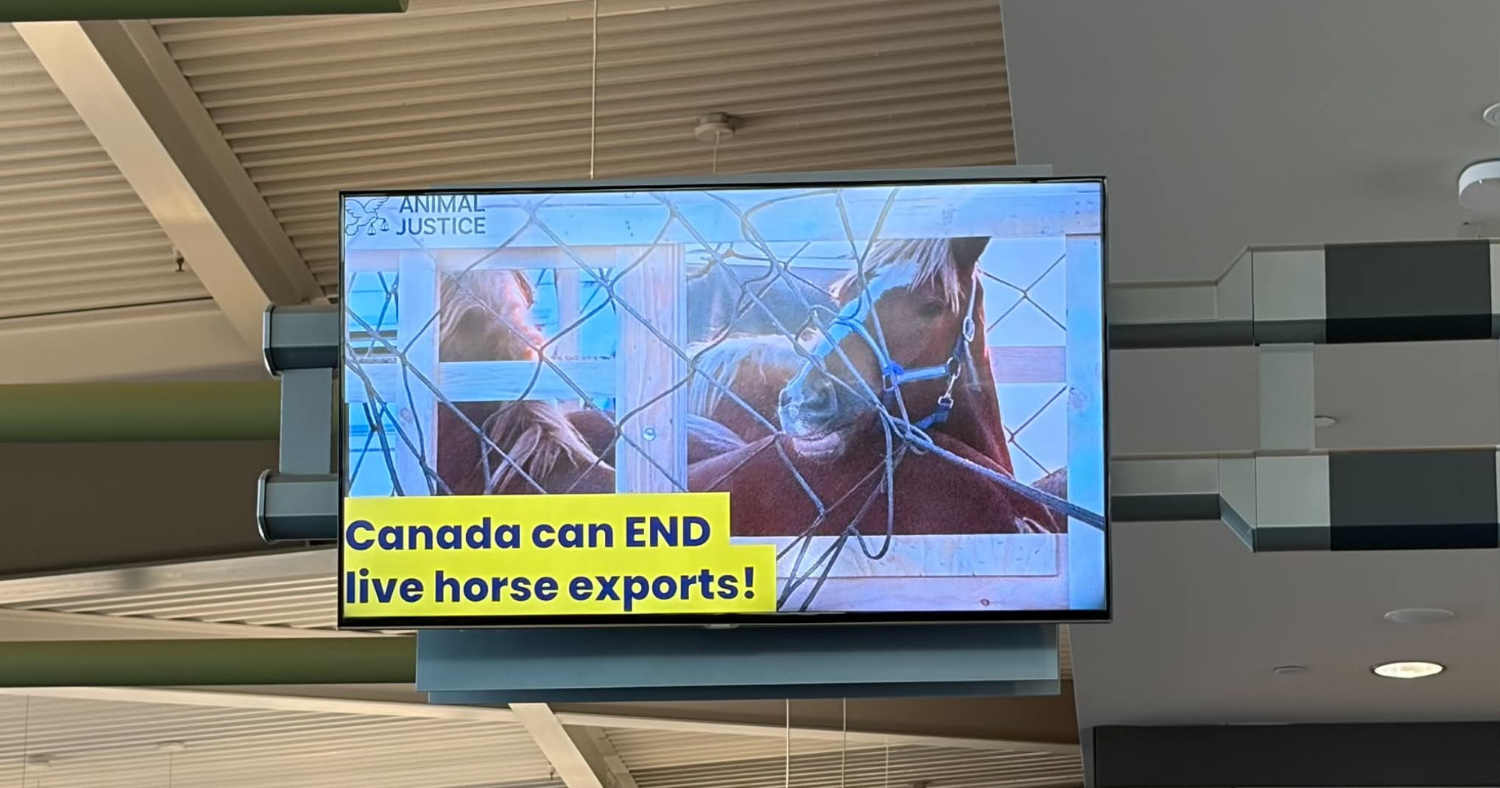
NFACC’s current Equine Code refers to horses who are purpose bred for slaughter. Many horses bred for slaughter in Canada are shipped overseas for slaughter, forcing horses to endure gruelling, stressful, and dangerous journeys without food, water, and rest. Horses exported for slaughter are often in transport for more than the 28 hour legal limit, and many collapse en route. A staggering number of these horses die during transport or in the hours and days following, from conditions including stress, dehydration, injuries sustained during the flights, and even painful miscarriages.
The practice of breeding horses for slaughter is out of step with the values of Canadians and supports the export for slaughter industry, which nearly 80 percent of Canadians oppose. The “Responsible breeding” section of the Code should be amended to prohibit breeding horses for the purpose of slaughter.
Take Action for Canadian Horses
The industry is currently holding a public consultation. Please take a moment to submit your comments to NFACC before the deadline. We encourage you to tell NFACC to end tie stalls, painful practices, and provide baselines for housing. Within the survey, share your unique perspective and be concise. Please use your voice to stand up for horse welfare in Canada right now.
Take action for Canadian horses: Submit your feedback to NFACC by filling out the survey before March 12, 2026.