

As a researcher, I have spent the past decade studying animal rights surveillance and how the animal agriculture industry and government agencies surveil people working to improve life for animals. My research has spanned stacks of legal documents, corporate campaign strategies, archival records, and parliamentary debate transcripts. It’s also involved countless hours of qualitative interviews—all to understand how power operates to silence dissent.
Surveillance Up Close
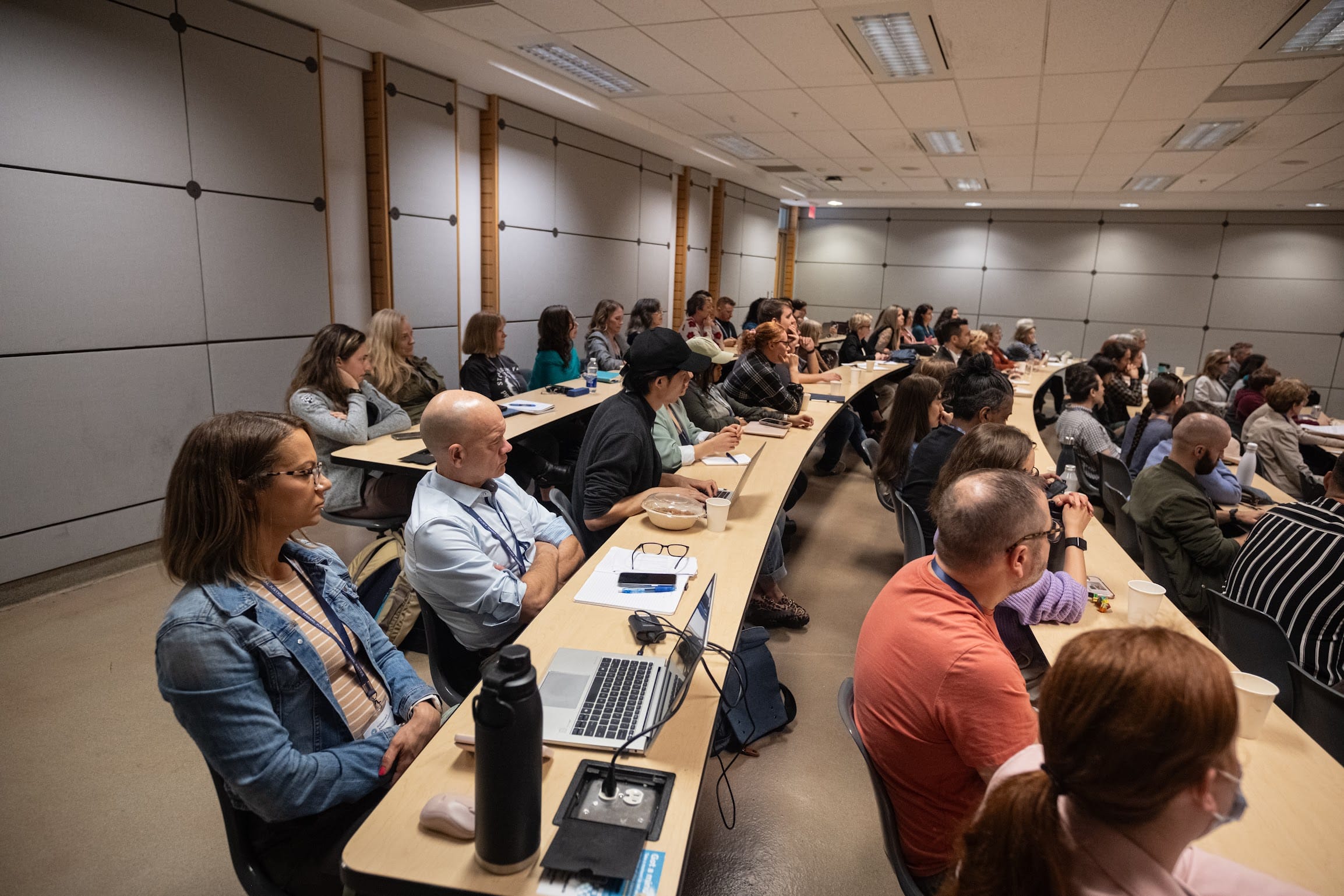
In my role as an advocacy program specialist at Animal Justice, I experienced this surveillance firsthand. It happened at our recent Animal Law & Advocacy Conference.
There I was, presenting the findings of my dissertation on the industry surveillance of the animal rights movement, discussing the corporate intelligence gathering, the legal tactics, and the physical monitoring that the industry uses to keep animal advocates under surveillance.
And little did I know, seated quietly at the back of the room were two representatives from Chicken Farmers of Canada—a lobbying and industry-representation group for Canadian chicken producers. They weren’t just attending; they were there to monitor and record my entire presentation, and those of my colleagues and other professionals.
The subject of my research had entered the room; the animal agriculture industry was watching the researcher who had been watching the industry. In that moment, I went from observer to the observed, and theory became reality. The surveillance I studied was no longer just a subject of study. It was right there in the room with me, turning my research into a real-time intelligence briefing for the very industry I had been studying.
A Long History of Industry Surveillance
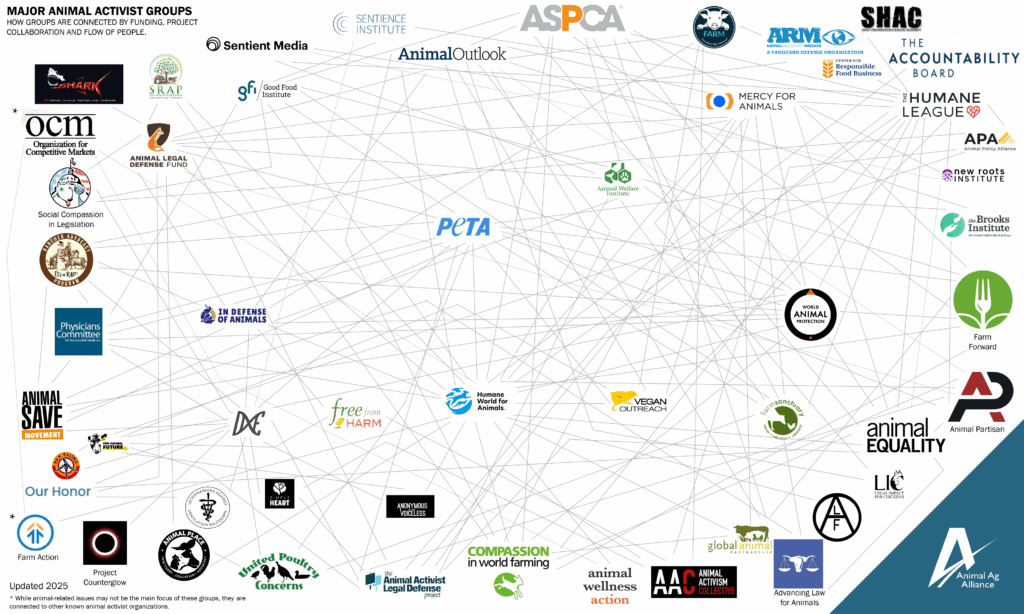
The farming industry has a long history of tracking and monitoring its critics. The Animal Agriculture Alliance (AAA), for example, is a US industry interest group funded by major meat and dairy producers. For years, it has conducted organized surveillance of advocacy groups. While US-based, the group has also encouraged its allied organizations to expand these monitoring efforts to include Canada.
The AAA openly advertises that monitoring animal activists is one of its main functions. On its website, it explains that it “identifies emerging threats and provides resources on animal rights and other activist groups by attending their events, tracking traditional and social media, and engaging its national network.”
Documents obtained through Freedom of Information requests revealed that the AAA maintains an extensive database of animal activists and organizations. The organization has profiles on over 150 groups, including Animal Justice and our staff of lawyers and other professionals on the team, and over 2,400 individuals. But this is far from casual observation. The files go deep, tracking everything from organizations’ legal strategies and planned protests to the personal relationships of each person. They track social media, attend meetings and conferences, record audio and take photographs, and build individual profiles on people working to help animals.
Animal Rights Monitoring Beyond the Private Sector
But the AAA’s surveillance extends beyond the private sector. It has worked directly with law enforcement, sharing reports and collecting information on animal rights organizations. The AAA has collaborated with the US Federal Bureau of Investigations (FBI) since at least 2018.
The AAA is just one example of a coordinated effort by the industry to keep tabs on anyone they see as a threat to their business, including advocates, lawyers and professors. They track, document and strategically target people.
This kind of surveillance isn’t just a reaction to protests or campaigns. It’s part of a planned system built to predict, watch, and suppress dissent, often with help from government agencies. They may claim to attend events like an animal law conference to engage in dialogue or exchange ideas. But that’s clearly not their true intention. Many animal groups have tried for years to establish meaningful dialogue with the Chicken Farmers of Canada, which monitored our conference. Despite referrals from their own allies, repeated encouragement to reach across the aisle, and our consistently respectful, non-confrontational approach, they have remained completely unresponsive.
The Researcher Becomes the Watched
My conference presentation and the presence of industry representatives was not simply ironic. It was consistent with the longer history of the animal rights surveillance practices I had been studying. The academic becomes the subject; the researcher the target. And what had been a case study became lived experience.